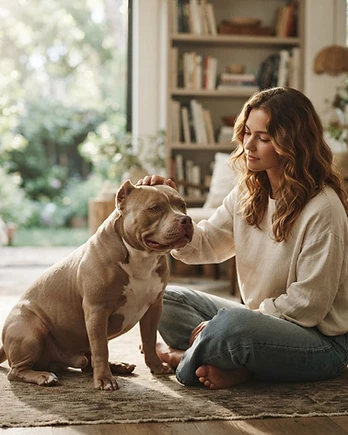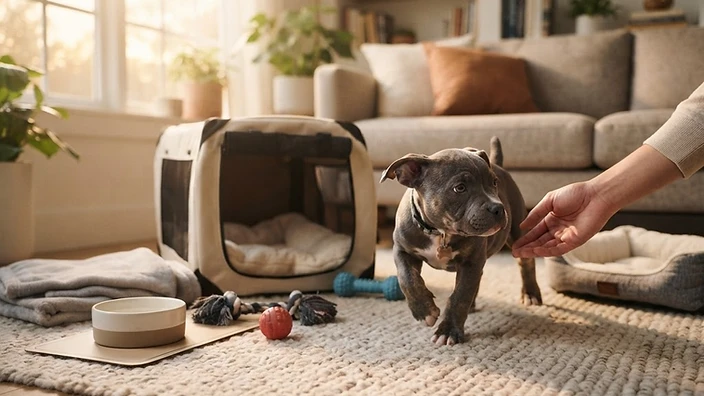
There is a moment — usually somewhere between pulling into the driveway and stepping through your front door — when it hits you. The warm, squirming weight in your arms. The soft snuffling against your chest. The quiet realization that your life just changed in the best possible way. Bringing home an American Bully puppy is one of those rare experiences that is equal parts joy and responsibility, and the breeder in us wants you to feel fully prepared for both.
American Bullies are confident, affectionate, deeply loyal dogs who bond with their families with extraordinary intensity. But that bond is built — brick by brick — in the very first days and weeks you spend together. How you set up your home, how you introduce your puppy to their new environment, and how consistently you establish a routine in those early days will shape who your dog becomes. This is not a time to wing it.
At American Bully Haven Pups, every puppy we raise in Austin, Texas leaves our care with a strong foundation. Our job does not end at the handoff. This guide is designed to walk you through your puppy's first week at home, so you can move forward with clarity, confidence, and a whole lot of love. Be sure to also bookmark our full resource library — it is packed with expert guidance tailored specifically to Bully owners.
Before Pickup Day: Get Your Home Ready
The best first week starts before your puppy ever walks through the door. Puppy-proofing and supply-gathering are not optional extras — they are the foundation of a smooth transition.
Essential Supplies Checklist
Here is what you should have ready before your puppy arrives:
- Crate: A sturdy, appropriately sized crate is non-negotiable. For most American Bully puppies, a 36-inch crate with a divider works well and grows with them. Choose a model with a removable divider so you can expand the space as your puppy grows.
- Dog bed or padded crate mat: Something washable, durable, and cozy. American Bullies love comfort and will appreciate a soft surface from day one.
- Food and water bowls: Stainless steel or ceramic — easy to clean and free from the chemical concerns of some plastics. Use a slow-feeder bowl if your puppy tends to gulp.
- Premium puppy food: Ask us what your specific puppy has been eating before pickup. Abrupt food changes upset sensitive stomachs. Transition gradually over 7–10 days by mixing increasing amounts of the new food with the original.
- Collar, ID tag, and leash: A well-fitted flat collar with a tag engraved with your phone number is essential from the very first day. Microchipping should already be in place — confirm this at your first vet visit.
- Enzymatic cleaner: Accidents happen. An enzymatic cleaner (such as Nature's Miracle) neutralizes odors at the source and reduces the likelihood of repeat offenses in the same spot.
- Treats: Small, high-value, soft treats for training. You will use these constantly in week one.
- Baby gates or exercise pen: To limit unsupervised access to the house while your puppy is learning the ropes.
- Chew toys and enrichment toys: American Bullies are powerful chewers. Stock up on rubber Kongs, Nylabones, and rope toys before your pup finds the furniture.
- Grooming basics: A soft brush, puppy nail clippers, and dog-safe ear cleaning solution. Starting grooming routines early builds tolerance and trust.

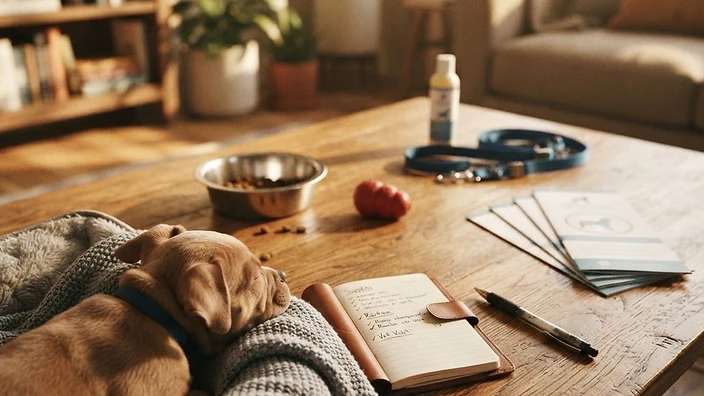
A young American Bully puppy sits beside a collection of essential new puppy supplies — crate, food bowls, leash, collar, and chew toys — laid out on a clean floor. These items form the foundation of a safe and structured home environment for a new Bully pup.
Puppy-Proofing Your Space
Get down on all fours — literally — and look at your home from a puppy's eye level. Look for electrical cords, low-hanging tablecloths, toxic houseplants (lilies, pothos, sago palm, and philodendron are all dangerous), small objects that can be swallowed, and gaps behind appliances. Secure cabinet locks in the kitchen and bathroom. If you have a yard, walk the fence line and check for gaps, loose boards, or dig-under vulnerabilities.
Setting Up a Safe Space
Your puppy's crate is not a punishment — it is a sanctuary. When introduced properly, most dogs come to love their crate as a quiet, secure den. Place it in a low-traffic but socially connected area of your home. A corner of the living room or a spot in the bedroom works well. Avoid isolating your puppy completely; American Bullies are deeply people-oriented and do not thrive in solitude.
Line the crate with a comfortable mat and, for the first few nights, consider placing a piece of your worn clothing inside. The scent of their new family is profoundly calming to a puppy adjusting to a new environment. Some owners also use a Snuggle Puppy toy — a stuffed animal with a simulated heartbeat — to ease the transition from littermates.
Beyond the crate, designate a "puppy zone" — a small, gated area of your home where your puppy can move freely under supervision. This is where meals, play sessions, and naps will happen. Keeping the space manageable in the first week reduces overwhelm and accidents.
Day One: Arrival and First Impressions
Keep the first day calm. We know it is tempting to invite the whole extended family over to meet your new pup, but resist the urge. Give your puppy time to sniff around their new space quietly and without chaos. Let them explore at their own pace. If you have children, brief them beforehand: no sudden movements, no screaming, and no picking the puppy up without an adult present.
Take your puppy outside to their designated potty spot within five minutes of arriving home. This is where every successful potty training journey begins — establishing a consistent spot from the very first moment.
Introduce the crate gently on day one by tossing a few treats inside and letting your puppy enter voluntarily. Do not latch the door on the first approach. Build positive associations before you ask them to stay inside.
Building a Daily Routine
Consistency is the single most powerful tool you have in week one. Puppies — especially American Bullies, who thrive on structure — feel safer and settle faster when they know what to expect. Build your daily schedule around these pillars:
Feeding Schedule
Most American Bully puppies between 8 and 12 weeks of age need three meals per day, spaced roughly 6–8 hours apart. Feed at the same times each day. Predictable feeding times create predictable potty times, which makes housetraining dramatically easier. Always provide fresh water.
Potty Training Protocol
Take your puppy outside:
- First thing in the morning (immediately after waking)
- Within 10–15 minutes of every meal
- After every nap
- After every play session
- Before bedtime
- Once during the night if they stir (for very young puppies)
Use a consistent verbal cue like "go potty" every time you take them to their spot. When they eliminate outside, praise enthusiastically and offer a treat immediately. Never punish accidents — simply interrupt calmly, redirect outside, and clean up thoroughly with enzymatic cleaner.
Sleep and Rest
Puppies sleep a lot — typically 16 to 18 hours a day. Do not underestimate this need. Overtired puppies become cranky, nippy, and harder to manage. Build regular nap times into the schedule. After a play session, guide your puppy to their crate for a rest. This also teaches them that the crate is a restful place, not a place of frustration.

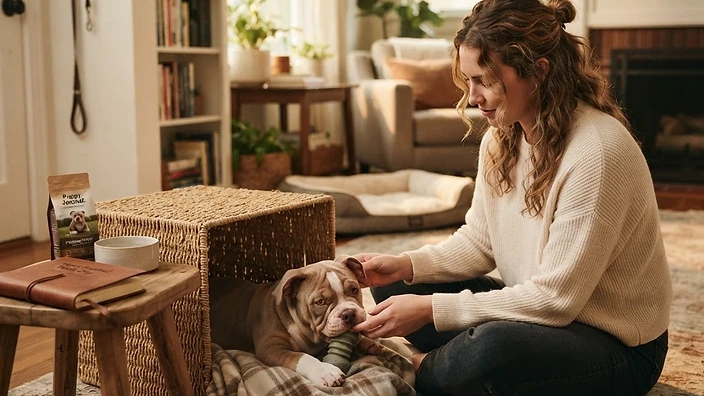
A sleepy American Bully puppy lies on a padded mat inside an open wire crate lined with a soft blanket and a small stuffed toy. Creating a positive association with the crate from day one is one of the most impactful things a new owner can do for their puppy's long-term comfort and confidence.
Socialization — Done Right
The socialization window for puppies is roughly 3 to 14 weeks of age, and it closes fast. During this period, positive exposure to a wide variety of people, sounds, surfaces, and environments creates a confident, well-adjusted adult dog. That said, balance is critical.
Before your puppy is fully vaccinated, avoid dog parks and areas with unknown dogs. Instead, focus on:
- Gentle exposure to household sounds (vacuum cleaners, music, television)
- Meeting calm, vaccinated adult dogs that you trust
- Visiting friends' and family members' homes
- Short car rides
- Different floor surfaces — tile, grass, gravel, hardwood
- Gentle handling of paws, ears, and mouth (essential for future grooming and vet visits)
For a deeper dive into why proper breeding sets your puppy up for socialization success, read about our breeding program and what we do before your puppy ever comes home.
The First Vet Visit
Schedule your puppy's first veterinary appointment within 48 to 72 hours of bringing them home. This is not optional — it is a critical health checkpoint and a baseline for your puppy's ongoing care.
What to Bring
- Health records and vaccination documentation from your breeder
- Deworming history
- The food your puppy is currently eating
- A list of any questions you have
What the Vet Will Check
Your vet will perform a full physical examination: heart, lungs, eyes, ears, skin, teeth, limbs, and abdomen. They will confirm microchip placement, review the vaccination schedule, discuss deworming and flea/tick prevention, and talk through spay/neuter timing (which is a nuanced conversation for the Bully breed — early spay/neuter can impact joint development).
Because American Bullies carry specific health considerations — including cardiac screening, hip dysplasia, and skin sensitivities — it helps to work with a vet who has experience with brachycephalic or muscular breeds. Our resource on American Bully Health Testing: Why It Matters for Your Puppy is an excellent primer to share with your vet.
Exercise in Week One: Less Is More
It is a common mistake to over-exercise a young Bully puppy. Their growth plates are open and their joints are vulnerable. In week one — and throughout the first several months — keep exercise gentle and brief. Short leash walks, supervised play sessions in the yard, and mental enrichment through training are more than enough.
A good rule of thumb: five minutes of exercise per month of age, twice a day. An 8-week-old puppy needs about 10 minutes of structured activity at a time. Our American Bully Exercise Guide: Age-Safe Activity & Joint Care goes into much greater detail on this topic — bookmark it for the months ahead.
Nighttime: Surviving the First Few Nights
The first night or two can be rough. Your puppy has left their littermates, their familiar scents, and the only home they have ever known. Some whining is normal and expected. Here is how to handle it:
- Place the crate in your bedroom for the first week. Proximity to your breathing and heartbeat is genuinely calming.
- Do not respond to every whimper with immediate attention, or you will inadvertently teach your puppy that crying works. Wait for a pause, then quietly reassure.
- Set an alarm for a middle-of-the-night potty break for very young puppies (under 10 weeks).
- By night three or four, most Bully puppies are settling noticeably better.
First-Week Summary: Key Takeaways
- ✅ Have all supplies ready before pickup day
- ✅ Set up a crate and designated puppy zone before they arrive
- ✅ Keep day one calm and low-stimulation
- ✅ Establish a consistent feeding, potty, and sleep schedule immediately
- ✅ Schedule your vet appointment within 72 hours
- ✅ Begin gentle socialization — safely and thoughtfully
- ✅ Keep exercise brief and age-appropriate
- ✅ Be patient with nighttime settling — it gets better fast
For a complete walkthrough of the adoption process and what to expect from us as your breeder, visit our adoption guide. It covers everything from deposit to delivery in clear, practical detail.
You Are Ready. Now Meet Your Puppy.
The first week is intense, beautiful, occasionally messy, and completely worth it. American Bullies are exceptional dogs — emotionally intelligent, physically impressive, and remarkably gentle with the people they love. If you raise them with consistency, warmth, and thoughtful preparation, what you get in return is a companion who will show up for you every single day.
If you are still in the process of choosing your puppy, we would love to introduce you to our current litter. Each one has their own personality, their own beauty, and their own way of stealing your heart:
- Atlas — Lilac Tri-Color Male American Bully puppy
- Bowie — Blue Tri Male American Bully puppy
- Diesel — Chocolate Tri Male American Bully puppy
- Ella — Lilac Tri Female American Bully puppy
- Hazel — Merle Female American Bully puppy
Browse all of our available American Bully puppies or contact us directly — we are always happy to answer questions, talk through your lifestyle, and help you find the right match. This is what we do, and we take it seriously.