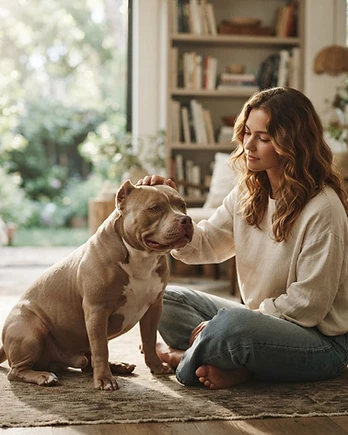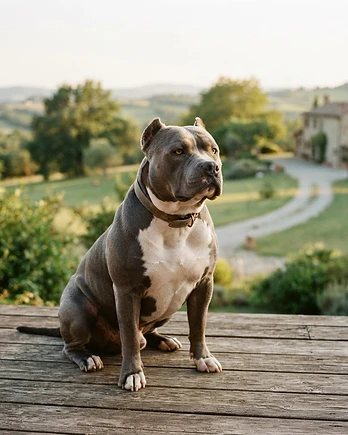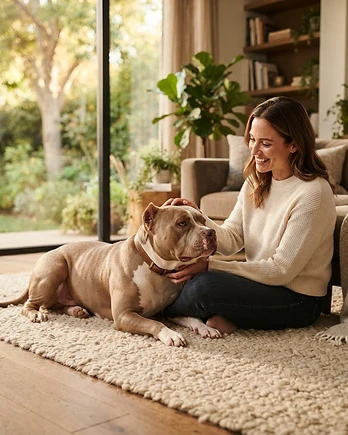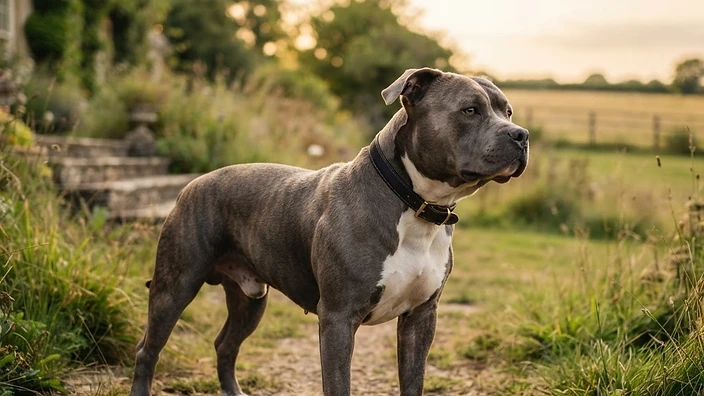
Few breeds inspire as much passion, loyalty, and — let's be honest — misunderstanding as the American Bully. Walk one through a park and you'll see it happen in real time: a stranger braces, then the dog leans in for a gentle nuzzle, and suddenly that stranger is crouched down, laughing, completely won over. That transformation — fear dissolved by warmth — is the American Bully's defining superpower.
At American Bully Haven Pups in Austin, Texas, we've dedicated our program to producing American Bullies that embody everything this breed was designed to be: structurally sound, genetically tested, emotionally balanced, and breathtakingly beautiful. We're ABKC- and UKC-registered, and we believe that understanding the breed deeply is the first step toward responsible ownership.
This guide is the most comprehensive American Bully resource we've written. Whether you're researching your first Bully, comparing size varieties, or trying to decode coat color genetics, you'll find everything here — organized clearly, explained honestly, and written from years of hands-on experience. Explore our full resource library for companion articles, and when you're ready, meet our available American Bully puppies.
Origin and History of the American Bully
The American Bully is a genuinely American creation, developed deliberately in the late 1980s and through the 1990s primarily on the East and West Coasts of the United States. Breeders sought to refine the American Pit Bull Terrier (APBT) and the American Staffordshire Terrier (AmStaff) into a companion-focused dog — retaining the muscular athleticism and loyalty of those foundation breeds while selectively breeding away from gameness and working-dog drive.
The breed's genetic foundation draws primarily from the APBT and AmStaff, with documented influence from the American Bulldog, English Bulldog, Olde English Bulldogge, and in some lines, the Staffordshire Bull Terrier. The result was a dog with a broader, more compact structure, a calmer baseline temperament, and an almost supernatural affinity for human companionship.
The American Bully Kennel Club (ABKC) was established in 2004, providing the breed with its first formal registry, written conformation standard, and show circuit. The United Kennel Club (UKC) officially recognized the American Bully as a distinct breed in 2013. These registrations formalized what breeders had known for years: the American Bully is not a Pit Bull. It is its own breed, with its own standard, its own purpose, and its own extraordinary identity.

A visual comparison of the four ABKC-recognized American Bully size varieties — Pocket, Standard, Classic, and XL — illustrating the height and body mass differences that distinguish each class under the official breed standard.
The Four ABKC Size Varieties
One of the most common questions we receive is: which size is right for me? The ABKC recognizes four official varieties, distinguished primarily by height at the withers. All four share the same breed standard for structure, temperament, and type — size is the differentiating factor.
Pocket Bully
The Pocket Bully is the smallest of the four varieties, measuring under 17 inches at the withers for males and under 16 inches for females. Don't let the name fool you — Pocket Bullies are dense, muscular dogs that typically weigh between 11 and 22 kg (approximately 25–50 lbs). They carry the same compact, powerful structure as larger varieties in a more manageable frame. Pocket Bullies have become enormously popular for apartment living and urban households.
Standard Bully
The Standard is the breed's benchmark variety. Males stand 17–20 inches at the withers, females 16–19 inches. This is the most common variety seen in ABKC conformation shows and represents the ideal balance of substance, proportion, and athleticism. Weight typically ranges from 30–40 kg (65–85 lbs) in well-conditioned adults.
Classic Bully
The Classic shares the same height parameters as the Standard but carries a lighter body frame — less overall body mass, less exaggerated muscle definition. The Classic more closely resembles the American Pit Bull Terrier foundation stock in body weight while maintaining the American Bully's characteristic head and temperament. This variety is often recommended for owners who want the breed's personality in a slightly more athletic, less extreme package.
XL Bully
The XL Bully exceeds Standard measurements: males stand over 20 inches up to 23 inches, females over 19 inches up to 22 inches. XL Bullies are the most visually imposing of the four varieties, with broad, powerful frames and substantial body mass often ranging from 45–60+ kg in males. Despite their size, well-bred XL Bullies maintain the breed's hallmark gentle temperament.
Size Variety Quick-Reference Table
| Variety | Male Height | Female Height | Relative Body Mass | |---------|------------|---------------|--------------------| | Pocket | Under 17" | Under 16" | Compact, dense | | Standard | 17–20" | 16–19" | Moderate-heavy | | Classic | 17–20" | 16–19" | Lighter/leaner | | XL | 20–23" | 19–22" | Very heavy |
American Bully Temperament
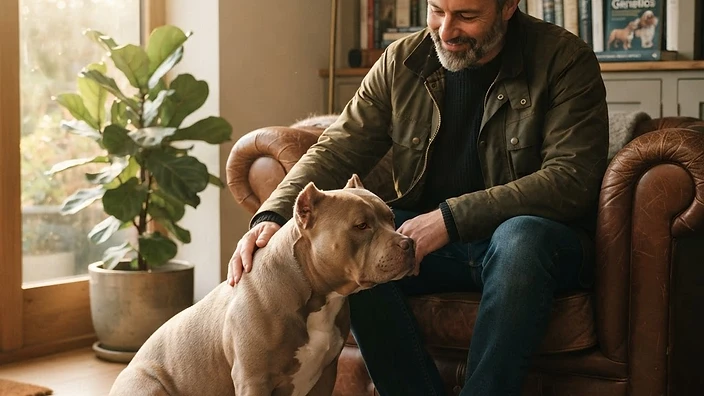
If there is one thing every experienced American Bully owner agrees on, it is this: the breed's temperament is its greatest attribute. The American Bully was purpose-bred for companionship — not protection, not hunting, not weight pulling (though some excel at that sport). This intentional breeding focus produced a dog with an unusually high tolerance for handling, a strong social drive toward humans, and a stable, confident disposition.
Key temperament traits include:
- Human-affectionate: American Bullies are intensely people-oriented. They thrive on physical contact, proximity, and interaction with their family.
- Child-tolerant: The breed is widely regarded as one of the most gentle and patient breeds with children, earning the affectionate descriptor "nanny dog" among enthusiasts.
- Confident, not aggressive: A correctly bred American Bully demonstrates stable, self-assured behavior without aggression toward people. The ABKC standard explicitly disqualifies dogs showing human-directed aggression.
- Dog-social with socialization: Dog-to-dog tolerance varies by individual and bloodline. Early socialization is essential and is discussed in depth in our Complete American Bully Care Guide.
- Eager to please: American Bullies are highly trainable, motivated by food and praise, and respond exceptionally well to positive reinforcement methods.
A critical misconception to address: the American Bully is not inherently aggressive. This misunderstanding stems from superficial visual similarity to breeds with different temperament profiles. The American Bully's breed standard and selective breeding history explicitly prioritize gentleness and human sociability. Aggression toward humans is a breed disqualification, not a characteristic.
ABKC Conformation Standard: Structure and Type
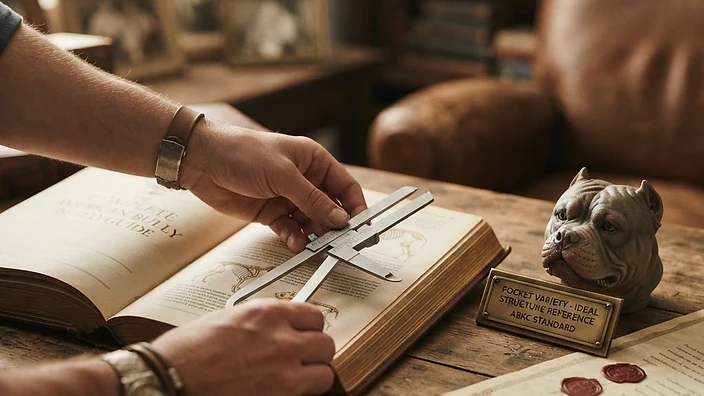
Understanding the ABKC conformation standard helps buyers identify quality breeding and distinguish a structurally sound Bully from an exaggerated or poorly bred specimen. Here are the core structural elements the standard evaluates:
Head
The American Bully's head is broad, large in proportion to the body, and features a well-defined stop. The skull is wide between the cheeks, with developed cheek muscles. The muzzle is broad, blocky, and short to medium in length. Loose, excessively wrinkled facial skin is not desired in the standard varieties.
Neck and Topline
The neck is heavy, muscular, and slightly arched — tapering cleanly from shoulders to the back of the skull. The topline should be level to slightly sloping from withers to rump, firm and strong.
Body
The chest is deep, broad, and well-sprung. The body is compact with a short to medium back. The loin is short and firm. Ribs are well sprung and close-set — contributing to the breed's characteristic barrel-chested appearance.
Limbs and Movement
Forequarters are straight and strong with well-muscled shoulders. Hindquarters are broad, well-developed, and moderately angulated. The gait should be powerful and purposeful — the dog should move with athletic efficiency, not waddle or roll.
Coat and Skin
The coat is short, close, stiff to the touch, and glossy. Any color or color pattern is permissible under the ABKC standard — with the sole exception of merle, which requires specific health-testing protocols and careful ethical management.
Coat Colors and Color Genetics
The American Bully's extraordinary coat color range is one of the breed's most celebrated features — and one of the most misunderstood from a genetics standpoint. Here's a breakdown of the major colors and the genetic loci that produce them.

A collection of American Bully puppies showcasing the breed's extraordinary coat color diversity — including blue tri, lilac tri, chocolate tri, and merle — each produced by specific genetic loci interactions including the A, B, D, and M loci.
Base Colors
- Black: Dominant eumelanin expression (K locus dominant black or BB/Bb at the B locus)
- Blue: Dilute black caused by the d allele (MLPH gene) at the D locus — dd genotype dilutes black to a blue-grey
- Chocolate/Brown: bb genotype at the B locus (TYRP1 gene) — reduces black pigment to brown
- Lilac: The "double dilute" — both dd (blue dilution) AND bb (chocolate) acting simultaneously, producing a soft silver-lilac coat. Our Atlas — Lilac Tri-Color Male and Ella — Lilac Tri Female are beautiful examples of this rare color.
Tri-Color Pattern
Tri-color (or "tri") refers to the atat genotype at the A locus — expressing tan points alongside the base coat color. Tri-color Bullies carry tan point markings on the muzzle, chest, legs, and above the eyes, overlaid on their base color. A blue tri, chocolate tri, lilac tri, or black tri each combines a base color with tan point expression. Bowie — Blue Tri Male and Diesel — Chocolate Tri Male showcase this pattern across different base colors.
Merle
Merle is produced by the PMEL17 gene (M locus) and creates a mottled, marbled coat pattern with patches of diluted and full-pigment areas. Merle is ethically complex in the Bully breed: double merle (MM genotype) carries serious health risks including blindness, deafness, and ocular microphthalmia. Responsible breeders — including our program — only produce merle through Mm × mm pairings (merle to non-merle), never merle to merle. Our Hazel — Merle Female was produced with full health-testing protocols.
Ghost Tan, Ticking, and Piebald
- Ghost tan: Very subtle tan point expression, often barely visible at birth
- Ticking: Small flecks of color on white areas — controlled by the T locus
- Piebald/parti: White spotting caused by the S locus (MITF gene) — creates large white patches
The Champagne and Fawn Family
- Fawn: Phaeomelanin (red/yellow pigment) expression with a sable or solid overlay
- Champagne: Dilute fawn (dd on a fawn base)
- Buckskin/Sable: Fawn base with black-tipped guard hairs
For deeper dives into specific color genetics, visit our complete breed guide series.
Influential Bloodlines
Understanding American Bully bloodlines helps buyers evaluate a breeder's lineage and the likely traits their puppy will inherit. These are the most historically significant and currently influential bloodlines in the breed:
Razors Edge
Developed by Dave Wilson in the Washington D.C. area during the 1980s–90s. Razors Edge dogs are credited with much of the American Bully's characteristic wide head, compact body, and exceptionally stable temperament. This bloodline is foundational to nearly every modern American Bully pedigree.
Gottiline
Developed around the dog "The Notorious Juan Gotty" by Richard Barajas. Gotty produced hundreds of offspring and contributed enormously to the breed's wide-chested, low-to-the-ground body type, particularly in the Pocket variety.
Remyline
Founded by Fabian Chichester, Remyline dogs — particularly "Dax" — influenced the XL and Standard varieties with an emphasis on extreme muscularity and large bone structure.
Kurupt Bloodline
A West Coast line known for producing dogs with refined heads and excellent temperaments — particularly influential in the development of exotic color genetics within the breed.
Mikeland, Watchdog, and Camelot
Three additional East Coast lines that contributed structural refinement, color diversity, and temperament stability across all four varieties.
For a deeper look at pedigree evaluation and what bloodlines mean for your puppy, explore our breed guide resource series.
Registration Bodies: ABKC vs. UKC
American Bully Kennel Club (ABKC)
Founded in 2004, the ABKC is the breed's primary registry and the gold standard for American Bully conformation shows. The ABKC maintains the official breed standard, certifies judges, sanctions shows, and provides pedigree registration. An ABKC registration certificate guarantees that both parents are registered and the litter is documented within the breed's official record.
United Kennel Club (UKC)
The UKC recognized the American Bully in 2013 and provides an alternative registration pathway, particularly valuable for breeders competing in UKC performance events and conformation shows. UKC registration is widely recognized and adds credibility and transparency to a breeding program.
What Registration Is NOT
Registration documents — ABKC or UKC — confirm pedigree lineage. They do not guarantee health, quality, or ethical breeding practices. A registered puppy from an irresponsible breeder is still a poorly bred puppy. Always evaluate the breeder's health testing protocols alongside their registration credentials. Learn more about our program's standards on our about our breeding program page.
American Bully vs. Related Breeds
This is one of the most searched comparisons in the bully breed world — and for good reason. Here's a clear breakdown:
| Feature | American Bully | American Pit Bull Terrier | American Staffordshire Terrier | American Bulldog | |---------|---------------|--------------------------|-------------------------------|------------------| | Primary purpose | Companion | Working/sport | Show/companion | Working/guardian | | Body type | Compact, heavily muscled | Athletic, medium | Athletic, moderate | Large, powerful | | Head type | Very broad, blocky | Moderate, wedge | Broad, medium | Large, square | | Temperament focus | Human companion | Tenacious, athletic | Stable, versatile | Protective | | ABKC registered | Yes | No | No | No | | AKC registered | No | No | Yes | No |
The single most important distinction: the American Bully is not a Pit Bull. While it shares ancestry, the American Bully has been a distinct breed with its own standard, registry, and purpose for over 30 years. Breed-specific legislation (BSL) that targets "Pit Bulls" typically does not legally apply to American Bullies, though this varies by municipality — always verify local ordinances.
For additional comparison context, our breed guide series covers related breed distinctions in more detail.
Health Considerations and Genetic Testing
Ethical American Bully breeding requires proactive health screening. The breed's structural characteristics — broad chests, shortened muzzles in some lines, heavy mass — create specific health considerations that responsible breeders must actively manage.
Core health tests for breeding stock:
- OFA hip and elbow evaluations — hip dysplasia is the most significant orthopedic concern in the breed; OFA (Orthopedic Foundation for Animals) certification is the industry standard
- OFA cardiac evaluation — performed by a board-certified cardiologist
- CAER eye examination — Canine Eye Registry Foundation certified ophthalmologist
- L-2-hydroxyglutaric aciduria (L2-HGA) genetic panel — a metabolic condition seen in some bully breed lines
- Hereditary cataract screening
- Congenital hypothyroidism with goiter (CHG) — relevant in some lines
Breed-specific health nuances: dogs with extreme brachycephalic traits (very short muzzles) may benefit from evaluation for Brachycephalic Obstructive Airway Syndrome (BOAS). Heavy XL dogs should have joint supplements and controlled exercise until skeletal maturity at approximately 18–24 months.
Learn more about health management across life stages in our Complete American Bully Care Guide.
Key Takeaways
- The American Bully was developed in the late 1980s–1990s from APBT and AmStaff foundation stock, purpose-bred for companionship
- Four ABKC-recognized size varieties exist: Pocket, Standard, Classic, and XL — differentiated by height at the withers
- Temperament is the breed's crown jewel: human-affectionate, child-tolerant, confident, and non-aggressive
- The ABKC (est. 2004) and UKC (recognized 2013) are the two primary registration bodies
- Coat colors span an extraordinary genetic range: blue, chocolate, lilac, tri-color, merle, fawn, champagne, and more — produced by interactions at the A, B, D, K, M, and S loci
- Foundational bloodlines — Razors Edge, Gottiline, Remyline — shaped the breed's structure and type
- The American Bully is a distinct breed from the American Pit Bull Terrier, with its own standard and registry
- Ethical breeding requires OFA hip/elbow/cardiac testing, genetic panels, and responsible color pairing (never merle × merle)
- Registration confirms pedigree; it does not substitute for health testing or ethical breeding practices
Frequently Asked Questions
Is the American Bully the same as a Pit Bull?
No. While the American Bully shares ancestral roots with the American Pit Bull Terrier, it is a distinct breed recognized by its own standard and registries (ABKC and UKC). The American Bully was selectively bred away from working-dog and gameness traits toward a companion-focused temperament and a more compact, heavily muscled body type. The ABKC formally established the breed's separate identity in 2004, and the UKC followed with recognition in 2013. Visually and temperamentally, the two breeds are meaningfully different.
What is the best size variety for a family with young children?
All four varieties are excellent with children when properly socialized and from well-bred stock, but the Standard and Pocket varieties are the most popular family choices. Pocket Bullies offer a manageable size without sacrificing the breed's characteristic structure and temperament. XL Bullies are loving and gentle but their sheer size warrants supervision around very young children — not because of aggression, but because an enthusiastic 60 kg dog can accidentally knock over a toddler. The Classic variety is also an excellent family dog, particularly for active households.
How much does an American Bully puppy cost?
Reputable, health-tested, ABKC/UKC-registered American Bully puppies typically range from $3,000 to $10,000+, depending on bloodline, size variety, coat color, and the breeder's health testing investment. Exotic color combinations (lilac tri, merle, champagne tri) from champion bloodlines can command $8,000–$15,000 or more. Be cautious of puppies priced under $1,500 from unregistered breeders — these almost certainly lack OFA health testing and documented pedigrees. The initial cost of a well-bred puppy is far less expensive than the lifetime veterinary costs of a poorly bred one.
What is a "tri-color" American Bully?
A tri-color (or "tri") American Bully carries the atat (tan point) genotype at the A locus, which causes tan/rust markings on the muzzle, eyebrows, chest, lower legs, and under the tail — appearing alongside the dog's base coat color. A "blue tri" has blue as the base color with tan points; a "chocolate tri" has chocolate; a "lilac tri" has lilac. The tri pattern is highly sought-after and adds visual complexity to already striking base colors. Our Diesel — Chocolate Tri Male and Bowie — Blue Tri Male are excellent examples.
How long do American Bullies live?
The American Bully's average lifespan is 10–13 years, with smaller varieties (Pocket, Classic) generally living at the higher end of that range and XL Bullies sometimes trending slightly shorter due to the metabolic demands of their larger body mass. A health-tested, well-fed, appropriately exercised American Bully from quality breeding stock has every opportunity to reach 12+ years. Our care guide series covers nutrition, exercise, and veterinary care across every life stage.
Are American Bullies easy to train?
Yes — American Bullies are among the more trainable bully breeds. They are food-motivated, eager to please, and highly attentive to their owners. Positive reinforcement methods work exceptionally well: reward-based training, marker training (clicker), and consistent routine produce rapid results. The breed benefits from early puppy socialization and basic obedience starting at 8–10 weeks. They can be stubborn if training is inconsistent or aversive, but a patient, positive trainer will find the American Bully a genuinely rewarding student. Read our complete breed guide series for training-specific guidance.
Ready to Meet Your American Bully?
The American Bully is, in our experience, one of the most rewarding breeds a person can share their life with. If this guide has sparked something in you — that recognition that this might be your breed — we'd love to be part of your journey.
Browse our available American Bully puppies — including extraordinary young dogs like Hazel — Merle Female and Atlas — Lilac Tri-Color Male. Read through our adoption guide to understand our process, health guarantees, and what to expect. Or simply contact us — we love talking about this breed and we're here to help you find the perfect match.
Every puppy we produce carries OFA-tested parents, ABKC/UKC registration, a full health protocol, and the love of a program that genuinely believes in this breed's future. We hope to welcome you into the American Bully Haven family.