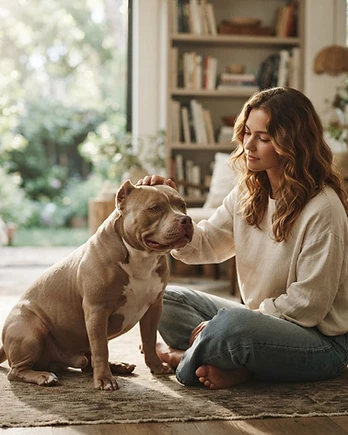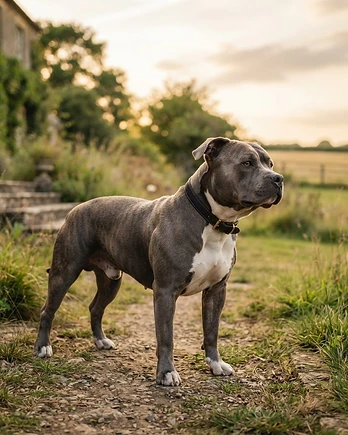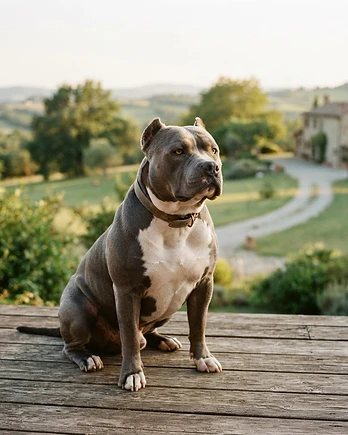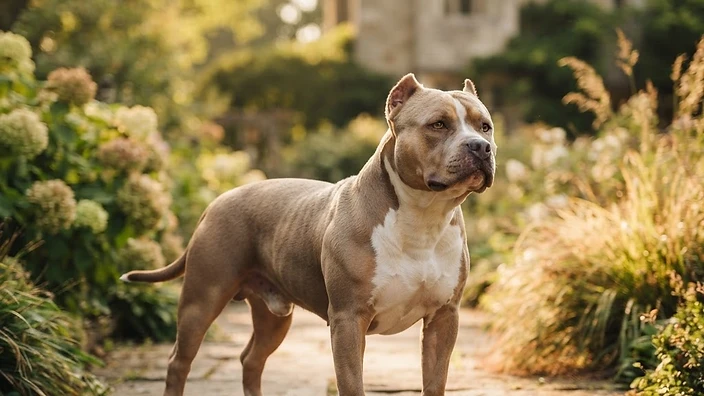
Few breeds inspire the kind of head-turning admiration—and persistent misunderstanding—that the American Bully does. With its broad chest, powerful musculature, and surprisingly gentle expression, this breed occupies a unique space in the canine world: athletically imposing yet deeply affectionate, visually dramatic yet emotionally intuitive. If you've ever watched an American Bully curl up beside a toddler or lean its enormous head into a stranger's hand, you understand immediately that appearances can be profoundly deceiving.
At American Bully Haven Pups, we've dedicated our program to breeding ABKC- and UKC-registered American Bullies in Austin, Texas, and we've answered thousands of questions from prospective owners, curious dog enthusiasts, and first-time buyers. This guide is our answer to all of them at once. Whether you're researching the breed for the first time or deepening your existing knowledge, you'll find everything here—history, conformation standards, size varieties, temperament, coat color genetics, influential bloodlines, registration bodies, and how this breed compares to its close relatives.
This is the most comprehensive American Bully breed guide we know how to write. Bookmark it, share it, and return to it as your knowledge grows. Let's start from the beginning.
Origin and History of the American Bully
The American Bully is a young breed by purebred standards, emerging in the United States during the late 1980s and reaching formal recognition in the early 2000s. Its foundation rests primarily on the American Pit Bull Terrier (APBT) and the American Staffordshire Terrier (AmStaff), with deliberate outcrossing to English Bulldogs, Olde English Bulldogges, and in some lines, American Bulldogs and Staffordshire Bull Terriers.
The goal was intentional and visionary: retain the APBT's loyalty, drive, and athletic capacity while amplifying its blocky, muscular physical structure and tempering any residual dog-directed aggression. Early pioneering breeders on the East and West Coasts—most notably in Virginia, Los Angeles, and New York—began selectively pairing dogs that exhibited heavier bone, wider chests, broader heads, and reliably human-friendly temperaments. The result was a distinctly American creation: a breed that looked like it belonged in a gladiatorial arena but acted like it belonged on a family couch.
The American Bully Kennel Club (ABKC) was founded in 2004 and provided the first formal breed standard, registry infrastructure, and conformation show system. The United Kennel Club (UKC) followed with formal recognition in 2013. These milestones legitimized the breed in the eyes of the broader dog fancy community and established a framework for ethical, consistent breeding. Today, the American Bully is one of the fastest-growing breeds in the United States, with a global footprint spanning Europe, Asia, Latin America, and beyond.
For a deep dive into how ABKC and UKC registration differ and why it matters for buyers and breeders, read our article on ABKC vs UKC Registration: What Every Bully Owner Must Know.
The Four ABKC Size Varieties
One of the most common sources of confusion about the American Bully is its size categories. The ABKC recognizes four official varieties: Pocket, Standard, Classic, and XL. These are not separate breeds—they share the same breed standard, temperament profile, and conformation requirements. Size is the primary differentiating factor, measured at the withers (top of the shoulder).
Pocket Bully
The Pocket Bully is the smallest variety. Males measure 14–17 inches at the withers; females measure 13–16 inches. Despite the name, there is nothing miniature about their build—Pocket Bullies carry the same heavy bone, broad chest, and compact musculature as larger varieties, simply compressed into a shorter frame. They typically weigh between 11 and 22 kilograms (roughly 25–50 lbs) depending on build and gender.
Pocket Bullies are extremely popular in urban and apartment settings due to their manageable size, but make no mistake—they require the same exercise, socialization, and enrichment as any other variety. Their compact frame can make them prone to certain orthopedic stresses, so OFA hip and elbow evaluations are especially important in this size class.
Standard Bully
The Standard is the foundational variety from which all others are measured. Males stand 17–20 inches; females stand 16–19 inches. This is the