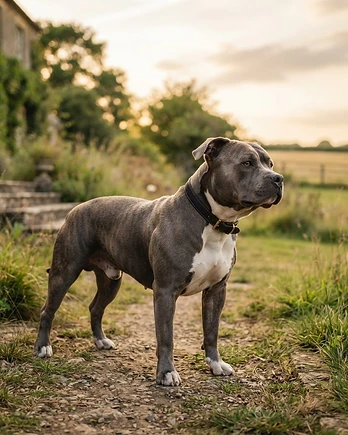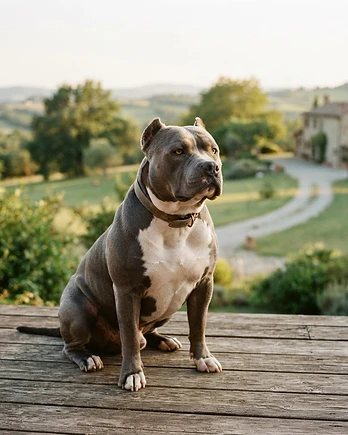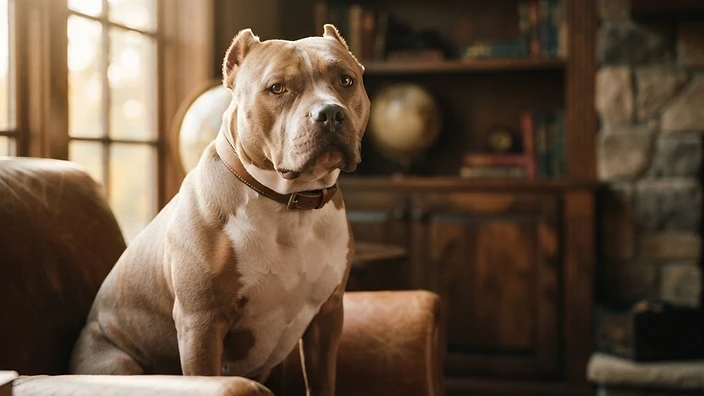
Few breeds in modern canine history have risen as rapidly — or as controversially — as the American Bully. In the span of roughly three decades, this dog evolved from a niche, underground-bred companion into one of the most recognized, celebrated, and sought-after breeds in the world. Yet despite that popularity, misconceptions persist, questions multiply, and prospective owners often struggle to find one truly authoritative resource that covers everything.
This guide is that resource. Whether you are just discovering the breed or already deep in the research phase of finding your first American Bully puppy, what follows is the most comprehensive overview of the breed available — written by people who live and breathe it every day. At American Bully Haven Pups, our ABKC- and UKC-registered program in Austin, Texas, is built on a foundation of ethical breeding, health testing, and a genuine love for this extraordinary dog.
From the breed's origins in 1980s America to the nuances of lilac tri coat genetics, from ABKC conformation standards to the difference between a Pocket Bully and an XL — every question you have is answered here. Let's begin.
Origin and History of the American Bully
The Founding Era: 1980s–1990s
The American Bully was developed primarily in the United States during the late 1980s and 1990s, with Virginia and Los Angeles serving as the two most influential geographic epicenters of early breeding activity. The breed's architects sought to create the ultimate companion dog by selectively crossing the American Pit Bull Terrier (APBT) and the American Staffordshire Terrier (AmStaff) as the primary foundation breeds. Secondary influence came from the American Bulldog, English Bulldog, and to a lesser degree, the Staffordshire Bull Terrier, all contributing the breed's hallmark blocky head, wide chest, and compact muscular body.
Crucially, the breeders who shaped the American Bully were intentionally selecting away from working-dog drive and toward a calmer, more family-oriented temperament. The result was a dog that retained the loyalty and athleticism of its APBT heritage while developing a markedly gentler, more human-focused disposition.
Kennel Club Recognition
The American Bully Kennel Club (ABKC) was founded in 2004 by Dave Wilson of Razor's Edge Kennels, providing the breed's first formal registry and conformation standard. This was a landmark moment — it legitimized the breed, standardized size categories, and gave breeders a framework for ethical competition and record-keeping.
The United Kennel Club (UKC), one of the oldest all-breed registries in the United States (founded 1898), granted the American Bully full breed recognition in July 2013, further cementing its standing in the purebred dog world. To learn more about the differences between these two registries and what they mean for your dog, read our detailed breakdown in ABKC vs UKC Registration: What Every Bully Owner Must Know.
The Four Size Varieties
One of the most unique aspects of the American Bully is its formal recognition of four distinct size varieties under a single breed standard. Each variety shares the same foundational traits — temperament, structure, and movement — but differs in height measured at the withers.

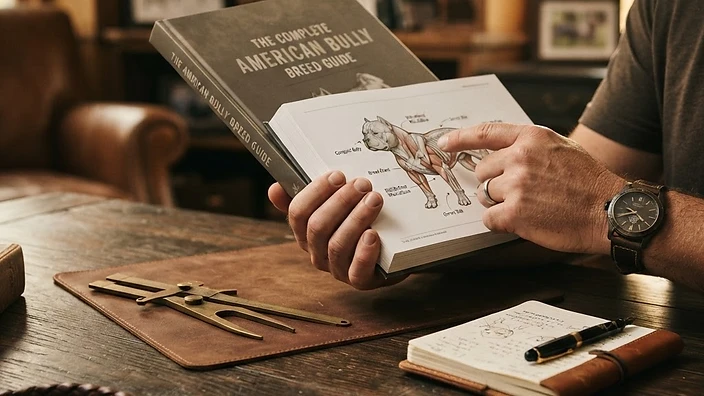
Pocket Bully
- Males: Under 17 inches at the withers (minimum ~14 inches)
- Females: Under 16 inches at the withers
- Weight range: Typically 30–50 lbs, though heavily muscled individuals may exceed this
- The Pocket is compact, dense, and often the most exaggerated in musculature relative to its size. Despite the name, these are not small dogs — they are short dogs with significant substance.
Standard Bully
- Males: 17–20 inches at the withers
- Females: 16–19 inches at the withers
- Weight range: Typically 65–85 lbs
- The Standard is the foundational variety and the benchmark against which all other sizes are measured. It represents the breed's ideal proportions most clearly.
Classic Bully
- Same height ranges as Standard
- Weight range: Typically 50–70 lbs
- The Classic is a lighter-framed dog than the Standard — less exaggerated in body mass, with a frame more reminiscent of the American Pit Bull Terrier foundation. It is judged within the Standard height ranges but carries a distinctly leaner build.
XL Bully
- Males: Over 20 inches (up to ~23 inches) at the withers
- Females: Over 19 inches (up to ~22 inches) at the withers
- Weight range: Typically 80–150 lbs
- The XL is everything the Pocket is, but larger. Massive bone, extraordinary muscle volume, and an imposing physical presence, yet the same gentle temperament defines this variety as much as the others.
For a side-by-side breakdown of the two most frequently compared varieties, see our dedicated article: Pocket vs Standard Bully: Which Size Is Right for You?
| Variety | Male Height | Female Height | Approx. Weight | |---------|-------------|---------------|----------------| | Pocket | < 17 in | < 16 in | 30–50 lbs | | Standard | 17–20 in | 16–19 in | 65–85 lbs | | Classic | 17–20 in | 16–19 in | 50–70 lbs | | XL | > 20 in | > 19 in | 80–150 lbs |
Temperament: The Breed's Greatest Asset
If there is one thing every American Bully owner agrees on, it is this: the temperament is extraordinary. The breed standard describes the American Bully as confident, stable, and people-oriented — and that description holds up in practice.
American Bullies are deeply affectionate with their families, famously gentle with children, and typically sociable with strangers when properly socialized. They possess a high pain tolerance and a patient, resilient nature that makes them excellent therapy and emotional support animals. Unlike their APBT ancestors, American Bullies tend to be lower in prey drive and working-dog intensity, making them more manageable for the average family.
Key temperament traits:
- High human affiliation: These dogs live to be near their people. Isolation or excessive kennel time is psychologically harmful to them.
- Child-friendly: Often called the