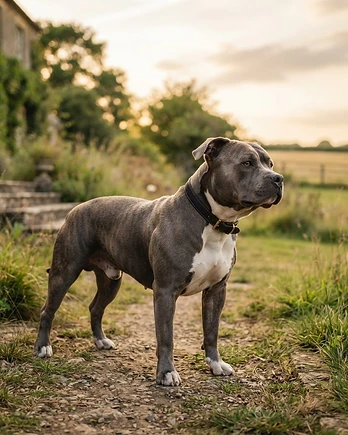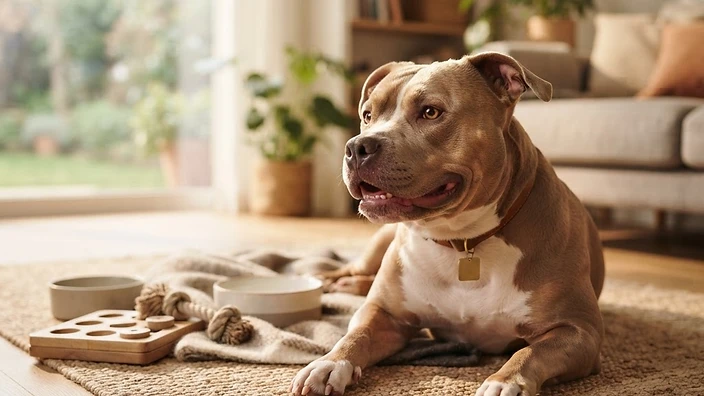
Your American Bully is not just a dog. They are a daily companion, a source of joy, and — if you're honest — a member of the family who just happens to sleep at the foot of your bed. That relationship deserves to be protected. Preventive wellness is the single most powerful investment you can make in the length and quality of your Bully's life, and it costs far less — financially and emotionally — than managing the chronic conditions that arise when it's neglected.
The American Bully is a relatively young breed, formally recognized by the American Bully Kennel Club (ABKC) and the United Kennel Club (UKC), and selectively developed from American Pit Bull Terrier and American Staffordshire Terrier foundation stock with occasional infusions from English Bulldog, French Bulldog, and Olde English Bulldogge lines. That lineage produces a dog of extraordinary musculature, loyalty, and temperament — but it also creates breed-specific health considerations that every responsible owner must understand. Joint stress from compact, heavy frames. Brachycephalic tendencies in certain pocket and micro lines. Skin sensitivities. Dental crowding. These are not reasons to fear the breed; they are reasons to be proactive.
This guide is the most comprehensive American Bully wellness resource you'll find anywhere. Whether you're preparing to welcome one of our available American Bully puppies into your home or you already have a Bully on the couch beside you, the framework here will help you build a life for your dog that is longer, healthier, and richer in every way that matters.
Understanding the American Bully Body: A Wellness Foundation
Before you can protect your Bully's health, you need to understand what you're working with. The American Bully comes in four ABKC-recognized size classes: Pocket (under 17" at the withers for males), Standard (17"–20"), Classic, and XL (over 20"). Each class carries slightly different structural stresses. XL Bullies, for example, carry significantly more body mass — often 80–150 lbs — which amplifies joint load. Pocket Bullies with compressed facial structures may have narrower nares and elongated soft palates that affect breathing and exercise tolerance.
The breed's characteristic wide chest, heavy bone density, and pronounced musculature mean that wellness is not one-size-fits-all. A good preventive program begins with understanding your individual dog's size class, lineage, and any conformation traits that require monitoring.
Joint Health and Orthopedic Wellness
Why Joint Health Is Priority One for American Bullies
The American Bully's broad, muscular build places above-average mechanical load on the hips, elbows, stifles (knees), and spine. Hip dysplasia — a malformation of the coxofemoral joint — and elbow dysplasia are the most clinically significant orthopedic concerns in the breed. OFA (Orthopedic Foundation for Animals) data consistently shows bully breeds with higher-than-average rates of hip dysplasia, which is why reputable breeders — including our program at American Bully Haven Pups — conduct OFA hip and elbow evaluations on all breeding stock before pairing.
Supplement Protocol for Joint Support
A structured joint supplement regimen should begin at around 12 months of age, when skeletal growth plates close, and continue for life. Key evidence-supported supplements include:
- Glucosamine HCl (500–1000 mg/day for a 60 lb dog): Supports cartilage matrix synthesis and synovial fluid viscosity.
- Chondroitin sulfate (400–800 mg/day): Works synergistically with glucosamine to inhibit cartilage-degrading enzymes.
- Omega-3 fatty acids — EPA and DHA (fish oil, 1000–3000 mg/day): Clinically demonstrated to reduce synovial inflammation and improve joint comfort scores in dogs.
- MSM (Methylsulfonylmethane): A bioavailable sulfur compound that supports connective tissue integrity.
- Turmeric/curcumin with black pepper (piperine): Emerging evidence supports anti-inflammatory effects; bioavailability is low without piperine.
- Green-lipped mussel (Perna canaliculus): A natural source of glycosaminoglycans and omega-3s with growing veterinary support.
Always choose supplements with NASC (National Animal Supplement Council) quality seals and discuss dosing with your veterinarian, as needs vary by body weight and activity level.
Exercise and Movement for Joint Longevity
Low-impact, consistent movement is the best joint medicine. American Bullies thrive on 45–60 minutes of structured exercise daily, split into two sessions. Ideal modalities include:
- Leash walks on varied terrain (grass, dirt paths) rather than exclusively on concrete, which accelerates joint wear.
- Swimming and hydrotherapy — exceptional for Bullies because water eliminates compressive load while maintaining muscle strength.
- Controlled fetch on soft ground — avoid repetitive high-impact jumping or sharp pivoting, particularly in dogs under 18 months whose growth plates haven't fully closed.
Avoid long-distance running on hard pavement, especially in dogs over 80 lbs or with known hip scoring of Fair or lower on OFA assessments.

An American Bully enjoying a swim, demonstrating the low-impact hydrotherapy approach recommended for maintaining joint health and musculoskeletal wellness in the heavy-boned breed.
Dental Care: The Overlooked Wellness Pillar
Periodontal disease affects an estimated 80% of dogs over age three — and American Bullies, with their sometimes-compressed jaw structures, can be particularly susceptible to dental crowding, tartar accumulation, and gingivitis. Untreated periodontal disease isn't just a dental problem; oral bacteria have a demonstrated pathway to the heart valves, kidneys, and liver, making dental hygiene a systemic health issue.
Daily and Weekly Dental Protocol
- Daily brushing with a veterinary enzymatic toothpaste (never human toothpaste — xylitol is toxic to dogs). Use a finger brush or angled dog toothbrush.
- Dental chews rated by the Veterinary Oral Health Council (VOHC) — look for the VOHC seal on products like Greenies, Oravet, or Virbac C.E.T. chews.
- Raw meaty bones (recreational, supervised) — raw beef femur or bully sticks provide mechanical plaque removal. Never cooked bones, which splinter.
- Water additives with chlorhexidine or zinc gluconate provide between-brush antibacterial support.
Professional Dental Cleanings
Most Bullies benefit from a professional dental cleaning under anesthesia every 1–2 years, beginning at age 2–3. Pre-anesthetic bloodwork is standard of care. During cleaning, your veterinarian will probe each tooth for pocket depth, perform full-mouth dental radiographs, and extract any teeth with bone loss greater than 50%. The cost typically ranges from $300–$800 depending on your region and the complexity of the procedure.
Weight Management and Body Condition Scoring
The Body Condition Score (BCS) System
The gold standard for weight assessment in dogs is the 9-point Body Condition Score (BCS) developed by Purina and validated by veterinary nutritionists. An ideal BCS for an American Bully is 4–5 out of 9:
| BCS | Description | Action | |-----|-------------|--------| | 1–3 | Underweight — ribs, spine, and pelvic bones prominent | Increase caloric intake, vet evaluation | | 4–5 | Ideal — ribs palpable with slight fat cover, waist visible from above | Maintain current program | | 6–7 | Overweight — ribs difficult to feel, no waist definition | Reduce calories 15–20%, increase exercise | | 8–9 | Obese — heavy fat deposits, distended abdomen | Veterinary weight loss program required |
American Bullies are muscle-forward dogs — do not confuse muscular density with overweight. A working or sport-conditioned Bully at 100 lbs with a BCS of 5 is not overweight; a sedentary Bully at 80 lbs with a BCS of 7 is. Learn to use your hands, not just a scale.
Caloric Needs by Life Stage
- Puppies (8–16 weeks): Approximately 55 kcal/lb of body weight/day, fed 3–4 times daily.
- Growing adolescents (4–12 months): 40–50 kcal/lb/day, fed 2–3 times daily.
- Adult maintenance (1–7 years): 25–35 kcal/lb/day depending on activity level.
- Senior dogs (7+ years): 20–28 kcal/lb/day; metabolism slows, joint-supportive nutrition becomes more critical.
High-quality kibble with a minimum 28–30% crude protein, 15–18% fat, and AAFCO nutritional adequacy statement for the appropriate life stage is the baseline. Many Bully owners supplement with fresh whole foods — lean meats, eggs, sardines, blueberries — for added micronutrient density.
Mental Enrichment and Cognitive Wellness
Physical health without mental stimulation produces an anxious, destructive, or depressed dog. The American Bully is an intelligent, people-oriented breed that was developed for companionship — a role that demands cognitive engagement, not just caloric management.
Puzzle Work and Nose Work
Mental enrichment directly reduces cortisol levels and improves behavioral stability. Research from Bristol Veterinary School found that dogs given enrichment activities showed measurably lower stress indicators within two weeks. Practical enrichment for Bullies includes:
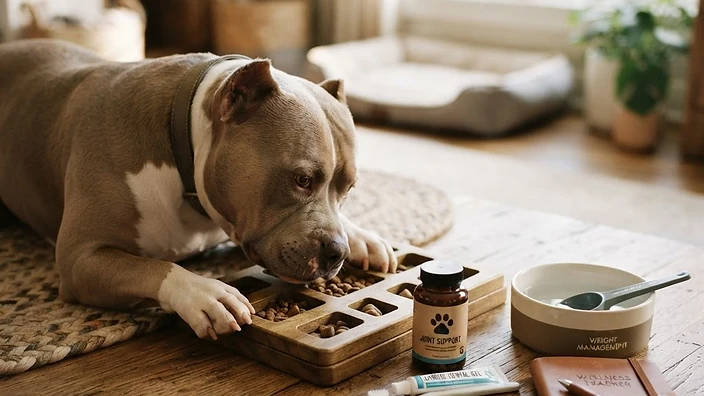
- Level 1–3 puzzle feeders (Nina Ottosson, Kong, Outward Hound): Begin with simple slide puzzles and progress as your dog's problem-solving skills improve.
- Snuffle mats and lick mats: Engage olfactory processing, which is metabolically demanding and deeply satisfying for dogs.
- Hide-and-seek with kibble or treats: Scatter feeding in grass engages natural foraging instincts.
- Nose work classes: Formalized scent detection training is one of the highest-enrichment activities available to any breed and is ideal for the Bully's powerful olfactory system.
Behavioral Stability and Social Enrichment
Well-socialized American Bullies are renowned for their emotional intelligence and affection toward family. To maintain that temperament, ongoing socialization exposure throughout adulthood — new environments, people, controlled dog-to-dog interactions — prevents the anxiety and reactivity that can develop in under-stimulated dogs. Our guide on Understanding American Bully Behavior covers temperament and socialization in depth, and our training guide walks you through building obedience foundations that support a confident, stable dog.

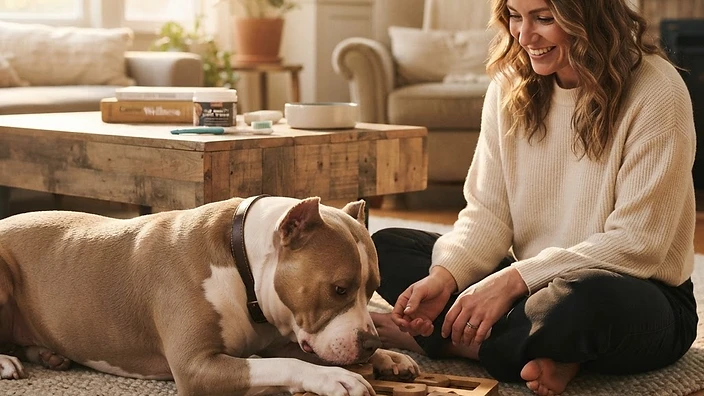
A young American Bully puppy focused intently on a puzzle feeder toy, illustrating the importance of daily mental enrichment activities for cognitive health, behavioral stability, and overall wellness.
Preventive Screenings and Veterinary Protocols
Core Vaccination Schedule
The American Animal Hospital Association (AAHA) vaccination guidelines define core vaccines for all dogs regardless of lifestyle:
- DA2PP (Distemper, Adenovirus, Parvovirus, Parainfluenza): Puppy series at 8, 12, and 16 weeks; booster at 1 year; then every 3 years.
- Rabies: At 12–16 weeks; booster at 1 year; then annually or triennially per state law (Texas requires rabies vaccination).
Non-core vaccines to discuss with your vet based on lifestyle: Bordetella (kennel cough), Leptospirosis, Lyme disease (if in tick-endemic areas), and Canine Influenza.
Parasite Prevention
Texas's warm, humid climate makes year-round parasite prevention non-negotiable:
- Heartworm prevention: Monthly oral or topical preventives (ivermectin-based products like Heartgard, or isoxazoline combinations). Annual heartworm antigen testing is standard.
- Flea and tick prevention: Year-round isoxazoline-class products (Bravecto, NexGard, Simparica) are highly effective and safe in healthy adults.
- Intestinal parasites: Fecal PCR panels twice yearly; deworm appropriately based on results.
OFA and Genetic Health Testing
OFA (Orthopedic Foundation for Animals) testing is the gold standard for orthopedic and cardiac health documentation in the breed. Responsible programs conduct:
- OFA Hip Evaluation (Excellent/Good/Fair grading via PennHIP or OFA radiographs)
- OFA Elbow Evaluation
- OFA Cardiac Evaluation (auscultation or echocardiogram by a board-certified cardiologist)
- OFA Eye Examination (CAER exam by a board-certified veterinary ophthalmologist)
- DNA panel testing for breed-relevant mutations including Hyperuricosuria (HUU), Degenerative Myelopathy (DM), and Exercise-Induced Collapse (EIC)
When you adopt from a program like ours, you receive documented health testing results. Understanding what those results mean — and what to ask for — is covered in our guide on how to find an ethical American Bully breeder.
Annual Wellness Bloodwork
Beginning at age 3–4, annual wellness panels — Complete Blood Count (CBC), Comprehensive Metabolic Panel (CMP), urinalysis, and thyroid panel (T4) — establish baseline values and detect subclinical disease before it becomes clinical. Hypothyroidism, in particular, is a documented concern in the breed and can masquerade as weight gain, lethargy, or coat changes.
Skin, Coat, and Allergy Management
American Bullies carry a genetic predisposition toward environmental and food-related allergies, driven in part by their mastiff and Bulldog heritage. Atopic dermatitis — chronic skin inflammation triggered by environmental allergens like pollen, dust mites, and mold — is one of the most common reasons Bullies visit the vet.
Skin Wellness Protocol
- Bathing frequency: Every 3–4 weeks with a hypoallergenic, soap-free shampoo (chlorhexidine + ketoconazole shampoos for dogs with yeast tendencies; oatmeal + aloe for dry/sensitive skin).
- Wrinkle and skin fold care: Bullies with prominent facial folds, rope wrinkles, or tail pockets require daily cleaning with a soft cloth or unscented pet wipe to prevent moisture accumulation, yeast overgrowth (Malassezia), and bacterial intertrigo.
- Omega-3 supplementation: As noted in the joint section, EPA/DHA from fish oil is directly anti-inflammatory in skin tissue and improves coat luster and barrier function.
- Food elimination trials: If chronic ear infections, paw licking, or recurrent hot spots persist, a 12-week hydrolyzed protein or novel protein elimination diet (no treats, no flavored medications) is the diagnostic gold standard — not allergy blood tests, which have poor specificity in dogs.
Seasonal Wellness: Year-Round Considerations in Texas
Austin's climate creates specific seasonal wellness demands:
Summer Heat Management
Texas summers are genuinely dangerous for American Bullies, particularly Pocket lines with brachycephalic anatomy. Brachycephalic Obstructive Airway Syndrome (BOAS) significantly impairs a dog's ability to thermoregulate through panting.
- Exercise only before 8 AM or after 8 PM during June–September.
- Provide constant access to fresh water and shaded rest areas.
- Know the signs of heat stroke: rectal temperature above 104°F, excessive panting, brick-red gums, stumbling. This is a veterinary emergency.
- Consider a cooling mat, paddling pool, or cooling vest for outdoor sessions.
Winter and Seasonal Allergy Considerations
Central Texas experiences significant cedar (Ashe juniper) pollen events from December through February — "cedar fever" affects both humans and dogs. Monitor for increased scratching, eye discharge, or ear inflammation during this window and adjust environmental management (HEPA filters, foot wipes after outdoor exposure) accordingly.
Spay/Neuter Timing: What the Research Says
The pediatric spay/neuter model (before 6 months) that dominated veterinary practice for decades is now under significant scientific review. A landmark UC Davis study found that early gonadectomy in large and muscular breeds is associated with higher rates of hip dysplasia, cranial cruciate ligament rupture, and certain cancers. Current evidence-based recommendations for American Bullies suggest:
- Males: Neuter between 18–24 months to allow full closure of growth plates and hormonal support for musculoskeletal development.
- Females: Spay after the first or second heat cycle (12–18 months) unless behavioral or medical factors necessitate earlier intervention.
Discuss this with your veterinarian using the current literature, not outdated population-control protocols designed for shelter medicine.
Building Daily Lifestyle Habits That Compound Over Time
Prevention is not a single appointment — it is a daily practice. The habits that add years to your Bully's life are not dramatic; they are consistent:
- Structured mealtimes (twice daily, not free-fed) to support weight management and digestive rhythm.
- Post-meal rest periods of 30–60 minutes to reduce bloat risk, particularly in deep-chested XL males.
- Weekly at-home physical assessment: Run your hands along the spine, ribs, and limbs. Check ear canals for odor or discharge. Inspect paw pads for cracking or foreign objects. Look at the eyes for cloudiness or discharge. Early detection begins with observation.
- Nail trimming every 3–4 weeks — overgrown nails alter gait mechanics and increase joint stress.
- Dental brushing as a daily ritual — make it part of the bedtime routine from puppyhood.
If you're just getting started, our first-week checklist for new Bully owners gives you a day-by-day framework for establishing these habits from day one.
Key Takeaways
- American Bully wellness requires a breed-specific, proactive approach — not generic dog care advice.
- Joint health is the highest-priority physical concern; begin supplements at skeletal maturity (~12 months) and prioritize low-impact exercise.
- Dental disease affects systemic health — daily brushing and biannual professional cleanings are not optional.
- Body Condition Score (4–5/9) is the correct weight target; muscle mass complicates scale-only assessment.
- Mental enrichment is as critical as physical exercise for temperament stability and long-term cognitive health.
- OFA testing, annual bloodwork, and year-round parasite prevention are the non-negotiable pillars of preventive veterinary care.
- Spay/neuter timing matters — current evidence supports waiting until 18–24 months in this breed.
- Seasonal management in Austin requires specific heat and allergen protocols.
- Consistent daily habits — not heroic interventions — are what produce a long, vibrant life.
Frequently Asked Questions
What is the average lifespan of an American Bully, and how can I maximize it?
Well-bred American Bullies typically live 10–13 years. Standard and Classic size classes generally outlive XL lines due to lower skeletal stress and reduced cardiovascular load. The most evidence-supported longevity strategies are maintaining a lean body condition (BCS 4–5/9), providing daily structured exercise, feeding a high-quality diet with appropriate supplementation, and maintaining a proactive preventive veterinary schedule beginning with your first wellness visit at 8 weeks. Genetic foundation matters enormously — dogs from health-tested parents have measurably better orthopedic and cardiac outcomes.
Do American Bullies need supplements, or is a good diet enough?
A complete and balanced diet meeting AAFCO nutritional profiles is the foundation, but it rarely provides therapeutic levels of joint-supportive nutrients for a heavy-muscled breed. Glucosamine and chondroitin, omega-3 fatty acids (EPA/DHA), and Vitamin E are frequently supplemented at levels above what commercial kibble provides — and veterinary literature supports the clinical benefit of doing so, particularly after age 2–3. Think of supplements as precision additions to an already solid dietary foundation, not replacements for food quality.
How often should my American Bully see a veterinarian?
Puppies need visits at 8, 12, and 16 weeks for the initial vaccine series, deworming, and developmental assessment. After that, annual wellness exams are the minimum standard through age 7, at which point twice-yearly senior wellness exams are recommended. Annual heartworm testing, fecal PCR panels, and — after age 3–4 — comprehensive bloodwork should accompany each visit. If you notice changes in weight, gait, appetite, coat quality, or behavior between scheduled visits, don't wait — early intervention consistently produces better outcomes and lower costs.
Are American Bullies prone to allergies, and what does that look like?
Yes — environmental atopy and food sensitivities are among the most commonly reported health issues in the breed. Classic presentations include chronic ear infections (often yeast-driven), inter-digital cysts or paw licking, recurrent hot spots, facial fold inflammation, and generalized scratching that worsens seasonally. In Austin, cedar pollen, grass pollen, and dust mites are the most common environmental triggers. If you suspect food allergy, work with your veterinarian on a structured 12-week elimination diet — this is the only diagnostically valid approach, as commercial allergy blood tests have poor specificity in dogs.
What mental enrichment activities are best for American Bullies?
American Bullies are highly food-motivated and people-oriented, making puzzle feeders, snuffle mats, lick mats, and scent work exceptionally well-suited to the breed. Nose work — formalized scent detection training — is one of the richest enrichment modalities available and can be done indoors or outdoors, making it ideal for hot Texas summers. Interactive training sessions of 10–15 minutes, two to three times daily, provide cognitive stimulation and reinforce the human-dog bond simultaneously. Rotate enrichment tools regularly to maintain novelty and challenge. Our complete training guide covers the training foundations that make enrichment even more effective.
How do I know if my American Bully is at a healthy weight?
Use the Body Condition Score system rather than relying solely on a scale. At an ideal BCS of 4–5/9, you should be able to feel your Bully's ribs with light pressure (like feeling the back of your hand) but not see them prominently. Viewed from above, there should be a visible waist narrowing behind the ribcage. Viewed from the side, a slight abdominal tuck should be present. Because American Bullies carry exceptional muscle mass, many healthy dogs look "big" — the key is palpation and topline assessment, not visual bulk alone.
Your Bully Deserves the Best — Start Here
Wellness is not a destination; it is a daily practice of attention, love, and informed care. The framework in this guide — from joint supplements to dental protocols, from enrichment puzzles to OFA screenings — represents the cumulative wisdom of experienced breeders, veterinary researchers, and the families who have loved American Bullies for years.
If you're considering adding a Bully to your family, explore our full resource library and review our adoption guide to understand how we prepare our puppies for a lifetime of health. Our currently available puppies — including Atlas, Bowie, Diesel, Ella, and Hazel — come from health-tested parents, are raised with early neurological stimulation, and leave for their forever homes with a wellness foundation already in place.
Have questions about a specific health topic or want to learn more about our breeding program? Contact us — we are always here to help you give your Bully the long, vibrant life they deserve.