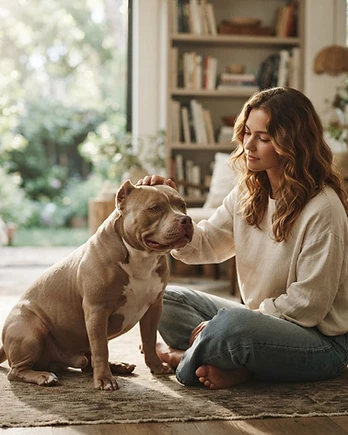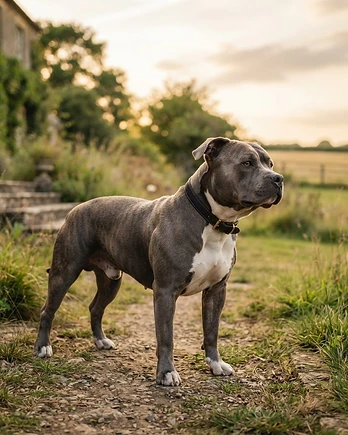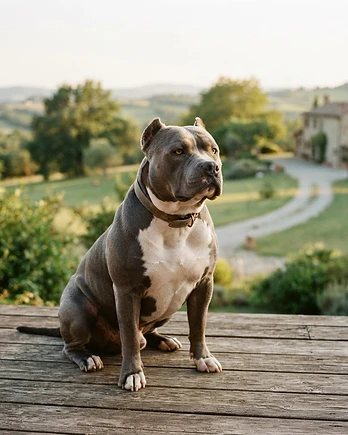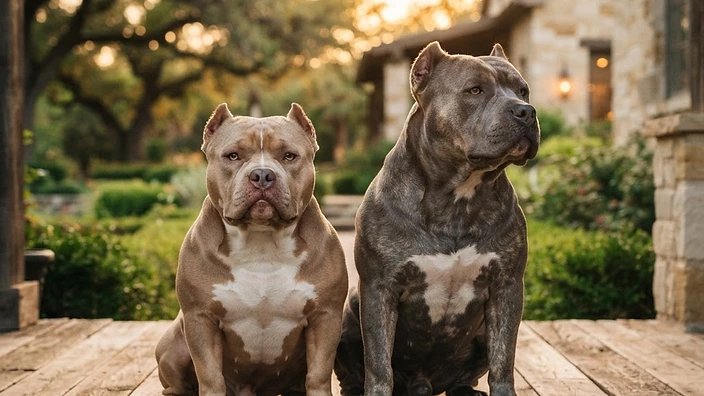
Few breeds in modern canine history have captured hearts — and generated as much misunderstanding — as the American Bully. Born from a deliberate vision of the ideal family companion, this breed combines the muscular athleticism of its working-dog ancestors with a temperament so gentle and people-oriented that experienced owners often describe it as "nanny dog" loyalty wrapped in a powerhouse frame. Whether you're a first-time prospective owner doing your homework or a seasoned enthusiast deepening your knowledge, this guide is the most comprehensive resource you'll find on everything American Bully.
At American Bully Haven Pups, an ABKC- and UKC-registered breeding program in Austin, Texas, we've spent years studying pedigrees, health protocols, conformation standards, and the living personalities of this breed. What we've learned is that the American Bully rewards informed ownership more than almost any other breed. Understanding where this dog came from, what it was bred to be, and how its genetics shape everything from coat color to structure gives you a profound advantage as an owner, advocate, or breeder.
This pillar article is your starting point. It connects to every major topic in our full resource library — from health and nutrition to training — and serves as the authoritative foundation for understanding the breed in full. Let's begin at the beginning.
Origin and History of the American Bully
The American Bully emerged as a distinct breed in the United States during the late 1980s and early 1990s, primarily on the East and West Coasts. The breed was intentionally developed by breeders who admired the American Pit Bull Terrier's loyalty, athleticism, and drive, but wanted to shift the temperament profile further toward family companion — reducing prey drive and dog aggression while amplifying human affinity, stability, and trainability.
The foundational cross was the American Pit Bull Terrier (APBT) and the American Staffordshire Terrier (AmStaff), both of which share common ancestry in the 19th-century British bull-and-terrier dogs. To achieve the breed's characteristic heavy bone, wide chest, and blocky head, breeders selectively introduced genetics from American Bulldogs, English Bulldogs, and in some lines, the Olde English Bulldogge. The result was a dog that looked dramatically different from the APBT — more compact, more muscular, with a broader skull and shorter muzzle — while retaining the pit bull's legendary people-love and resilience.
In 2004, the American Bully Kennel Club (ABKC) was founded specifically to provide a registry, breed standard, and conformation show system for the American Bully. This was a pivotal moment — it gave the breed formal recognition and a framework for ethical development. In 2013, the United Kennel Club (UKC) granted the American Bully official breed recognition, further legitimizing its distinct identity separate from the APBT.
Key Milestones
- Late 1980s–1990s: Breed development begins on East and West Coasts
- Early 2000s: Breed gains national visibility through influential kennels
- 2004: ABKC founded; formal breed standard established
- 2013: UKC officially recognizes the American Bully as a distinct breed
- Present: American Bully is one of the fastest-growing breeds globally
The Four Official Size Varieties
One of the most misunderstood aspects of the American Bully is its size classification system. The ABKC recognizes four official varieties: Pocket, Standard, Classic, and XL. These are not separate breeds — they share the same conformation standard and temperament requirements. Size variety is determined by height at the withers (the highest point of the shoulder blades), not weight.

A visual comparison of the four American Bully size classes — Pocket, Standard, Classic, and XL — highlighting differences in height and frame while demonstrating the consistent blocky head type, wide chest, and muscular build shared across all varieties.
Pocket Bully
The Pocket Bully is the smallest variety and one of the most popular. Despite the name, there's nothing small about the impression this dog makes.
- Males: Under 17 inches at the withers (typically 13–17 inches)
- Females: Under 14 inches at the withers (typically 10–14 inches)
- Weight: Typically 11–22 kg (25–50 lbs), though no weight disqualification exists
- Character: Maximum muscle and mass in a compact frame; often described as a "bulldog on steroids"
Pocket Bullies are ideal for owners in apartments or smaller homes who want the full American Bully experience in a more manageable size. Their popularity has driven significant demand, and well-bred Pocket Bullies from health-tested parents typically range from $3,000 to $8,000+ depending on bloodline and color.
Standard Bully
The Standard is the foundation variety — the "template" from which all other sizes are derived.
- Males: 17–20 inches at the withers
- Females: 16–19 inches at the withers
- Weight: Typically 30–40 kg (65–90 lbs)
- Character: Balanced power and agility; the quintessential American Bully silhouette
The Standard Bully is what most people picture when they hear "American Bully" — a heavily muscled, medium-sized dog with a wide chest, blocky head, and confident, rolling gait. Standard males and females make exceptional family dogs and perform well in ABKC conformation events.
Classic Bully
The Classic Bully shares the Standard's height parameters but has a lighter body frame — less exaggerated muscle mass and a build that more closely resembles the American Pit Bull Terrier or American Staffordshire Terrier.
- Height: Same as Standard (males 17–20", females 16–19")
- Weight: Typically 23–36 kg (50–80 lbs)
- Character: Athletic, leaner build; more agile; ideal for active families
Classic Bullies are sometimes overlooked in favor of more extreme builds, but they represent the breed's athletic heritage beautifully. They tend to be energetic and excel in canine sports alongside conformation.
XL Bully
The XL is the largest variety and commands immediate attention.
- Males: Over 20 inches at the withers (typically 20–23 inches)
- Females: Over 19 inches at the withers (typically 19–22 inches)
- Weight: Typically 45–60 kg (100–130 lbs), with some individuals heavier
- Character: Gentle giants; XL Bullies are famous for their calm, laid-back temperament
Despite their imposing size, well-bred XL Bullies are among the most docile, patient dogs in any family setting. Their size demands responsible ownership — proper training, socialization, and physical conditioning are essential. XL Bullies from elite bloodlines can command prices of $5,000 to $15,000+.
Quick Size Comparison
| Variety | Male Height | Female Height | Approx. Weight | |---------|------------|---------------|----------------| | Pocket | < 17" | < 14" | 25–50 lbs | | Standard | 17–20" | 16–19" | 65–90 lbs | | Classic | 17–20" | 16–19" | 50–80 lbs | | XL | > 20" | > 19" | 100–130+ lbs |
Temperament: The Breed's True Superpower
If structure is the American Bully's visual signature, temperament is its soul. The breed standard explicitly prioritizes a stable, outgoing, and confident temperament. An American Bully should be eager to please, highly social with humans (including strangers when properly introduced), and tolerant with children. Aggression toward humans is considered a serious fault under both ABKC and UKC standards and is grounds for disqualification in the show ring.
Key temperament traits include:
- Human affinity: American Bullies are intensely bonded to their families. They thrive on human contact and do not do well in isolation.
- Gentleness with children: Their patient, tolerant nature makes them exceptional family dogs. Interactions with young children should always be supervised, as with any breed.
- Sociability: Well-socialized American Bullies are typically friendly with strangers and other animals. Early socialization between 3 and 16 weeks of age is critical.
- Trainability: High intelligence and a strong desire to please make American Bullies highly trainable. They respond best to positive reinforcement methods.
- Courage and confidence: The breed is neither shy nor aggressive — it carries itself with quiet self-assurance.
At American Bully Haven Pups, every puppy in our program is socialized from day one using structured neurological stimulation (ENS/BioSensor protocols) and exposed to a wide variety of people, sounds, and environments before going to their forever homes.
For a complete guide to raising a well-adjusted American Bully from puppyhood through senior years, see The Complete American Bully Care Guide: Puppyhood to Senior Years.
ABKC Conformation Standard: What Judges Look For
The American Bully Kennel Club conformation standard is the definitive blueprint for the breed. Understanding it helps owners appreciate why certain physical traits are prized — and why extreme exaggeration can be problematic.
Head and Skull
The head is a hallmark of the breed: large, broad, blocky skull with a pronounced stop (the angle between forehead and muzzle). The cheek muscles (masseter muscles) should be clearly defined. The muzzle is medium length, broad, and deep — never too short (which impairs breathing) or too long (which detracts from type). Loose, pendulous lips are acceptable; excessive flews are a fault.
Eyes should be oval to round, set low and wide, in any color except albinism. Ears may be natural or cropped (where legally permitted); natural ears are rose or semi-prick.
Neck, Body, and Topline
The neck is heavy, slightly arched, and muscular, tapering from shoulder to head without throatiness. The body is compact to medium length, with a deep, wide chest and well-sprung ribs. The topline (back) should be level or slightly sloping from withers to croup — not roached (arched) or swayed.
Forequarters and Hindquarters
Shoulder blades are wide, muscular, and well laid-back. Forelegs are straight, strong, and wide set. The hindquarters are broad, muscular, and well angulated — the American Bully's powerful rear drive contributes to its characteristic rolling gait. Feet are round, compact, and well-arched.
Coat and Skin
The coat is short, close, stiff to the touch, and glossy. All colors and patterns are accepted by the ABKC except merle (a topic we address in the coat color section below). Skin may be loose but not excessive.
Disqualifying Faults
- Albinism (pink eyes)
- Merle coat pattern (ABKC standard only — UKC permits merle)
- Unilateral or bilateral cryptorchidism in males
- Viciousness or extreme shyness
- Severely undershot or overshot bite


A group of American Bully puppies displaying a range of coat color expressions including lilac tri, blue tri, and chocolate tri — illustrating the complex interplay of eumelanin, phaeomelanin, dilution genes, and tan point genetics that make the breed's color palette so remarkable.
Coat Colors and Genetics
The American Bully is one of the most color-diverse breeds in existence. Understanding the genetics behind coat color helps owners appreciate what they're seeing — and make informed decisions when evaluating puppies.
Base Colors and Dilutes
- Black: Dominant eumelanin expression; solid black or with tan points
- Blue: Dilute black, caused by the dd genotype at the dilution (MLPH) locus; produces a steel-gray to slate-blue coat
- Chocolate (Brown): Recessive bb genotype at the B locus; produces warm brown pigmentation
- Lilac: Double dilute — both blue dilution (dd) AND chocolate (bb) combined; produces a striking pale grayish-purple coat
- Champagne: Dilute red/fawn (ee at E locus + dd at D locus)
- Fawn and Red: Phaeomelanin-dominant expression in various intensities
- Brindle: Tiger-stripe pattern produced by the K locus (kbr allele)
Pattern Modifiers
- Tri-color: Addition of tan points (Atat genotype at the A locus) to any base color — producing striking combinations like blue tri, chocolate tri, and the highly sought lilac tri
- Piebald (Pied): White spotting caused by the sp allele at the S locus
- Tuxedo: A specific expression of piebald with white on the chest, feet, and face
- Merle: A pattern modifier caused by the M locus (Mm or MM genotype) that creates mottled patches of diluted pigment. Double merle (MM) carries serious health risks including blindness and deafness and should never be intentionally bred.
Our current litter includes some of the breed's most stunning color expressions — including Atlas — Lilac Tri-Color Male American Bully puppy, Bowie — Blue Tri Male American Bully puppy, Diesel — Chocolate Tri Male American Bully puppy, Ella — Lilac Tri Female American Bully puppy, and Hazel — Merle Female American Bully puppy — each a testament to responsible color breeding with health at the forefront.
Influential Bloodlines
Bloodlines are the living history of the American Bully. Understanding key sires and kennels helps buyers evaluate pedigrees and understand the traits a puppy is likely to inherit.
Razor's Edge
Founded by Dave Wilson in the Washington D.C. area, Razor's Edge is arguably the most influential bloodline in American Bully history. Known for heavy bone, blocky heads, and exceptionally gentle temperaments, Razor's Edge dogs formed the backbone of many early breed programs. Their influence is present in virtually every major bloodline today.
Gottiline
The Gottiline traces to Juan Gotty (registered name: The Notorious Juan Gotty), a Standard Bully born in 1997 and owned by Richard Barajas of West Side Kennels. Juan Gotty produced an estimated 900+ registered offspring and had an enormous influence on the breed's characteristic wide chest, heavy muscle, and compact build.
Kurupt Bloodline
Primarily influential in the development of the Pocket Bully, the Kurupt bloodline is known for extreme muscle density, short stature, and heavy bone. Dogs carrying Kurupt genetics tend to be compact with very wide fronts.
Mikeland
Mikeland Kennels contributed significantly to the XL variety, producing large-framed dogs with excellent temperament and bone density.
Other Notable Bloodlines
- Remyline (founded by Fabian Woods)
- Monster G genetics
- Iron Cross Bullies
- Daxline and Kingpin lines for Pocket development
When evaluating a puppy's pedigree, look for multi-generational health testing, conformation titling, and temperament documentation alongside recognizable bloodline names.
Registration Bodies: ABKC vs. UKC
Two primary registries govern the American Bully breed in the United States.
American Bully Kennel Club (ABKC)
Founded in 2004, the ABKC is the breed's founding registry and the gold standard for American Bully conformation. The ABKC maintains the official breed standard, hosts sanctioned shows, and registers dogs in all four size varieties. ABKC papers are the most universally respected in the American Bully community. Registration requires physical inspection or review of photos confirming the dog meets breed type.
United Kennel Club (UKC)
The UKC recognized the American Bully in 2013, offering an additional layer of legitimacy and access to a broader network of performance and conformation events. UKC registration is particularly valuable for owners interested in Rally Obedience, Weight Pull, and other performance sports. Notably, the UKC standard permits merle coloring, which the ABKC currently disqualifies.
OFA Health Testing
The Orthopedic Foundation for Animals (OFA) provides health testing and certification for genetic conditions common in the breed. Responsible breeders should test breeding stock for:
- Hip dysplasia (OFA Hip Evaluation)
- Elbow dysplasia (OFA Elbow Evaluation)
- Cardiac disease (OFA Cardiac Exam by board-certified cardiologist)
- Hereditary cataracts (CAER eye exam)
- Exercise-induced collapse (EIC) genetic test
All breeding dogs at American Bully Haven Pups are health tested per OFA protocols. Learn more about our breeding program.
American Bully vs. Related Breeds
One of the most common sources of confusion — and unfortunately, breed discrimination — is the conflation of the American Bully with other bully breeds. Here's a clear comparison:
| Feature | American Bully | American Pit Bull Terrier | American Staffordshire Terrier | American Bulldog | |---|---|---|---|---| | Registry | ABKC, UKC | UKC, ADBA | AKC, UKC | AKC, NKC | | Height (male) | 13–23" | 17–21" | 17–19" | 22–25" | | Weight (male) | 25–130 lbs | 35–65 lbs | 55–70 lbs | 75–125 lbs | | Build | Heavy, wide, blocky | Athletic, lean | Medium-heavy | Large, athletic | | Primary purpose | Family companion | Versatile working/companion | Companion/show | Working/guardian | | Energy level | Moderate | High | High | High | | Prey drive | Low–moderate | Moderate–high | Moderate | Moderate |
The American Bully is not the same breed as the American Pit Bull Terrier, despite sharing ancestry. The ABKC and UKC both classify them as distinct breeds. Understanding this distinction matters enormously for breed advocacy and fair housing/insurance policies.
Common Myths and Misconceptions
Myth: American Bullies are aggressive and dangerous. Fact: Human aggression is a disqualifying fault under the breed standard. The American Bully was specifically bred away from aggression. Well-bred, properly socialized American Bullies consistently score above average on the American Temperament Test Society (ATTS) evaluations — outperforming many breeds considered "family-friendly."
Myth: Bigger muscles mean more health problems. Fact: The American Bully's musculature is the result of selective breeding for a specific phenotype, not pharmaceutical enhancement. A well-bred American Bully with OFA-tested parents, appropriate nutrition, and proper exercise can live a healthy 10–13 years.
Myth: American Bullies can't be trained. Fact: The opposite is true. Their people-pleasing nature and intelligence make them highly responsive to positive reinforcement training. Many American Bullies hold CGC (Canine Good Citizen) certifications, compete in UKC obedience, and work as therapy dogs.
Myth: The "Pocket" variety is a separate, smaller breed. Fact: Pocket Bullies are simply the smallest height class within the American Bully breed. They meet the same conformation standard as Standard Bullies — only their height distinguishes them.
Health, Lifespan, and Care Overview
The American Bully is a generally robust breed when bred responsibly. Common health considerations include:
- Hip and elbow dysplasia: Inherited orthopedic conditions manageable with OFA-tested breeding stock and appropriate weight management
- Brachycephalic Obstructive Airway Syndrome (BOAS): More prevalent in dogs with extremely short muzzles; responsible breeding avoids extreme brachycephaly
- Skin allergies and environmental sensitivities: The breed's short coat and skin folds (in some lines) require regular cleaning and monitoring
- Dilated cardiomyopathy (DCM): Cardiac screening is recommended for all breeding animals
- Hypothyroidism: Relatively common; manageable with thyroid supplementation
Average lifespan: 10–13 years for well-bred individuals from health-tested parents.
For comprehensive guidance on nutrition, veterinary care, exercise, and age-specific milestones, visit The Complete American Bully Care Guide: Puppyhood to Senior Years.
Key Takeaways
- The American Bully was developed in the late 1980s–1990s from American Pit Bull Terrier, AmStaff, and bulldog crosses with the intentional goal of creating the ultimate family companion.
- The ABKC recognizes four size varieties — Pocket, Standard, Classic, and XL — distinguished by height, not weight.
- Human aggression is a disqualifying fault; the breed was selectively developed for gentleness, sociability, and trainability.
- The ABKC (founded 2004) and UKC (recognized 2013) are the two primary registries; OFA health testing is the standard for responsible breeders.
- Coat color genetics are complex and diverse — lilac tri, blue tri, chocolate tri, and merle are among the most sought-after expressions.
- Influential bloodlines including Razor's Edge, Gottiline, and Kurupt have shaped the breed's modern phenotype.
- The American Bully is a distinct breed — not the same as the APBT, despite shared ancestry.
- Responsible breeding includes multi-generational health testing, temperament evaluation, and ABKC/UKC conformation standards.
Frequently Asked Questions
Is the American Bully a good family dog?
Absolutely — the American Bully was purpose-bred to be an exceptional family companion. The breed standard explicitly prioritizes a stable, outgoing, and human-friendly temperament. American Bullies are known for their patience with children, their loyalty to family members, and their social adaptability. As with any dog, early socialization (3–16 weeks is the critical window), consistent positive training, and responsible ownership are key to raising a well-rounded companion. Human aggression is a disqualifying fault under both ABKC and UKC standards, and ethical breeders test for and actively breed away from this trait.
What is the difference between a Pocket Bully and a Standard Bully?
The only official distinction between a Pocket Bully and a Standard Bully is height at the withers. Pocket males stand under 17 inches; Standard males stand 17–20 inches. Both varieties are judged by the same conformation standard — same head type, body proportion, muscle structure, and temperament requirements. Pocket Bullies are not a separate breed and are not produced by crossing with smaller breeds (such as Patterdale Terriers, despite rumors). Weight is not a determining classification factor in either variety.
How much does an American Bully puppy cost?
Prices vary considerably based on variety, bloodline, coat color, and the breeder's health testing investments. As a general range: $2,000–$5,000 for Standard and Classic Bullies from reputable, health-tested programs; $3,000–$8,000+ for Pocket Bullies; $5,000–$15,000+ for elite XL Bullies or rare color combinations like lilac tri from champion bloodlines. Be cautious of prices that seem too low — responsible breeders invest significantly in OFA testing, genetic testing, quality nutrition, early neurological stimulation, and veterinary care that must be reflected in the price. Review our adoption guide to understand what our program includes.
Are American Bullies banned in any states or countries?
Breed-specific legislation (BSL) varies by jurisdiction and is often based on physical appearance rather than registration or lineage. Some municipalities in the U.S. and several countries (notably the UK, which enacted an XL Bully ban in 2024) have restrictions or bans affecting bully-type dogs. Always research your local ordinances before acquiring any bully breed. The American Bully community actively advocates against BSL through education and responsible ownership initiatives. Proper ABKC/UKC registration and canine good citizen certifications can sometimes support housing and insurance exceptions.
What is the ABKC breed standard for American Bullies?
The ABKC breed standard defines the American Bully as a medium to large, compactly built dog of heavy bone, broad chest, blocky head, and short, glossy coat. The standard covers all anatomical regions — head, neck, topline, body, forequarters, hindquarters, coat, and gait — and places equal emphasis on temperament as a breed characteristic. Key disqualifications include human aggression, extreme shyness, albinism, merle coat pattern, cryptorchidism, and severely malformed bites. The full standard is available at abkcdogs.org and serves as the judging framework for all ABKC-sanctioned conformation events.
How long do American Bullies live?
The American Bully has an average lifespan of 10–13 years when bred responsibly from health-tested parents and raised with proper nutrition, veterinary care, and appropriate exercise. Pocket Bullies sometimes trend slightly shorter due to the health challenges associated with extreme compactness in some lines. Maintaining a healthy body weight — avoiding obesity, which stresses joints and the cardiovascular system — is one of the single most impactful factors in longevity. Routine OFA-screened breeding stock, annual cardiac exams, dental care, and age-appropriate diet adjustments all contribute to a long, healthy life.
Explore More from American Bully Haven Pups
This guide is your foundation, but there's much more to explore. Our full resource library includes deep-dive articles on health, training, nutrition, and responsible ownership — each one written with the same commitment to accuracy and care that defines our breeding program.
If you're ready to bring an American Bully into your life, we invite you to meet our available American Bully puppies — each one raised underfoot, socialized with intention, and backed by our comprehensive health and genetic testing protocols. Or if you have questions about our program, our bloodlines, or whether this breed is right for your family, please contact us — we'd love to talk.
The American Bully isn't just a breed. It's a living statement that power and gentleness are not opposites — they are, in the right hands and with the right breeding, the same beautiful thing.