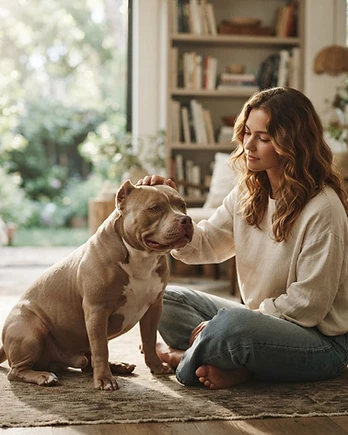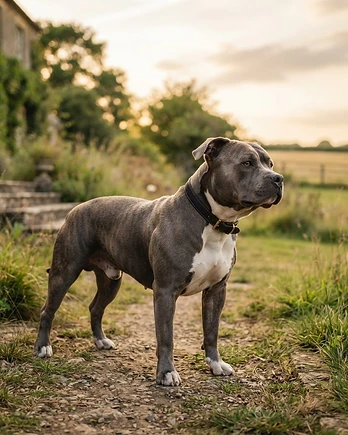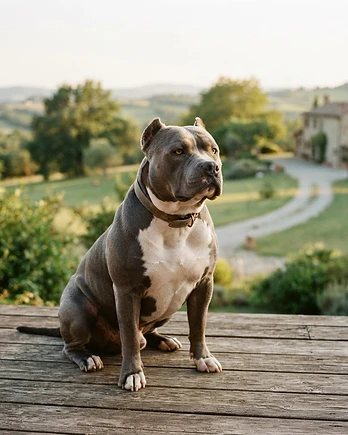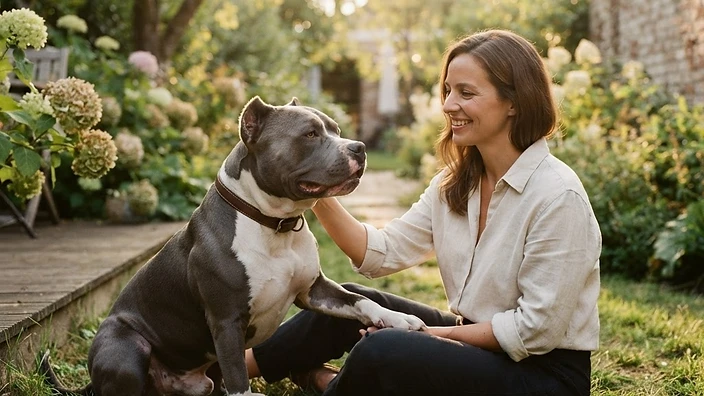
Bringing an American Bully into your life is one of the most rewarding decisions you'll ever make. These dogs — compact, muscular, and overflowing with affection — form bonds with their families that are nothing short of extraordinary. But that depth of connection comes with real responsibility. An American Bully thrives when their owner understands not just the basics, but the full picture: how their nutritional needs shift with age, what exercise looks like at 8 weeks versus 8 years, how Austin's Texas heat affects a brachycephalic-adjacent breed, and what early warning signs of joint stress actually look like.
This guide is the most comprehensive American Bully care resource we've written — a true pillar covering every stage of your dog's life. Whether you're preparing for a new puppy or stewarding a beloved senior, you'll find evidence-based, veterinarian-aligned guidance here. We've pulled from our experience as ABKC- and UKC-registered breeders in Austin, Texas, alongside veterinary best practices, OFA health testing standards, and years of hands-on observation with our own lines.
Use this as your living reference. Bookmark it. Return to it as your Bully grows. And when you have questions this guide doesn't answer, we're always just a message away.
Understanding the American Bully: A Quick Breed Foundation
Before diving into care specifics, it helps to understand who you're caring for. The American Bully is a distinct breed — not an American Pit Bull Terrier, not an American Staffordshire Terrier — developed in the 1980s and 1990s through deliberate crosses that emphasized a wider, more muscular build alongside a gentler, family-oriented temperament. The breed is recognized by both the American Bully Kennel Club (ABKC) and the United Kennel Club (UKC).
The four standard ABKC size classes are:
| Class | Male Height at Withers | Female Height at Withers | Typical Adult Weight | |---|---|---|---| | Pocket | Under 17" | Under 16" | 30–50 lbs | | Standard | 17"–20" | 16"–19" | 50–80 lbs | | Classic | 17"–20" | 16"–19" | 50–75 lbs | | XL | Over 20" | Over 19" | 80–150 lbs |
Size class affects daily care in meaningful ways — Pocket Bullies are more prone to overheating in hot weather, XL Bullies carry greater joint load, and all classes share the breed's characteristic short, dense coat and broad chest.
For a deeper dive into breed history, conformation, temperament, and bloodlines, visit our Complete American Bully Breed Guide: Everything You Need to Know.
Bringing Your Puppy Home: The First 30 Days
Puppy-Proofing Your Home and Yard
American Bully puppies are curious, low-to-the-ground explorers with powerful jaws even at 8 weeks. Before your puppy arrives, conduct a full home safety audit:
- Toxic plants: Remove or fence off sago palm, oleander, lantana, azalea, and dieffenbachia — all common in Austin-area landscaping and all toxic to dogs.
- Chemicals and cleaners: Store all household chemicals, lawn treatments, and fertilizers in locked cabinets at height.
- Electrical cords: Use cord covers or route cables out of reach — puppies chew.
- Yard perimeter: Inspect fencing for gaps at ground level. American Bullies are surprisingly agile despite their build; a Pocket Bully can squeeze through a 6-inch gap.
- Pool and water features: Install a fence or cover. Bullies are not natural swimmers — their heavy, dense musculature and broad chest make them poor floaters.
- Small objects: Keep floors clear of items small enough to swallow — coins, rubber bands, children's toys.
The First Night
Expect vocalization. Your puppy has just left their littermates and dam for the first time. Place their crate in your bedroom for the first week — proximity to your breathing and scent significantly reduces separation distress. A worn t-shirt in the crate and a heartbeat-simulating plush toy (widely available for around $25–$35) can ease the transition dramatically.
Vaccination and Deworming Schedule (Weeks 8–16)
Reputable breeders, including our program at American Bully Haven Pups, send puppies home having already received their first DA2PP (Distemper, Adenovirus, Parvovirus, Parainfluenza) combination vaccine at 6–8 weeks, along with a deworming protocol. Your veterinarian will complete the series:
- 10–12 weeks: DA2PP booster, Bordetella
- 14–16 weeks: DA2PP final booster, Rabies (required by Texas law at 12–16 weeks)
- Heartworm prevention: Begin by 8 weeks with a veterinarian-approved monthly preventative
Do not allow your puppy on public grass, dog parks, or surfaces frequented by unknown dogs until 7–10 days after their final parvovirus booster — parvovirus is environmentally stable and devastating.

A young American Bully puppy rests comfortably in a veterinarian's arms during an early wellness exam, representing the critical first weeks of preventive health care including vaccinations, deworming, and baseline health assessment.
Nutrition: Feeding Your American Bully at Every Life Stage
Puppies (8 Weeks – 12 Months)
American Bully puppies have high caloric density requirements per pound of body weight, but overfeeding is one of the most common mistakes new owners make. Excess weight during skeletal development strains growth plates and increases the risk of hip dysplasia and elbow dysplasia — two conditions for which the breed carries elevated risk.
Feeding guidelines for puppies:
- Feed a large-breed puppy formula with a crude protein minimum of 28–30% and crude fat of 12–16%
- Look for AAFCO (Association of American Feed Control Officials) statements confirming formulation for "growth" or "all life stages"
- Feed 3 times daily from 8–12 weeks, transitioning to twice daily by 12–16 weeks
- Avoid free-feeding (leaving food out all day) — it makes body condition monitoring nearly impossible
- Appropriate caloric intake for a Standard Bully puppy at 10 weeks: approximately 800–1,100 kcal/day, divided across meals
Ingredients to prioritize: Named animal proteins (chicken, beef, salmon) as the first ingredient; DHA (docosahexaenoic acid) for brain development; glucosamine and chondroitin for early joint support.
Ingredients to avoid: Corn syrup, artificial preservatives (BHA, BHT, ethoxyquin), unnamed "meat meal," excessive plant-based protein fillers.
Adults (1–7 Years)
Transition to an adult formula around 12 months for Standard and Pocket classes, and 18 months for XL Bullies whose skeletal development extends longer. Adult maintenance requirements:
- Crude protein: 24–26% minimum
- Crude fat: 12–15%
- Feeding frequency: Twice daily — this reduces the risk of bloat (gastric dilatation-volvulus), which, while more common in deep-chested breeds, can occur in heavily muscled Bullies
- Biological value: Prioritize animal-sourced proteins over plant proteins for amino acid completeness
Seniors (7+ Years)
Senior American Bullies often experience reduced metabolic rate and decreased activity level, making caloric management critical to prevent obesity. However, protein should not be drastically reduced in senior dogs — current veterinary science supports maintaining protein levels to preserve lean muscle mass. Supplement with:
- Omega-3 fatty acids (EPA/DHA): 1,000–2,000 mg daily for joint inflammation support
- Glucosamine: 500–1,000 mg daily
- Chondroitin sulfate: 400–800 mg daily
- Probiotics: for digestive health and immune support
Exercise: Age-Appropriate Activity for Every Stage
The 5-Minute Rule for Puppies
One of the most important guidelines for American Bully puppy owners: 5 minutes of structured exercise per month of age, twice daily. A 3-month-old puppy needs no more than 15 minutes of leash walking twice a day. Growth plates in large-breed and heavily muscled dogs don't fully close until 12–18 months; excessive impact exercise before closure risks permanent joint damage.
What's safe for puppies:
- Free play in a safely fenced yard
- Short, flat leash walks on soft surfaces
- Mental stimulation (puzzle feeders, sniff games, basic obedience training)
What to avoid until 12–18 months:
- Repetitive jumping (on/off furniture, agility obstacles)
- Long-distance running or jogging
- Prolonged stair climbing
- Hard, repetitive surface work (concrete, asphalt)
Adults (1–7 Years)
A healthy adult American Bully needs 45–90 minutes of daily exercise, ideally split into two sessions. This breed is athletic and muscular but not a high-endurance working dog — they excel at:
- Structured leash walks at a brisk pace (30–45 minutes)
- Weight pull training — a UKC-recognized competitive sport that suits the breed's natural strength and drive
- Flirt pole sessions — 10–15 minutes of controlled play that delivers high-intensity cardio with low joint impact
- Swimming — with a properly fitted canine life vest, given their dense build
- Basic obedience, nose work, and trick training — critical for mental stimulation
Heat and exercise in Austin, Texas: The American Bully's shortened muzzle and broad palate reduce thermoregulatory efficiency. In Austin summers (heat indices frequently exceeding 105°F), exercise should occur before 8 a.m. or after 7 p.m. from May through September. Asphalt temperatures can exceed 150°F on a 95°F day — if you can't hold the back of your hand on the pavement for 7 seconds, it's too hot for your Bully's paw pads.
Seniors (7+ Years)
Senior Bullies still need daily movement — muscle atrophy and joint stiffness worsen with inactivity. Adjust to 30–45 minutes of gentle daily activity: slow leash walks, short swim sessions, and low-impact play. Watch for signs of post-exercise stiffness (reluctance to rise, altered gait 12–24 hours after activity), which may indicate osteoarthritis warranting veterinary assessment.

A well-muscled adult American Bully walks confidently on a leash during an early morning outing in Austin, Texas, demonstrating the breed's athletic build and the importance of structured, age-appropriate daily exercise for physical and mental wellbeing.
Grooming: Short Coat, Big Results
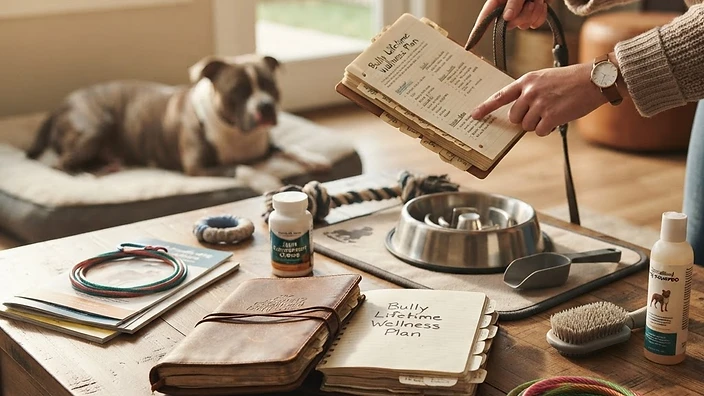
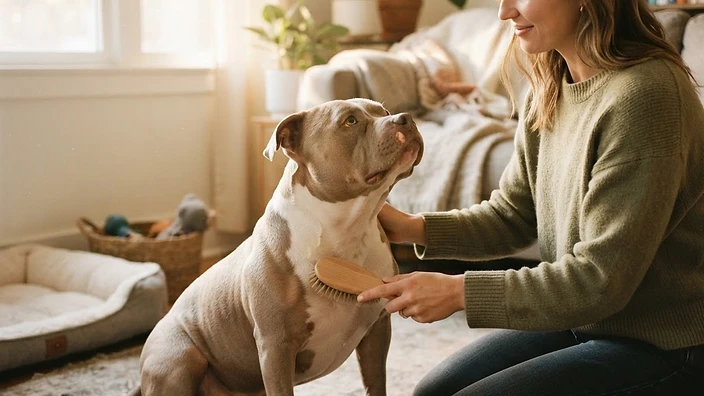
The American Bully's short, close-lying coat is one of the breed's most maintenance-friendly features — but "low maintenance" doesn't mean "no maintenance." A consistent grooming routine prevents skin issues, distributes natural oils, and gives you a regular opportunity to check for lumps, parasites, and skin abnormalities.
Weekly Grooming Routine
- Brushing: A rubber curry brush or soft-bristle brush 2–3 times per week removes loose hair, stimulates the sebaceous glands, and reduces shedding. American Bullies are moderate shedders year-round with heavier shed cycles in spring and fall.
- Bathing: Every 4–6 weeks with a pH-balanced canine shampoo (pH 6.5–7.5). Overbathing strips the coat's natural oils and disrupts the skin microbiome, predisposing to bacterial or yeast dermatitis — a condition this breed is genetically prone to.
- Ear cleaning: Weekly inspection; clean every 2–3 weeks with a veterinarian-recommended ear cleanser. The breed's ear anatomy (rose or half-prick ears in most cases) allows reasonable air circulation, but moisture accumulation can trigger otitis externa.
- Nail trimming: Every 3–4 weeks. Overgrown nails alter foot posture and contribute to long-term joint stress — particularly relevant for a breed already at elevated risk for hip and elbow issues.
- Dental care: Daily tooth brushing with enzymatic canine toothpaste is ideal; 3–4 times per week is the practical minimum. Periodontal disease affects over 80% of dogs by age 3 and is directly linked to systemic inflammation and cardiac disease.
- Wrinkle and fold care: Bullies with prominent facial or body folds require daily cleaning with a soft, dry cloth — or a dog-safe wipe — to prevent Malassezia yeast and bacterial fold dermatitis. Keep folds dry; moisture is the enemy.
Preventive Health and Veterinary Care
Annual and Biannual Wellness Visits
Puppies require veterinary visits approximately every 3–4 weeks from 8–16 weeks for their vaccine series. After the first year, annual wellness exams are the minimum standard; many veterinarians recommend biannual visits for senior dogs (7+ years) given the accelerated disease progression in that life stage.
OFA Health Testing
The Orthopedic Foundation for Animals (OFA) provides standardized screening for the heritable conditions most relevant to American Bullies:
- Hip dysplasia: OFA hip evaluation (PennHIP protocol preferred) at 24 months
- Elbow dysplasia: OFA elbow evaluation
- Cardiac disease: OFA cardiac exam by a board-certified cardiologist — congenital heart defects occur in the breed
- Eye conditions: OFA CAER (Companion Animal Eye Registry) annual exam
At American Bully Haven Pups, all of our breeding dogs are OFA health-tested before being included in our program. You can learn more about our approach at our breeding program page.
Common Health Concerns by Life Stage
Puppies (0–12 months):
- Parvovirus (preventable through vaccination)
- Demodectic mange (Demodex canis — associated with immature immune function, often self-resolving)
- Umbilical hernias (congenital; assess at first vet visit)
Adults (1–7 years):
- Hip and elbow dysplasia
- Atopic dermatitis and environmental allergies
- Hypothyroidism
- Ichthyosis (a hereditary skin condition)
Seniors (7+ years):
- Osteoarthritis
- Lipomas (benign fatty tumors — monitor for rapid growth or positional impairment)
- Kidney disease (monitor BUN, creatinine, SDMA via annual bloodwork)
- Dental disease progression
Seasonal Care: Austin, Texas Climate Considerations
Summer (May–September)
- Exercise only in early morning or after sunset
- Provide constant access to fresh water and shade
- Never leave your Bully in a parked vehicle — interior temperatures exceed 130°F within minutes
- Watch for heat stroke signs: excessive panting, brick-red gums, disorientation, collapse — this is a veterinary emergency
- Use dog-safe sunscreen on pink-pigmented nose leather and light-coated skin areas
Winter (November–February)
Austin winters are mild but occasionally dip below freezing. American Bullies, with their single-layer short coat, have minimal cold tolerance below 45°F:
- Use a fitted dog coat or sweater for outdoor walks below 45°F
- Wipe paws after walks if ice melt chemicals have been used on sidewalks
- Ensure sleeping areas are elevated from cold floors with an orthopedic dog bed
Travel and Lifestyle Integration
Car Travel
- Secure your Bully in a crash-tested crate (brands like Gunner Kennels and Impact Dog Crates have IIHS-tested models starting around $300–$600) or with a certified crash-tested harness
- Never allow your Bully to ride with their head out the window — at highway speeds, debris and air pressure cause corneal and inner ear trauma
- For trips over 2 hours, plan rest stops every 90 minutes for water and a brief walk
Air Travel
Most major U.S. airlines prohibit brachycephalic or brachycephalic-adjacent breeds — including American Bullies — from the cargo hold due to respiratory risk. Ground transportation or pet-friendly driving routes are strongly preferred for this breed.
Hotels and Rentals
Use platforms like BringFido or GoPetFriendly to identify verified pet-friendly accommodations. Always bring your Bully's own bedding — familiar scent reduces travel anxiety. Bring vaccination records; many hotels request proof of rabies vaccination at check-in.
Building a Lifelong Wellness Routine
The difference between an American Bully who struggles at age 9 and one who is vibrant and mobile at 12 is almost always rooted in consistency during the early and middle years. Here's a practical framework:
Daily Checklist
- Morning walk (before 8 a.m. in summer)
- Breakfast (measured, twice-daily feeding)
- Teeth brushing
- Evening walk or play session
- Dinner
- Fold/wrinkle check and wipe-down if applicable
Weekly Checklist
- Full body brush and coat inspection
- Ear check
- Nail length check (trim every 3–4 weeks)
- Paw pad inspection (cracking, foreign objects, discoloration)
Monthly Checklist
- Bath
- Heartworm and flea/tick preventative administration
- Weight check — use your hands as well as a scale; you should feel ribs without pressing hard (Body Condition Score 4–5 on a 9-point scale)
Annually
- Veterinary wellness exam with bloodwork (biannual for seniors)
- Dental cleaning under anesthesia if indicated
- OFA re-evaluations as recommended
- ABKC or UKC registration updates if applicable
For detailed deep-dives into specific care areas, explore our full cluster of care guides:
- American Bully puppy nutrition and feeding schedules
- American Bully exercise and physical development
- American Bully grooming and coat care
- American Bully home and yard safety
- American Bully preventive health and vet care
- American Bully seasonal care guide
- American Bully travel tips and lifestyle integration
- American Bully senior care and aging gracefully
Key Takeaways
- Size class matters: Pocket, Standard, Classic, and XL Bullies have meaningfully different exercise loads, thermal tolerances, and skeletal development timelines.
- Puppy joint protection is non-negotiable: Follow the 5-minute exercise rule and avoid high-impact activity until growth plates close at 12–18 months.
- Nutrition is foundational: Feed AAFCO-compliant formulas appropriate to life stage; monitor body condition score monthly.
- Dental care is health care: Periodontal disease has systemic consequences — brush teeth 3–5 times per week.
- Heat is a real danger in Austin: Exercise before 8 a.m. or after 7 p.m. from May through September.
- OFA health testing separates ethical breeders from irresponsible ones: Insist on documentation for hip, elbow, cardiac, and eye testing in your puppy's parents.
- Fold hygiene prevents dermatitis: Daily cleaning and drying of facial and body folds is essential for wrinkle-type Bullies.
- Consistency over perfection: A simple daily routine, followed 90% of the time, produces dramatically better long-term outcomes than sporadic intensive care.
Frequently Asked Questions
How much exercise does an American Bully need per day?
Adult American Bullies (1–7 years) need approximately 45–90 minutes of exercise daily, ideally split between a morning and evening session. Puppies should follow the 5-minute rule: 5 minutes of structured exercise per month of age, twice daily, to protect developing growth plates. Senior Bullies (7+) benefit from 30–45 minutes of gentle daily activity to maintain muscle mass and joint mobility. In Austin's climate, always schedule outdoor exercise during cooler parts of the day from May through September.
What should I feed my American Bully puppy?
Feed an AAFCO-certified large-breed puppy formula with at least 28–30% crude protein and 12–16% crude fat. Named animal proteins (chicken, beef, salmon) should appear as the first ingredient. Feed three times daily until 12 weeks, then twice daily. Avoid free-feeding, which makes body condition monitoring difficult and contributes to obesity. Introduce DHA-rich foods or supplements to support neurological development, and consider early glucosamine supplementation for joint support.
Are American Bullies good with children?
American Bullies were selectively bred for a gentle, affectionate temperament and are widely considered among the most family-friendly bully breeds. They are notably patient and tolerant with children. However, their size and exuberance — even at Pocket class — means adult supervision is essential with toddlers and young children. Early socialization (exposure to children, other animals, and varied environments between 3–16 weeks) produces the most reliably gentle adult temperament. Our Complete American Bully Breed Guide covers temperament in much greater depth.
How often should I bathe my American Bully?
Every 4–6 weeks is the recommended bathing frequency for most American Bullies. Use a pH-balanced canine shampoo (pH 6.5–7.5) to protect the skin's acid mantle. Overbathing — more than once every 2–3 weeks — strips natural sebum, disrupts the cutaneous microbiome, and predisposes your Bully to atopic dermatitis and secondary yeast or bacterial skin infections, which this breed is genetically prone to. Between baths, a quick wipe-down with dog-safe grooming wipes keeps skin folds clean and dry.
What health problems are common in American Bullies?
The most clinically significant heritable conditions in American Bullies include hip dysplasia, elbow dysplasia, congenital cardiac defects, atopic dermatitis, ichthyosis, and hypothyroidism. Responsible breeders conduct OFA testing for hips, elbows, cardiac health, and eyes before breeding. At American Bully Haven Pups, we publish health testing results for all of our breeding dogs. Purchasing from an ABKC- or UKC-registered breeder who provides documented OFA clearances is the single most impactful decision you can make to reduce your puppy's inherited disease risk.
When should my American Bully be spayed or neutered?
Current veterinary research — particularly studies on large and heavily muscled breeds — recommends waiting until skeletal maturity before spaying or neutering. For Standard and Pocket Bullies, this generally means 12–18 months; for XL Bullies, 18–24 months. Early spay/neuter removes the sex hormones that guide growth plate closure, increasing risk of orthopedic abnormalities and some cancers. Discuss timing with your veterinarian based on your individual dog's size class, body condition, and behavior.
Ready to Welcome an American Bully Into Your Life?
If this guide has given you confidence that you're ready to raise a healthy, thriving American Bully, we'd love to introduce you to our current available puppies. Meet Atlas — our Lilac Tri-Color Male, Bowie — Blue Tri Male, Diesel — Chocolate Tri Male, Ella — Lilac Tri Female, and Hazel — Merle Female — each raised with exactly the care standards described in this guide, from their first breath to the day they come home with you.
Browse our available American Bully puppies, review our adoption guide for next steps, or explore our full resource library for everything you need to become the best possible Bully owner. And if you have questions — about care, our program, or whether this breed is right for your family — please contact us. We're here for the whole journey.