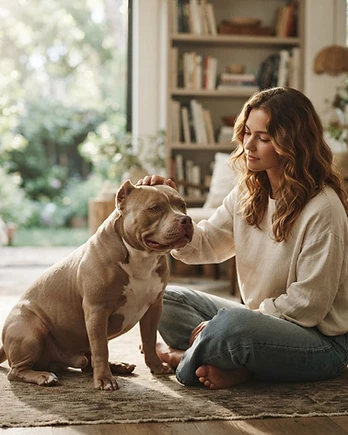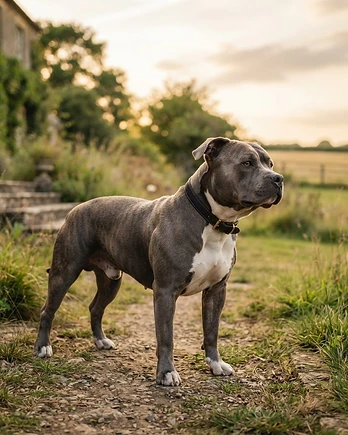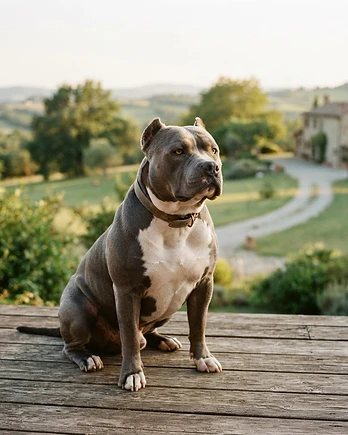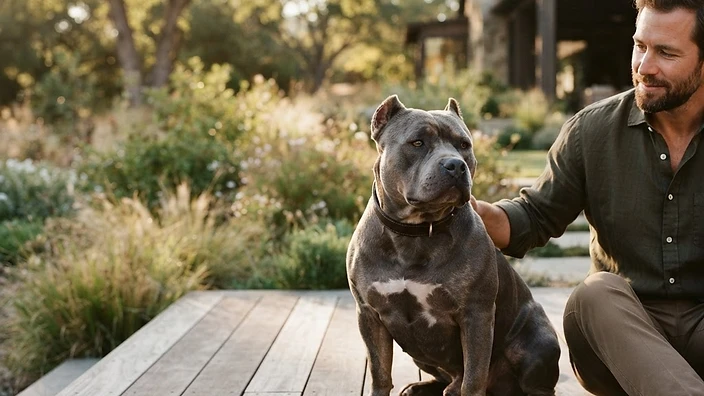
Few breeds in modern history have captured hearts, sparked controversy, and inspired such fierce devotion as the American Bully. Born from careful, purposeful breeding in the United States, this breed represents something genuinely rare: a dog designed from the ground up to be the ultimate family companion — confident, gentle, loyal, and breathtakingly beautiful. Whether you're a first-time researcher drawn in by a stunning photo or a seasoned enthusiast refining your knowledge, this guide is your definitive resource.
At American Bully Haven Pups, we've dedicated our program to producing ABKC- and UKC-registered American Bullies in Austin, Texas, with health-tested parents, documented bloodlines, and temperaments that reflect the breed's highest standard. We've written this pillar guide to be the most thorough, accurate, and honest resource available — one that answers every question a prospective owner, researcher, or fellow enthusiast could bring to the table.
From the breed's origins in the 1980s and 1990s to the nuanced genetics behind a lilac tri coat, from the ABKC conformation standard to the difference between a Pocket and an XL — we cover it all here. Bookmark this page. Share it. And when you're ready to welcome one of these extraordinary dogs into your home, we'll be here.
Origin and History of the American Bully
The American Bully emerged in the United States during the late 1980s and early 1990s, primarily on the East Coast and West Coast simultaneously. Breeders — most notably in Virginia, Los Angeles, and New York — set out to create a companion-focused breed by selectively crossing the American Pit Bull Terrier (APBT) and the American Staffordshire Terrier (AmStaff) with select bully-type breeds including the American Bulldog, English Bulldog, and Olde English Bulldogge. The goal was explicit: retain the APBT's intelligence, loyalty, and trainability while dramatically amplifying bone structure, muscle mass, and above all, a stable, human-friendly temperament.
Early foundational breeders like Dave Wilson of Razors Edge Kennels and Richard Barajas of Gottiline were instrumental in shaping the breed's identity. Wilson's Razor's Edge line, developed in the Washington D.C. area, became synonymous with wide chests, heavy bone, and docile dispositions. Barajas's Juan Gotty — widely considered the most influential American Bully sire in history — produced offspring that spread the breed's hallmark look across the country and the world.
The American Bully Kennel Club (ABKC) was founded in 2004 by Dave Wilson and Carlos Barksdale, becoming the first official registry to recognize the American Bully as its own distinct breed — separate from the APBT and AmStaff. The United Kennel Club (UKC) followed, granting the American Bully full breed recognition in 2013. These two registration bodies remain the gold standard for ethical breeding and show competition today.

A visual comparison of the four American Bully size varieties recognized by the ABKC, illustrating the differences in height and body mass from the compact Pocket Bully to the impressive XL Bully.
The Four ABKC-Recognized Size Varieties
One of the American Bully's most distinctive features is its official classification into four size varieties, each recognized by the ABKC with specific height standards measured at the withers (the highest point of the shoulder blades). It's critical to understand that these are varieties of the same breed — not separate breeds — and all share the same conformation ideals, temperament expectations, and breed standard.
Pocket Bully
The Pocket Bully is the smallest variety. Males measure under 17 inches (but no less than 14 inches) at the withers; females measure under 16 inches (but no less than 13 inches). Despite the name, Pocket Bullies are not small dogs in mass — they carry extraordinary muscle and bone density for their height, giving them a compact, powerful appearance. They typically weigh between 30–50 lbs. Pocket Bullies are among the most popular variety for families in urban settings due to their manageable size.
Standard Bully
The Standard Bully is the foundation variety — the baseline against which all others are measured. Males stand 17–20 inches at the withers; females stand 16–19 inches. Weight typically ranges from 50–80 lbs, though heavily muscled individuals may exceed this. The Standard exhibits the breed's classic proportions: wide chest, thick neck, heavy bone, and a blocky head with pronounced cheek muscles.
Classic Bully
The Classic Bully shares the same height range as the Standard but carries a lighter body frame and less overall body mass. It more closely resembles the American Pit Bull Terrier in body structure while still displaying the American Bully's characteristic head and disposition. The Classic is sometimes described as the "athlete" of the lineup — still muscular, but leaner and more agile. This variety appeals to owners who prefer a slightly more traditional bully silhouette.
XL Bully
The XL Bully is the largest variety. Males stand 20–23 inches at the withers; females stand 19–22 inches. XL Bullies can weigh 80–150 lbs or more, combining the breed's compact musculature with impressive overall size. Despite their imposing presence, well-bred XL Bullies are known for being gentle giants — calm, patient, and exceptionally affectionate with children and families.
| Variety | Male Height | Female Height | Typical Weight | |---------|------------|---------------|----------------| | Pocket | 14–16.9 in | 13–15.9 in | 30–50 lbs | | Standard | 17–20 in | 16–19 in | 50–80 lbs | | Classic | 17–20 in | 16–19 in | 45–70 lbs | | XL | 20–23 in | 19–22 in | 80–150 lbs |
For a deeper dive into health and care specific to each size, explore The Complete American Bully Care Guide: Puppyhood to Senior Years.
ABKC Conformation Standard
The American Bully Kennel Club conformation standard defines the ideal physical characteristics every ethical breeder works toward. Understanding the standard helps buyers identify quality breeding and avoid exaggerated, unhealthy traits sometimes seen in unethical programs.
Head: Large, broad skull with a deep, wide muzzle. Pronounced cheek muscles, a defined stop, and a strong, broad jaw. The head should be proportionate to the body — impressive but not exaggerated to the point of causing respiratory distress.
Neck: Heavy, muscular, and slightly arched, tapering from the shoulders to the back of the skull.
Body: The chest should be broad, deep, and well-filled. The back is strong and firm with a slight slope from withers to the tail. The loin is short, strong, and slightly tucked up. The overall body is compact and heavy-boned.
Forequarters and Hindquarters: Shoulders are strong and muscular. The forelegs are straight, with heavy bone. The hindquarters are well-muscled with a broad, thick appearance and well-bent stifles.
Coat: Short, close, stiff to the touch, and glossy. All color patterns are accepted.
Gait: The movement should be effortless and powerful — the dog should move with confidence and purpose, demonstrating structural soundness.
Disqualifications under ABKC standard include: albinism, merle-to-merle breeding offspring (double merle), extreme aggression toward humans, and measurements outside variety-specific height requirements.

A group of American Bully puppies displaying diverse coat colors including chocolate tri, lilac tri, blue tri, and merle patterns, illustrating the rich genetic color diversity of the breed.
American Bully Temperament
If there's one thing that defines the American Bully above all else — including its impressive physique — it's temperament. The breed was engineered to be people-oriented to an extraordinary degree. A properly bred American Bully is:
- Confident but not aggressive — stable, self-assured, and unflappable in new environments
- Deeply affectionate — often described as "velcro dogs" who want constant human contact
- Excellent with children — patient, gentle, and tolerant; many owners describe their Bullies as the family babysitter
- Sociable with strangers — friendly and outgoing, which makes them poor guard dogs but exceptional family companions
- Intelligent and eager to please — highly trainable with positive reinforcement; they thrive on praise and structured routine
Human aggression is considered a serious breed fault and grounds for disqualification in ABKC competition. This cannot be overstated: an American Bully that shows aggression toward people does not meet the breed standard, and ethical breeders temperament-test every dog in their program.
Some dog-directed reactivity can occur, particularly in unneutered males, and early socialization starting at 3–12 weeks (the critical socialization window) is essential. Consistent, positive training from puppyhood produces a well-rounded adult.
Coat Colors and Color Genetics
The American Bully's coat color diversity is one of the breed's most celebrated features, and understanding the genetics helps buyers appreciate what they're looking at — and avoid being misled by inflated "rare color" pricing.
Base Colors
- Black — dominant eumelanin expression (BB or Bb)
- Blue (dilute black) — caused by the dilution gene (dd at the D locus); two copies of the recessive dilution allele
- Chocolate (brown) — caused by the bb genotype at the B locus, converting black pigment to brown
- Lilac — the result of both dilution (dd) AND chocolate (bb) acting simultaneously; produces a cool, silvery-brown coat
- Red/Fawn — phaeomelanin expression modified by the E locus
- Cream — heavily diluted phaeomelanin
Pattern Overlays
- Tri-color — a three-color pattern expressing tan points at the eyebrows, cheeks, chest, and legs over a base color, controlled by the atat genotype at the A locus. You can see beautiful examples in our available puppies: Diesel — Chocolate Tri Male, Atlas — Lilac Tri-Color Male, Bowie — Blue Tri Male, and Ella — Lilac Tri Female.
- Merle — a dominant pattern gene (M allele at the M locus) that creates mottled patches of diluted pigment over the base color. Merle breeding requires careful genetic testing — double merle (MM) breeding is unethical and produces offspring with significant health risks including blindness and deafness. See our stunning Hazel — Merle Female for a responsibly produced example.
- Brindle — dark striping over a lighter base, caused by the Kbr allele at the K locus
- Piebald (Pied) — white spotting pattern from the sp allele at the S locus
Genetic color testing through providers like Embark Veterinary or Animal Genetics is standard practice in ethical programs and should be documented and shared with buyers.
Influential Bloodlines
Bloodlines matter in the American Bully world — they trace structural traits, temperament tendencies, and the legacy of foundational dogs. Here are the most historically significant:
Razor's Edge — Dave Wilson's foundational line from the D.C. area. Known for wide chests, heavy bone, blocky heads, and exceptional temperament. The backbone of many modern programs.
Gottiline (Juan Gotty) — Produced by Richard Barajas, Juan Gotty became perhaps the most prolific and influential sire in breed history. His offspring shaped the wide, low-to-the-ground bully look that dominates the modern Standard and Pocket varieties.
Remyline — Developed by Fabian Chichester. Known for producing consistent, typey Bullies with excellent muscle tone, tight skin, and reliable temperament.
Kurupt Bloodline — Associated with celebrity culture and the entertainment industry, this line gained widespread visibility and is credited with popularizing the XL variety and exotic coat colors.
Daxline — Known for producing extreme muscle density and heavy bone while maintaining correct structure and sound health.
Miagi Bullies — A newer but highly influential line known for tight conformation, exceptional pigmentation, and tri-color genetics.
At American Bully Haven Pups, our breeding dogs carry documented pedigrees rooted in these proven bloodlines. Learn more about our breeding program.
Registration Bodies: ABKC vs. UKC
Two primary kennel clubs register American Bullies, and understanding the difference matters when evaluating a breeder's credentials.
American Bully Kennel Club (ABKC) — Founded specifically for the American Bully in 2004. The ABKC maintains the official breed standard, sanctions conformation shows, and issues registration papers. ABKC papers are widely considered the gold standard in the American Bully community.
United Kennel Club (UKC) — One of the oldest all-breed registries in the United States (founded 1898). The UKC recognized the American Bully in 2013. UKC registration adds legitimacy and cross-registry recognition, particularly for performance events.
Ethical breeders register their dogs with one or both of these bodies and can provide litter registration certificates and individual dog registration papers to buyers. Neither the AKC (American Kennel Club) nor the AKC recognizes the American Bully as a separate breed — beware of registries like the APR, DBBR, or similar lesser-known bodies that offer "registration" without legitimate breed standards or oversight.
American Bully vs. Related Breeds
One of the most common sources of confusion — and unfair stigma — surrounding the American Bully is its frequent conflation with related breeds. Here's a clear, factual comparison:
| Feature | American Bully | American Pit Bull Terrier | American Staffordshire Terrier | American Bulldog | |---------|---------------|--------------------------|-------------------------------|------------------| | Build | Compact, heavy, wide | Athletic, moderate | Athletic, moderate | Large, athletic | | Head | Extra-broad, blocky | Moderate | Moderate | Large, boxy | | Temperament | Companion-focused, gentle | Active, loyal, tenacious | Loyal, confident | Loyal, energetic | | Size | Varies by variety | 30–65 lbs | 40–70 lbs | 60–120 lbs | | ABKC Recognized | Yes | No | No | No | | Primary Purpose | Family companion | Versatile working/companion | Show/companion | Working/guardian |
The American Bully is not an American Pit Bull Terrier. While it shares ancestry, the two breeds have diverged significantly in structure, temperament mandate, and purpose. The ABKC standard explicitly prohibits extreme gameness or dog aggression as traits — characteristics that were historically valued in the APBT. This distinction is important for breed-specific legislation (BSL) discussions, insurance considerations, and public perception.
Health Considerations and OFA Testing
Responsible American Bully breeding requires proactive health screening. The breed's compact, muscular build and brachycephalic tendencies in some lines make certain conditions more prevalent:
Hip and Elbow Dysplasia — The Orthopedic Foundation for Animals (OFA) provides hip and elbow evaluations. Ethical breeders test both parents and share OFA results. Hip dysplasia is a significant concern given the breed's heavy muscling and compact frame.
Brachycephalic Obstructive Airway Syndrome (BOAS) — Dogs with extremely shortened muzzles can experience breathing difficulties. Reputable breeders select for functional, correctly proportioned muzzles that meet the ABKC standard.
Hereditary Cataracts and Eye Disease — CAER (Companion Animal Eye Registry) evaluations are recommended. The merle gene, when irresponsibly doubled, greatly increases risk of ocular and auditory defects.
Cardiac Disease — Aortic stenosis has been documented in bully-type breeds. Cardiac evaluations by a board-certified cardiologist are best practice.
Skin Conditions — The short, dense coat and skin folds in heavily built individuals can predispose the breed to demodectic mange, intertrigo (skin fold dermatitis), and seasonal allergies.
At American Bully Haven Pups, health testing is non-negotiable. Review our adoption guide for full details on what documentation we provide with every puppy.
Key Takeaways
- The American Bully was developed in the late 1980s–early 1990s from American Pit Bull Terrier, AmStaff, and bully-breed crosses — purpose-bred as a family companion.
- The ABKC (2004) and UKC (2013) are the two legitimate registration bodies; the breed has four recognized size varieties: Pocket, Standard, Classic, and XL.
- The breed's defining characteristic is its people-loving temperament — human aggression is a disqualifying fault.
- Coat colors range from black, blue, chocolate, and lilac to tri-color, merle, brindle, and piebald — all governed by well-understood genetics.
- Foundational bloodlines including Razor's Edge, Gottiline, and Remyline shaped the modern breed.
- Health testing (OFA, CAER, cardiac) is an ethical obligation for every serious breeder.
- The American Bully is a distinct breed — not an American Pit Bull Terrier — and should not be subject to BSL targeting APBTs in most jurisdictions.
- Prices for ABKC/UKC registered American Bully puppies from health-tested parents typically range from $2,500–$10,000+ depending on variety, color, and bloodline.
Frequently Asked Questions
Is the American Bully the same as a Pit Bull?
No — and this distinction matters enormously. The American Bully is a separate, independently developed breed with its own ABKC and UKC breed standard. While it shares ancestry with the American Pit Bull Terrier, the two breeds have diverged significantly in structure, purpose, and temperament mandate. The American Bully was purpose-bred to eliminate gameness and dog aggression while amplifying human affection and companion traits. Many jurisdictions with breed-specific legislation (BSL) targeting "pit bulls" do not legally include the American Bully, though this varies by location and should always be verified.
What size American Bully is best for families?
All four size varieties — Pocket, Standard, Classic, and XL — share the same family-friendly temperament when properly bred and socialized. The "best" size depends on your living space, lifestyle, and personal preference. Pocket Bullies are ideal for apartment dwellers or smaller homes. Standard and Classic Bullies are versatile and fit most family environments. XL Bullies are gentle giants perfect for families with large homes and yards who want a more imposing presence. Regardless of size, early socialization and consistent positive training are the real determinants of an exceptional family dog.
How long do American Bullies live?
A well-bred, health-tested American Bully typically lives 10–13 years. Smaller varieties (Pocket, Standard) tend toward the longer end of this range, while XL Bullies, like most large breeds, may average 8–11 years. Lifespan is heavily influenced by breeding quality, diet, exercise, veterinary care, and avoiding obesity — a significant health risk in a breed predisposed to joint issues. Purchasing from a breeder who health-tests parents significantly improves the odds of a long, healthy life.
Are American Bullies good with children and other pets?
Absolutely — when properly bred and socialized, the American Bully is one of the most child-friendly breeds in existence. Their patience, tolerance, and affection make them natural companions for kids of all ages. They are generally sociable with other dogs when introduced correctly, though unneutered males can show dog-directed reactivity. Early socialization with other animals — starting during the critical 3–12 week window — is important. Supervision with very small children is always recommended with any dog breed, regardless of temperament.
What should I look for in an ethical American Bully breeder?
An ethical breeder will: (1) provide ABKC and/or UKC registration papers for both parents and the litter; (2) share OFA health testing results for hips, elbows, and cardiac evaluations; (3) conduct genetic color and health testing via providers like Embark; (4) allow you to visit and meet the parents; (5) provide a written health guarantee; (6) temperament-test puppies; and (7) ask you qualifying questions to ensure their puppies go to appropriate homes. Avoid breeders who prioritize "extreme" or exaggerated traits over health and function, who cannot provide documentation, or who have puppies always available at unusually low prices.
How much does an American Bully puppy cost?
Legitimately bred, ABKC/UKC-registered American Bully puppies from health-tested parents typically range from $2,500 to $10,000, with some exotic-colored or elite-bloodline dogs reaching higher. Pocket and Standard Bullies are often priced between $2,500–$5,000. XL Bullies and dogs carrying rare color genetics like lilac tri or merle from proven, health-tested lines typically run $4,000–$8,000 or more. Be cautious of prices that seem too low — they often reflect absent health testing, unregistered parents, or unethical practices. The upfront investment in a quality puppy is almost always less expensive than the veterinary bills and heartbreak that come from a poorly bred one.
The American Bully is more than a breed — it's a community, a commitment, and for thousands of families, the most loyal and loving companion they've ever known. We hope this guide has given you the knowledge and confidence to make an informed, joyful decision.
When you're ready to take the next step, explore our available American Bully puppies — each one ABKC/UKC registered, health-tested, and raised with love in Austin, Texas. You're also welcome to browse our full resource library for more in-depth guides on care, training, nutrition, and health. And if you have questions our guides don't answer, we'd love to hear from you — contact us anytime. Your future best friend may already be waiting.