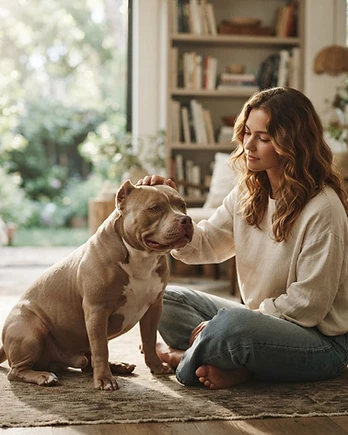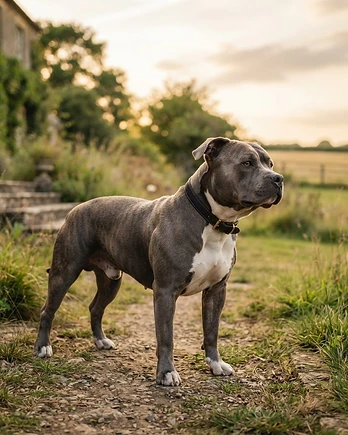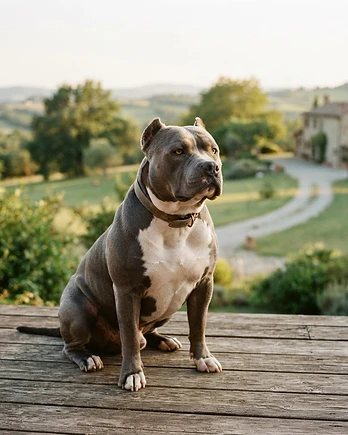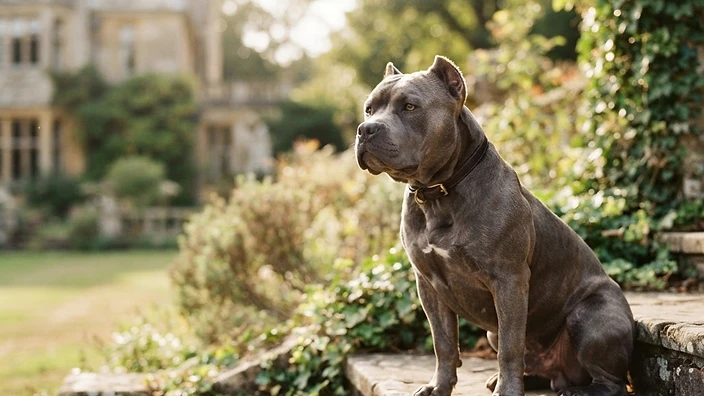
Few breeds have risen as quickly — or been as widely misunderstood — as the American Bully. In just three decades, this breed has gone from a backyard experiment in selective breeding to one of the most popular companion dogs in the world, celebrated for its extraordinary physical presence and an almost paradoxical gentleness of spirit. If you've been drawn to this breed by a photo, a friend's dog, or simply a curiosity you can't quite explain, you're in good company.
At American Bully Haven Pups, our ABKC- and UKC-registered program in Austin, Texas, we've spent years living alongside, studying, and carefully breeding these dogs. We know their quirks, their health needs, their genetic complexities, and — most importantly — the profound joy they bring to the right home. This guide is our definitive resource: a comprehensive, honest, and deeply informed look at everything the American Bully is.
Whether you're researching the breed for the first time, comparing size varieties, or trying to understand coat color genetics before choosing a puppy, this is the only guide you'll need. Explore our full resource library for companion articles on care, training, nutrition, and health.
Origin and History of the American Bully
The American Bully is a purpose-bred companion dog developed in the United States during the late 1980s and early 1990s, primarily on the East Coast and West Coast. The breed emerged from selective crosses between the American Pit Bull Terrier (APBT) and the American Staffordshire Terrier (AmStaff), with measured influence from several Bulldog-type breeds — most notably the American Bulldog, English Bulldog, and Olde English Bulldogge — to amplify blocky structure, broad skull, and shortened muzzle without sacrificing athleticism.
The driving philosophy was intentional: take the loyalty and gameness of the APBT, temper the working-dog intensity, amplify the physical mass and "bully" aesthetic, and produce a dog that was first and foremost a family companion. Breeders like Dave Wilson of Razor's Edge Kennels and Richard Barajas of Gottiline are widely credited as foundational figures, establishing the look, temperament standard, and early bloodline infrastructure that still defines the breed today.
The American Bully Kennel Club (ABKC) was founded in 2004, providing the breed's first formal registration, conformation standard, and show structure. The United Kennel Club (UKC) followed by officially recognizing the American Bully in 2013. These recognitions legitimized the breed in the eyes of the broader dog community and gave ethical breeders a framework for health testing, pedigree documentation, and conformation evaluation.

A group of American Bully dogs representing multiple size varieties and coat colors, including blue, chocolate tri, and lilac tri, photographed at an ethical ABKC-registered breeder facility in Austin, Texas. The image illustrates the breed's remarkable diversity in size and color.
The Four ABKC Size Varieties
One of the most common points of confusion about the American Bully is the relationship between size, type, and quality. The ABKC recognizes four distinct size varieties — not separate breeds, but distinct classes judged against the same core standard with height-specific parameters. Understanding these classes is essential before choosing a puppy.
Pocket Bully
The Pocket Bully is the smallest recognized variety. Males stand under 17 inches at the withers (minimum 14 inches); females stand under 16 inches (minimum 13 inches). Despite the name, Pocket Bullies are not small dogs in terms of mass — they are compact, heavily muscled, and proportionally very wide. A quality Pocket Bully will weigh between 30–50 lbs depending on sex and build. Their exaggerated musculature relative to height gives them their characteristic "low and wide" silhouette. Pocket Bullies are among the most popular variety for apartment living and urban households.
Standard Bully
The Standard Bully is the breed's foundational variety, against which all other classes are evaluated. Males stand 17–20 inches at the withers; females stand 16–19 inches. Weight ranges from approximately 50–80 lbs, with substantial variation based on build quality. The Standard is the benchmark for the ABKC conformation standard — the ideal proportions of head, body, and movement are defined at this size.
Classic Bully
The Classic Bully shares the Standard's height parameters but carries a lighter body frame with less overall mass and exaggeration. Classic Bullies often resemble their American Pit Bull Terrier heritage more closely, with a leaner body, less exaggerated head, and a more athletic silhouette. They are judged in a separate class from Standards precisely because their build type is fundamentally different — lighter-bodied dogs are not penalized as "undersized Standards" but evaluated on their own merits.
XL Bully
The XL Bully is the tallest variety. Males stand over 20 inches up to 23 inches; females stand over 19 inches up to 22 inches. XL Bullies are imposing animals — well-structured males can weigh 80–130 lbs — but should still reflect the breed's athleticism and should never appear obese or structurally unsound. The XL variety has grown enormously in popularity over the past decade, though it has also attracted less scrupulous breeding practices; health and structure should be paramount priorities when evaluating XL lines.
Note on "Micro" and "Extreme" Bullies: These are informal terms used in the marketplace, not recognized ABKC or UKC classes. "Micro" typically describes dogs smaller than the Pocket minimum; "Extreme" describes dogs with heavily exaggerated features. Ethical breeders caution against prioritizing exaggeration at the expense of health and soundness.
| Variety | Male Height | Female Height | Approx. Weight | |---------|------------|---------------|----------------| | Pocket | 14–<17 in | 13–<16 in | 30–50 lbs | | Standard | 17–20 in | 16–19 in | 50–80 lbs | | Classic | 17–20 in | 16–19 in | 40–70 lbs | | XL | 20–23 in | 19–22 in | 80–130 lbs |
Temperament: The American Bully's True Nature
If there is one truth that every experienced American Bully owner will tell you, it is this: these dogs are extraordinarily gentle with people they love. The breed standard describes the ideal temperament as confident, outgoing, stable, and eager to please — a dog that is neither aggressive toward humans nor timid to the point of nervousness.
American Bullies are highly people-oriented. They form intense bonds with their families, are reliably gentle with children (earning them the informal title "nanny dogs" in some circles), and typically greet strangers with enthusiasm rather than suspicion. This is not accidental — it is the result of deliberate temperament selection by early breeders who specifically culled human-directed aggression from their programs.
The breed does carry moderate dog-selectivity in many lines, a legacy of its APBT heritage. This does not mean all American Bullies are dog-aggressive — many live harmoniously with other dogs — but early socialization, proper introductions, and awareness of dog-to-dog dynamics are essential. The Complete American Bully Training Guide covers socialization protocols in depth.
In terms of energy level, American Bullies are moderate-energy dogs. They enjoy play sessions, walks, and interactive games but are equally content lounging on the couch. They are not high-drive working dogs; they are companion animals first. This makes them well-suited to a wide range of living situations, including apartments, provided they receive adequate daily exercise (30–60 minutes per day is typically sufficient).
Key temperament traits:
- Loyal and deeply affectionate with family
- Confident and stable in new environments
- Excellent with children; patient and tolerant
- Sociable with strangers when properly socialized
- Intelligent and responsive to positive reinforcement training
- Moderate exercise needs; adaptable to various lifestyles
ABKC Conformation Standard: What Judges Look For
The ABKC breed standard is the definitive document governing how American Bullies are evaluated in the show ring. Understanding it helps breeders, buyers, and enthusiasts recognize quality structure and identify faults.
Head and Skull
The head is large, broad, and blocky — a defining characteristic of the breed. The skull should be broad between the cheeks, with well-defined cheek muscles (masseters). The stop — the transition from skull to muzzle — should be distinct. The muzzle is broad and deep, medium in length, with the upper lips just covering the lower jaw. Excessively shortened (brachycephalic) muzzles that compromise breathing are considered a fault.
Body and Structure
The neck is heavy, slightly arched, and muscular, tapering from shoulder to head. The chest is broad and deep, with well-sprung ribs. The topline is level to slightly sloping from withers to rump. The back is short, strong, and firm. Hindquarters should be well-muscled with broad, short thighs and well-bent stifles. The overall impression is of compact, muscular power.
Movement
Gait should be effortless and powerful, with good reach in front and strong drive from behind. Paddling, crabbing, or stilted movement are faults. Structural soundness enabling efficient movement is prioritized by ethical breeders and judges alike.
Disqualifying Faults
Under the ABKC standard, human-directed aggression is an automatic disqualification. Other disqualifying faults include: albinism, merle-to-merle breeding progeny (double merle), dogs under the minimum height threshold, and viciousness or extreme shyness.

A young American Bully puppy displaying a merle coat pattern with vivid blue eyes, representing the breed's color diversity and the gentle, curious temperament that defines well-bred American Bullies from health-tested, ABKC-registered programs.
Coat Colors and Color Genetics
The American Bully is one of the most color-diverse breeds in the dog world, and color genetics have become a major focus of the breeding community. Understanding the genetic basis of coat color helps buyers ask better questions and helps breeders make responsible pairings.
Base Colors
The breed's color palette begins with two pigment bases: eumelanin (black/brown pigment) and phaeomelanin (red/yellow pigment). Modifier genes determine how these pigments are expressed.
Common and Sought-After Colors
Blue: Produced by the dilute gene (dd) acting on black eumelanin, creating a characteristic slate-gray coat. Blue is one of the most recognized American Bully colors.
Chocolate/Brown: Produced by the brown (bb) locus, which dilutes black eumelanin to a warm brown. Our Diesel — Chocolate Tri Male American Bully puppy is a beautiful example of this coloration.
Lilac: A double-dilute color produced when a dog carries both the dilute gene (dd) AND the brown gene (bb), resulting in a soft purple-gray coat. Lilac is highly prized and relatively rare. Meet our stunning Atlas — Lilac Tri-Color Male American Bully puppy and Ella — Lilac Tri Female American Bully puppy for examples of this exceptional color.
Tri-Color: The tri-color pattern — a base color plus tan points and white — is produced by the agouti (at) allele. Tri-color Bullies carry the pattern at the A locus and express tan points above the eyes, on the cheeks, chest, and legs. Blue Tri, Chocolate Tri, and Lilac Tri are among the most popular combinations. See our Bowie — Blue Tri Male American Bully puppy for a striking example.
Merle: Produced by the M locus (Merle gene), which creates a mottled, irregular pattern of diluted patches on a base color. Merle can appear in blue merle, chocolate merle, lilac merle, and other combinations. Our Hazel — Merle Female American Bully puppy showcases this breathtaking pattern. Important: merle-to-merle breedings produce double merle offspring (MM genotype) with a high risk of deafness, blindness, and other developmental defects. Responsible breeders never breed merle to merle.
Other colors: Fawn, red, black, brindle, black and tan, piebald (parti), ghost tan, and champagne (the result of dilute acting on red/fawn) are all seen in the breed.
A Note on Color and Health
While color diversity is exciting, health must always precede color selection. Certain color combinations carry genetic health risks (double merle, extreme white/piebald patterns linked to deafness). At American Bully Haven Pups, every pairing is evaluated for genetic health compatibility before color aesthetics are considered.
Influential Bloodlines
The American Bully's relatively short history is defined by a handful of landmark bloodlines that shaped the breed's type and temperament. Understanding these lines gives context to pedigrees and helps buyers evaluate a breeder's breeding philosophy.
Razor's Edge: Developed by Dave Wilson in the Washington D.C. area, Razor's Edge dogs were foundational to the breed. They were known for their heavy bone, blocky heads, and exceptionally calm temperaments — the blueprint for the modern American Bully.
Gottiline: Richard Barajas's Juan Gotty (born 1997) is perhaps the most influential sire in breed history. His offspring were distributed across hundreds of programs and his genetics are present in the majority of today's registered American Bullies. Gottiline dogs are known for their wide, stocky builds.
Remyline: Developed by Fabian Chichester, Remyline built on Gottiline genetics to produce dogs with extreme mass and refined structure, particularly influencing the Pocket and XL markets.
Kurupt Bloodline: A California-based line known for contributing to extreme "exotic" type — short stature, wide frame, and heavy wrinkle. Kurupt dogs have significantly influenced the informal "Micro" and "Exotic Bully" movements.
Bully Camp Line: Known for producing large-format dogs with clean structure and excellent temperament, the Bully Camp Line has been influential in the XL variety.
Modern breeding programs like ours at American Bully Haven Pups draw selectively from multiple lines, using DNA health panels and OFA testing to ensure that pedigree prestige never comes at the cost of health and soundness. Learn more about our breeding program.
Registration Bodies: ABKC vs. UKC
Two primary kennel clubs register American Bullies in the United States, and understanding the difference matters when evaluating a breeder's credentials.
American Bully Kennel Club (ABKC): Founded specifically for the American Bully, the ABKC is the breed's original and most widely recognized registry. It maintains the official breed standard, sanctions conformation shows, and issues pedigree certificates. ABKC registration is considered the gold standard for American Bully breeders and buyers.
United Kennel Club (UKC): The second-oldest all-breed registry in the U.S., the UKC officially recognized the American Bully in 2013. UKC registration is widely respected and provides access to UKC-sanctioned performance and conformation events.
Note: The American Kennel Club (AKC) does not currently recognize the American Bully as a breed. Buyers should be cautious of breeders representing AKC papers as a quality indicator for this breed.
American Bully vs. Related Breeds
The American Bully is frequently confused with several related breeds. Here's a clear comparison:
| Feature | American Bully | American Pit Bull Terrier | American Staffordshire Terrier | English Bulldog | |---------|---------------|--------------------------|-------------------------------|------------------| | Build | Heavy, wide, blocky | Athletic, lean, muscular | Moderate, athletic | Stocky, low-slung | | Head | Very broad, blocky | Moderate, wedge-shaped | Broad, slightly blocky | Very broad, wrinkled | | Temperament | Gentle companion | Energetic, driven | Confident, stable | Docile, calm | | Energy Level | Moderate | High | Moderate-high | Low | | Size Range | 14–23 inches | 17–21 inches | 17–19 inches | 14–15 inches | | Registration | ABKC, UKC | UKC, ADBA | AKC, UKC | AKC |
The key distinction: the American Bully was intentionally bred away from working and terrier instincts toward a stable, lower-drive companion. It is a distinct breed — not a "type" of Pit Bull — with its own standard, registry, and breeding history.
Health Considerations and Lifespan
The American Bully is a generally hardy breed with a lifespan of 10–13 years for Standard and Classic varieties; XL Bullies may average slightly shorter at 8–12 years, consistent with patterns seen in larger dogs. Key health considerations include:
- Hip and elbow dysplasia: Common in heavy-bodied breeds. OFA (Orthopedic Foundation for Animals) hip and elbow evaluations are the standard testing protocol. Ethical breeders test all breeding dogs.
- Cardiac disease: OFA cardiac evaluations are recommended. Certain lines carry predispositions to aortic stenosis.
- Skin and allergies: The breed is prone to environmental and food allergies, often manifesting as skin irritation, hotspots, or ear infections.
- Brachycephalic concerns: Dogs with very short muzzles may experience Brachycephalic Obstructive Airway Syndrome (BOAS), affecting breathing, thermoregulation, and exercise tolerance.
- Eye conditions: Entropion and cherry eye are seen in the breed; OFA CAER eye evaluations are recommended.
For a comprehensive guide to keeping your American Bully healthy from puppyhood through the senior years, read The Complete American Bully Care Guide: Puppyhood to Senior Years.
What to Expect: Cost, Timeline, and Finding a Reputable Breeder
Quality, health-tested American Bully puppies from ABKC/UKC-registered breeders typically range from $3,000–$8,000 for Standard and Classic varieties. Pocket Bullies commonly range from $4,000–$10,000, and XL Bullies from $5,000–$15,000+, depending on color, pedigree, and structural quality. Rare colors like lilac, merle, and lilac tri command premiums reflecting their genetic complexity and demand.
When evaluating a breeder, prioritize:
- ABKC and/or UKC registration with verifiable pedigrees
- OFA health clearances for both parents (hips, elbows, heart, eyes)
- DNA panel health testing (at minimum: DM, NCL, Ichthyosis, HUU)
- In-person or video socialization evidence
- Transparent health guarantees and contract
- Willingness to answer questions and stay in contact post-purchase
View our available American Bully puppies and read our adoption guide to understand our process.
Key Takeaways
- The American Bully was developed in the late 1980s–1990s from APBT and AmStaff crosses with Bulldog influence, purpose-bred as a companion.
- The ABKC recognizes four official size varieties: Pocket, Standard, Classic, and XL — each with specific height parameters.
- Temperament is the breed's defining hallmark: confident, gentle, people-oriented, and stable.
- The ABKC (2004) and UKC (2013) are the primary registration bodies; AKC does not recognize the breed.
- Coat color diversity is extraordinary — blue, chocolate, lilac, tri-color, and merle are all seen, each with distinct genetic underpinnings.
- Foundational bloodlines include Razor's Edge, Gottiline, Remyline, and Kurupt.
- The American Bully is a distinct breed from the APBT and AmStaff, though genetically related.
- Health testing (OFA hips, elbows, cardiac, eyes; DNA panels) is non-negotiable in ethical breeding programs.
- Quality puppies range from $3,000–$15,000+ depending on variety, color, and pedigree.
Frequently Asked Questions
Is the American Bully the same as a Pit Bull?
No. While the American Bully shares genetic heritage with the American Pit Bull Terrier, it is a distinct breed with its own ABKC/UKC breed standard. The American Bully was deliberately bred away from the APBT's high-drive working temperament toward a calmer, more companion-oriented disposition. Physically, American Bullies are broader, heavier-boned, and more exaggerated in structure. Legally and registrationally, they are separate breeds. Calling an American Bully a "Pit Bull" is both technically inaccurate and does a disservice to both breeds.
Are American Bullies good with children?
American Bullies are widely regarded as excellent family dogs and are particularly noted for their patience and gentleness with children. The breed's temperament standard explicitly emphasizes stability and human-friendliness. That said, no dog of any breed should be left unsupervised with very young children, and all family dogs benefit from teaching children appropriate interaction behaviors. Early socialization and basic obedience training reinforce the breed's naturally gentle disposition.
How much exercise does an American Bully need?
American Bullies are moderate-energy dogs that do well with 30–60 minutes of daily exercise — typically one or two walks plus interactive play. They are not built for extreme endurance activities, and owners of heavier-structured dogs (particularly XL and heavily built Pocket Bullies) should monitor for overheating in hot weather due to their brachycephalic features. Mental stimulation through training, puzzle feeders, and socialization is equally important for this intelligent breed.
What is the difference between a Pocket Bully and an XL Bully?
The Pocket Bully and XL Bully sit at opposite ends of the American Bully size spectrum. Pocket Bullies stand under 17 inches (males) and weigh 30–50 lbs; XL Bullies stand over 20 inches (males) and can weigh 80–130 lbs. Beyond size, the two varieties often differ in structural proportions — Pocket Bullies tend to emphasize extreme width and mass relative to height, while XL Bullies emphasize overall size while maintaining breed type. Both are judged against the same core conformation standard.
What health tests should American Bully breeders perform?
At minimum, responsible American Bully breeders should complete OFA hip and elbow evaluations, OFA cardiac examination, and OFA CAER eye screening on all breeding dogs. DNA panel testing should include screening for Degenerative Myelopathy (DM), Neuronal Ceroid Lipofuscinosis (NCL), Hereditary Cataract, Hyperuricosuria (HUU), and Ichthyosis. Merle carriers should be genotype-tested to prevent accidental merle-to-merle pairings. Ask any breeder for documentation of these clearances before committing to a purchase.
How long do American Bullies live?
The average lifespan of an American Bully is 10–13 years for Standard and Classic varieties. XL Bullies, like most large-breed dogs, may have a slightly shorter average lifespan of 8–12 years. Lifespan is heavily influenced by genetics, weight management, exercise, diet quality, and access to routine veterinary care. Dogs from health-tested parents in well-managed programs consistently outlive those from unscreened stock.
Ready to Meet Your American Bully?
The American Bully is a breed unlike any other — a dog that combines jaw-dropping physical presence with a heart full of warmth and an almost infinite capacity for love. At American Bully Haven Pups, every puppy we raise reflects our commitment to health, structure, temperament, and the breed we love.
Browse our available American Bully puppies to meet our current litter, including beautiful examples like Bowie — Blue Tri Male, Hazel — Merle Female, and Atlas — Lilac Tri-Color Male. When you're ready to take the next step, read our adoption guide or contact us directly — we'd love to help you find your perfect match.
For deeper dives into specific topics, explore our related guides: