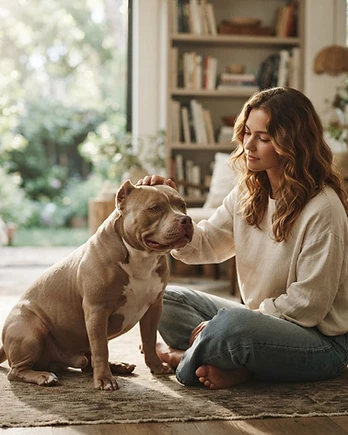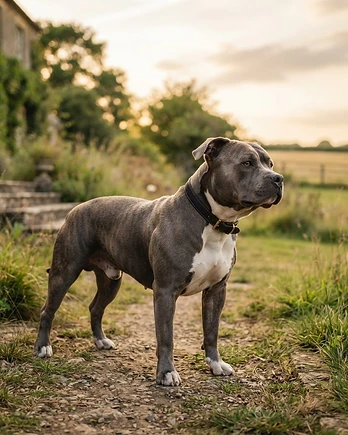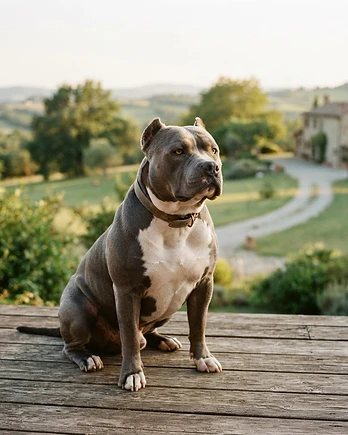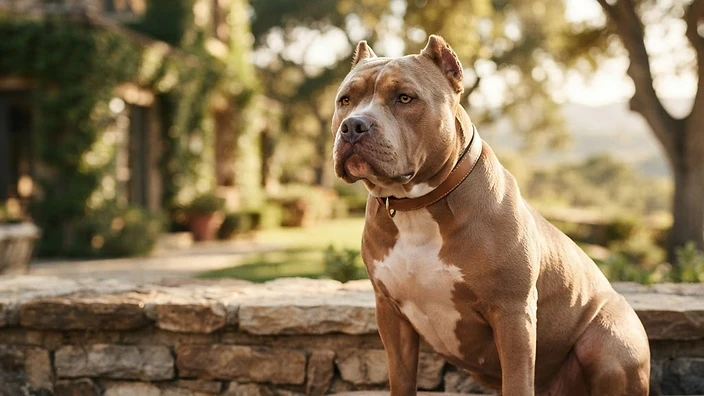
Few breeds inspire the kind of passionate devotion that the American Bully does. With a muscular, compact frame that turns heads and a heart so gentle it melts them, this breed occupies a singular space in the canine world — simultaneously misunderstood by outsiders and fiercely cherished by those who know them. Whether you're a first-time buyer researching your options or a seasoned enthusiast looking to deepen your knowledge, this guide was written for you.
At American Bully Haven Pups in Austin, Texas, we've spent years studying, breeding, and living alongside these remarkable dogs. We're ABKC- and UKC-registered breeders committed to health-tested, ethically produced American Bullies, and everything in this guide reflects our hands-on experience and ongoing education. We want you to walk away with a complete, accurate picture of the breed — the history, the structure, the temperament, the genetics, and everything in between.
This is the most comprehensive American Bully breed resource we know how to write. Bookmark it, share it, and return to it as you move through your journey. You can also explore our full resource library for deep-dive articles on health, nutrition, training, and more.
Origin and History of the American Bully
The American Bully is a deliberately developed breed, not an accidental one. Its origins trace to the United States in the late 1980s and early 1990s, when visionary breeders sought to create a companion dog that retained the athleticism and loyalty of the American Pit Bull Terrier while amplifying its gentle, family-friendly qualities and adding a more substantial, blocky physical presence.
The primary foundation breed is the American Pit Bull Terrier (APBT), itself descended from 19th-century British bull-and-terrier crosses. Breeders selectively introduced genetics from the American Staffordshire Terrier, and to varying degrees, the Staffordshire Bull Terrier, English Bulldog, and in some XL lines, the Olde English Bulldogge. The result, over successive generations of selective breeding, was a dog that looked and felt different enough from its ancestors to warrant recognition as its own breed.
The American Bully Kennel Club (ABKC) was founded in 2004 specifically to register, standardize, and promote the breed. This was a landmark moment — it gave the American Bully an official identity separate from the APBT and established the conformation standards that define the breed today. The United Kennel Club (UKC) followed by formally recognizing the American Bully in 2013, further legitimizing the breed on the national stage.
Today, the American Bully is one of the fastest-growing breeds in the United States and internationally, with a robust show circuit, dedicated breed clubs, and a global community of passionate enthusiasts.
The Four ABKC Size Varieties
One of the most distinctive and often confusing aspects of the American Bully is that it comes in four officially recognized size classes, each with its own conformation standard. Size is measured at the withers (top of the shoulder blades) and is a defining criterion for class placement in ABKC and UKC shows.
Pocket Bully
The Pocket Bully is the smallest recognized variety. Males stand under 17 inches at the withers; females stand under 14 inches. Despite the name, Pocket Bullies are not frail or delicate — they carry the same dense musculature and broad, blocky head as their larger counterparts, just compressed into a smaller frame. Weight typically ranges from 11 to 22 kg (approximately 25–50 lbs). Their compact build and manageable size make them a popular choice for apartment dwellers and urban families.
Standard Bully
The Standard Bully is the benchmark variety and the foundation from which all others are evaluated. Males measure 17–20 inches at the withers; females measure 16–19 inches. This is the classic American Bully silhouette — broad chest, thick neck, moderate stop, and a powerful topline. Weight ranges roughly from 25 to 45 kg (55–100 lbs) depending on sex and build. The Standard is the most commonly shown variety and the best representation of the breed's intended conformation.
Classic Bully
The Classic Bully shares the same height parameters as the Standard but carries a lighter body frame with less overall muscle mass and bulk. Think of it as a leaner, more athletic expression of the same blueprint. The Classic retains the breed's essential head type and structural proportions but without the extreme muscling that defines the Standard and XL. This variety often appeals to owners who prefer a more streamlined dog that still unmistakably reads as an American Bully.
XL Bully
The XL Bully is the largest recognized variety. Males stand over 20 inches at the withers (up to approximately 23 inches); females stand over 19 inches. XL Bullies are imposing animals — heavily muscled, broad-chested, and commanding in presence — yet they remain subject to the same temperament and structural quality standards as any other variety. Weight can range from 45 to 65+ kg (100–150+ lbs) in males. It's worth noting that the XL Bully is NOT the same as the "XL American Bully" designated under the UK's breed-specific legislation — that designation reflects a different population and political context.
Size Variety Comparison Table
| Variety | Male Height | Female Height | Typical Weight Range | |---------|------------|---------------|----------------------| | Pocket | Under 17" | Under 14" | 25–50 lbs | | Standard | 17–20" | 16–19" | 55–100 lbs | | Classic | 17–20" | 16–19" | 45–85 lbs | | XL | Over 20" | Over 19" | 100–150+ lbs |

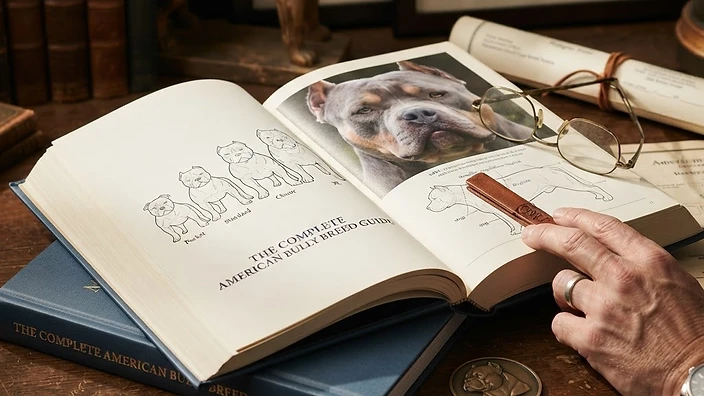
A visual comparison of the four American Bully size varieties recognized by the ABKC — Pocket, Standard, Classic, and XL — illustrating differences in height at the withers, body mass, and overall conformation as defined in the official breed standard.
Temperament: The American Bully's Greatest Asset
If there is one thing that surprises people who meet an American Bully for the first time, it's the temperament. Bred specifically to be human-oriented companion animals, these dogs are warm, affectionate, and deeply social. The ABKC breed standard explicitly describes the ideal American Bully temperament as "outgoing and stable, gentle with people" and notes that "viciousness, fearfulness, or extreme shyness are unacceptable."
In practice, this means:
- Exceptional with children. American Bullies are patient, tolerant, and playful, earning them a well-deserved reputation as "nanny dogs" in families with young kids.
- Loyal and bonded. They form deep attachments to their families and thrive on human contact. Isolation or prolonged neglect is psychologically harmful to this breed.
- Confident, not aggressive. A well-bred American Bully is stable and self-assured around strangers and novel environments, not reactive or fearful.
- Adaptable. With adequate exercise (30–60 minutes daily for adults), they adapt well to apartment living, suburban homes, and rural properties alike.
It is important to distinguish between dog-directed aggression and human-directed aggression. Some American Bullies, particularly those with strong APBT lineage, may exhibit dog-selective behavior — a preference for their own species or intolerance of same-sex dogs. This is managed through proper socialization beginning in puppyhood, not a temperament flaw. Human aggression, by contrast, is a serious fault and disqualifying trait in any reputable breeding program.
For a full breakdown of raising a well-adjusted American Bully from puppyhood through senior years, see The Complete American Bully Care Guide: Puppyhood to Senior Years.
ABKC Conformation Standard: What Makes a Great American Bully
The American Bully Kennel Club conformation standard is the technical blueprint against which all American Bullies in the show ring are evaluated. Understanding it helps buyers identify quality breeding and spot structural faults.
Head
The head is large, broad, and blocky — one of the breed's most defining features. The skull is wide between the cheeks, with a pronounced stop (the angle between the forehead and the muzzle). The muzzle is medium in length, square, and deep. Cheek muscles should be pronounced. Eyes are round to oval, set low and wide; all colors are accepted except albinism. Ears may be natural or cropped.
Neck, Body, and Topline
The neck is heavy, muscular, and slightly arched, blending smoothly into well-laid-back shoulders. The chest is broad, deep, and well-filled. The topline (back line from withers to croup) should be level or have a very slight slope toward the hindquarters. The back is strong and muscular. A roached or swayed topline is a fault.
Legs and Feet
Front legs are straight, heavy-boned, and set wide. Pasterns are upright with minimal slope. Feet are round, compact, and well-arched. Rear legs show moderate angulation at the stifle and hock. Cow hocks and splayed feet are faults.
Coat and Color
The coat is short, close, and glossy. All colors and color patterns are accepted by the ABKC except merle in some show contexts (discussed further in the genetics section below). Color should not be the primary selection criterion over structure and temperament.
Movement
Gait should be balanced and powerful — firm, confident strides covering ground efficiently. Paddling, rolling, or weak rear drive are movement faults.
Coat Colors and Genetics: A Deep Dive
The American Bully's color palette is one of the most diverse in the canine world, and understanding the genetics behind these colors helps buyers make informed decisions and helps breeders plan responsible litters.
Base Colors
- Black — Dominant eumelanin expression; genotype typically E/E or E/e at the extension locus with K/K or K/k at the dominant black locus.
- Blue — A dilute of black, produced by two copies of the dilution gene (d/d at the MLPH locus). Blue dogs range from steel blue to slate.
- Chocolate (Brown) — Results from the b/b genotype at the TYRP1 locus, which dilutes eumelanin to a warm brown.
- Lilac — A double dilute: both blue (d/d) and chocolate (b/b) acting simultaneously, producing a soft grayish-lavender coat. Atlas and Ella are beautiful examples of lilac tri-color expression.
- Fawn and Red — Phaeomelanin-dominant colors controlled by the extension locus (e/e) or agouti pathway.
- Brindle — A pattern of dark striping over a base color, controlled by the K locus (k^br allele). One of the most classic American Bully patterns.
Tri-Color and Tan Points
Tri-color American Bullies carry the a^t (tan point) allele at the agouti locus, producing distinct tan/copper markings above the eyes, on the cheeks, chest, and legs against a base coat color. Tri-color expression can overlay any base color — hence blue tri, chocolate tri, lilac tri, and black tri. Our own Bowie — Blue Tri Male and Diesel — Chocolate Tri Male showcase this pattern beautifully.
Ghost Tri, Tuxedo, and Piebald
- Ghost tri refers to subtle, barely visible tan points on a heavily pigmented dog — often seen in dogs with a single copy of the tan point allele.
- Tuxedo is an informal term for high-white patterning on the chest and feet.
- Piebald (Parti) — Large white patches due to the S locus (sp/sp) genotype.
Merle
Merle is produced by the M locus (SILV gene) and creates a mottled, dappled pattern with patches of diluted pigment. Hazel — Merle Female is a stunning example of merle coloring. Responsible merle breeding requires DNA testing to prevent double merle (M/M) offspring, which can suffer from vision and hearing deficits. Merle-to-merle breeding is an ethical line no responsible breeder should cross.
Color Genetics and Health
Some color-associated health considerations include Color Dilution Alopecia (CDA), a skin condition occasionally seen in blue and lilac dogs caused by clumping of melanin granules in hair shafts. Not every dilute dog develops CDA, but buyers should ask breeders about skin health history in dilute-colored lines.

A group of American Bully puppies displaying diverse coat colors and patterns including lilac tri-color, blue tri, and merle, illustrating the breed's wide genetic color palette and the role of dilution, tan point, and merle loci in producing these variations.
Influential Bloodlines
Understanding bloodlines helps serious buyers evaluate pedigrees and understand what physical and behavioral traits to expect. Several bloodlines have had an outsized impact on shaping the modern American Bully.
- Razor's Edge — Founded by Dave Wilson in the Washington D.C. area, this is arguably the most influential bloodline in American Bully history. Razor's Edge dogs contributed the breed's characteristic wide chest, blocky head, and gentle temperament. Much of the APBT influence was softened through this line.
- Gottiline — Developed by Richard Barajas around the dog Juan Gotty, this bloodline emphasized extreme width and mass, shorter muzzles, and lower-slung bodies. Gottiline genetics are present in a significant percentage of modern Pocket and Standard Bullies.
- Remyline — Known for producing athletic, well-structured dogs with exceptional rear drive and balanced conformation. Often favored by breeders who prioritize movement quality alongside mass.
- Kurupt Bloodline — A California-based line known for producing exotic color expression (particularly lilac, blue, and tri) alongside heavy muscling.
- Miagi Bullies — Associated with refining the XL variety with improved structure and temperament stability.
No single bloodline produces perfect dogs — elite breeders cross lines strategically to combine structural strengths while minimizing health and temperament weaknesses. Studying a pedigree three to five generations deep is standard practice in serious programs.
Registration Bodies: ABKC vs. UKC
Two primary organizations register and govern the American Bully in the United States.
American Bully Kennel Club (ABKC)
Founded in 2004, the ABKC is the breed's founding registry and remains the primary authority on the American Bully conformation standard, show rules, and breed development. ABKC registration requires submitted photos and lineage documentation. The ABKC also governs the ABKC World Classic, the breed's most prestigious show event.
United Kennel Club (UKC)
The UKC recognized the American Bully in 2013 and maintains its own slightly different conformation standard and show circuit. The UKC is the second-oldest all-breed registry in the United States and adds significant legitimacy and show opportunity for breeders. UKC events operate under a Total Dog philosophy that evaluates both conformation and performance.
Other Registries
Organizations like the International Bully Coalition (IBC) and Bully Breeds Coalition (BBC) also operate shows and registrations, primarily for the "Exotic" and "Micro" variants — phenotypes not recognized by the ABKC or UKC mainstream standards.
OFA Health Testing
Regardless of registration body, ethical breeders should conduct Orthopedic Foundation for Animals (OFA) health evaluations including hip and elbow dysplasia screening, cardiac evaluation, and ophthalmological exams. At American Bully Haven Pups, health testing is a non-negotiable part of our breeding program.
American Bully vs. Related Breeds
The American Bully is frequently confused with several related breeds. Here's a clear breakdown:
| Feature | American Bully | American Pit Bull Terrier | American Staffordshire Terrier | English Bulldog | |---------|---------------|--------------------------|-------------------------------|----------------| | Build | Heavy, blocky, wide | Athletic, lean | Muscular, moderate | Heavy, low-slung | | Head | Very broad, blocky | Wedge-shaped | Broad but less extreme | Very broad, wrinkled | | Temperament | Companion-focused | High drive, athletic | Confident, social | Laid-back, stubborn | | Energy Level | Moderate | High | Moderate-High | Low | | ABKC Recognized | Yes | No | No | No | | Primary Purpose | Companion | Terrier/working | Show/companion | Companion |
The most important distinction: the American Bully was bred away from working drive and toward companion qualities. It is not a re-branded Pit Bull — it is a distinct breed with its own standard, registry, and breeding history.
Health Considerations and Lifespan
The American Bully's lifespan ranges from 10 to 13 years, with smaller varieties (Pocket) generally living on the longer end of that range and larger varieties (XL) trending slightly shorter, consistent with the general pattern across dog sizes.
Common health concerns to be aware of include:
- Hip and elbow dysplasia — Common in heavily muscled, large-framed breeds. OFA screening is essential.
- Brachycephalic Obstructive Airway Syndrome (BOAS) — Some individuals, particularly those with very short muzzles, may experience breathing difficulties. Ethical breeders select for functional muzzle length.
- Skin conditions — Including allergies, demodectic mange, and Color Dilution Alopecia in blue/lilac individuals.
- Congenital heart conditions — Cardiac screening via OFA is recommended.
- Hypothyroidism — Thyroid panel testing is advisable, particularly in breeding animals.
For a complete walkthrough of health milestones, vaccination schedules, and senior care, see The Complete American Bully Care Guide: Puppyhood to Senior Years.
What to Expect: Owning an American Bully
Owning an American Bully is one of the most rewarding experiences in the dog world — but it comes with real responsibilities.
- Exercise: 30–60 minutes of moderate exercise daily. American Bullies enjoy walks, fetch, and structured play but are not endurance athletes. Avoid over-exercising puppies under 18 months, as growth plates are still developing.
- Nutrition: A high-quality diet with a minimum of 24–26% crude protein and 12–16% fat supports muscle maintenance. AAFCO-compliant foods or veterinarian-supervised raw feeding are appropriate.
- Grooming: The short, dense coat requires minimal grooming — weekly brushing with a rubber curry brush and monthly baths. Clean skin folds (in dogs that have them) weekly to prevent dermatitis.
- Training: Positive reinforcement-based training is highly effective. American Bullies are intelligent and eager to please, though some can be stubborn. Early socialization and obedience training (beginning at 8–12 weeks) are essential.
- Housing: Adaptable to most living situations, but not suited to outdoor-only living. They are thermally sensitive in extreme heat or cold due to their short coats and compact airways.
When you're ready to welcome one home, our adoption guide walks you through every step of the process.
Key Takeaways
- The American Bully was deliberately developed in the late 1980s–early 1990s from APBT and AmStaff foundation stock, with the goal of creating the ultimate companion dog.
- There are four ABKC-recognized size varieties: Pocket, Standard, Classic, and XL — each with distinct height parameters.
- Temperament is the breed's defining characteristic: human-oriented, gentle, loyal, and stable.
- The ABKC (founded 2004) and UKC (recognized the breed in 2013) are the two primary registration bodies.
- Coat color genetics are complex and diverse; responsible color breeding requires DNA testing, particularly for merle.
- Influential bloodlines include Razor's Edge, Gottiline, Remyline, and Kurupt.
- Health testing (OFA hips, elbows, cardiac, eyes) is a hallmark of ethical breeding.
- The American Bully is NOT the same as the American Pit Bull Terrier — it is a distinct, separately registered breed.
- Lifespan is 10–13 years; smaller varieties tend toward the longer end.
Frequently Asked Questions
Is the American Bully the same as a Pit Bull?
No — this is one of the most persistent misconceptions about the breed. The American Bully was selectively bred from American Pit Bull Terrier and American Staffordshire Terrier stock, but it has been developed into a distinct breed with its own ABKC and UKC registration, its own conformation standard, and a temperament profile specifically oriented toward companionship rather than working drive. Calling an American Bully a "Pit Bull" is roughly as accurate as calling a Labrador a "Retriever mix" — technically traceable, but imprecise and misleading.
Are American Bullies good with children?
American Bullies are widely regarded as one of the best family dogs for households with children. Their patient, tolerant, and affectionate nature — combined with their physical sturdiness — makes them well-suited to the unpredictable energy of young kids. As with any breed, supervision of interactions between dogs and very young children is always recommended, and children should be taught to respect the dog's space. Socialization from puppyhood reinforces these positive traits.
How much does an American Bully puppy cost?
Prices vary widely based on bloodline, variety, color, and breeder reputation. From a health-tested, ABKC/UKC-registered breeder, expect to pay anywhere from $2,500 to $10,000+ for a quality puppy. Exotic colors (lilac, merle, tri) and high-demand bloodlines command premium pricing. Be cautious of puppies priced under $1,500 from breeders who cannot provide health testing documentation — the cost of genetic diseases and structural problems far exceeds any upfront savings.
What is the difference between a Pocket Bully and a Micro Bully?
A Pocket Bully is an ABKC-recognized size variety of the American Bully. A "Micro Bully" (also called "Exotic Micro") is an informal designation for dogs bred to an even smaller, more extreme standard — often involving additional genetic input from breeds like the Shorty Bull or French Bulldog. Micro Bullies are not recognized under the ABKC or UKC standard and are sometimes associated with more significant health challenges related to extreme conformation. At American Bully Haven Pups, we breed within recognized ABKC and UKC standards.
How do I know if a breeder is reputable?
A reputable American Bully breeder will provide: ABKC and/or UKC registration papers for both parents; OFA health testing results (hips, elbows, cardiac); a health guarantee and contract; references from previous buyers; transparency about their breeding program; and puppies that are well-socialized, parasite-treated, vaccinated, and microchipped before leaving. Red flags include no registration papers, no health testing, multiple litters available at all times, and pressure to buy quickly. You can learn more about what we offer through our breeding program.
What is Color Dilution Alopecia and should I be concerned?
Color Dilution Alopecia (CDA) is a genetic skin condition that can affect blue and lilac (double dilute) American Bullies. It results from abnormal melanin granule distribution in hair shafts, leading to dry, brittle hair, patchy hair loss, and sometimes skin infections. Not all blue or lilac dogs develop CDA — many live their entire lives without symptoms. Responsible breeders monitor for CDA in their dilute lines and can share skin health history. Management includes gentle shampoos, moisturizing treatments, and veterinary care if secondary infections occur.
Ready to Find Your American Bully?
If this guide has deepened your appreciation for what makes the American Bully so special, we'd love to help you take the next step. At American Bully Haven Pups, every puppy in our program is health-tested, ABKC- and UKC-registered, and raised in our home with early neurological stimulation and structured socialization.
Browse our available American Bully puppies — including stunning individuals like Atlas — Lilac Tri-Color Male, Hazel — Merle Female, and Ella — Lilac Tri Female. When you're ready to move forward, our adoption guide explains every step of our process, and we're always here to answer your questions — just contact us directly.
For more in-depth resources on health, training, nutrition, and raising your American Bully, explore our full resource library. Your perfect companion is closer than you think.