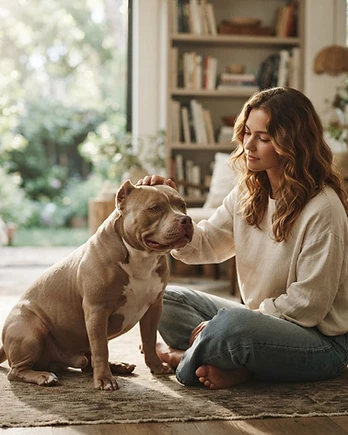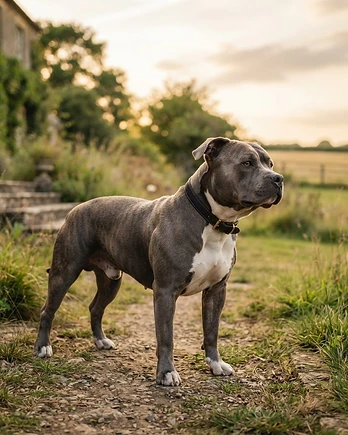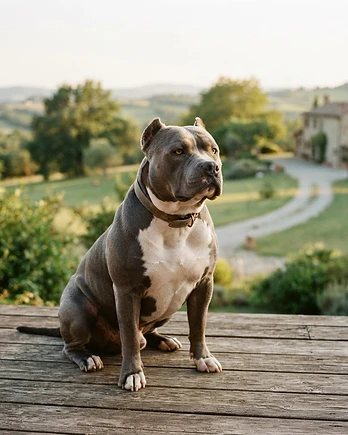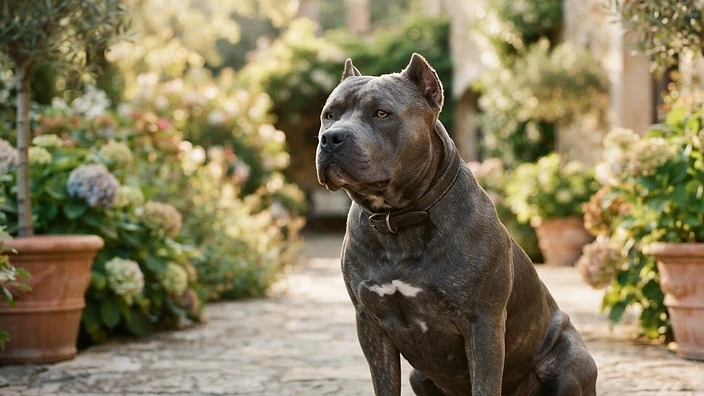
Few breeds inspire the kind of instant, jaw-dropping admiration that the American Bully does. That broad chest, those heavily muscled shoulders, that surprisingly gentle expression — this is a dog that commands attention and then completely disarms you with affection. Whether you're a lifelong Bully enthusiast or someone who just encountered the breed for the first time and can't stop thinking about it, you've come to the right place.
At American Bully Haven Pups in Austin, Texas, we've dedicated our program to producing ABKC- and UKC-registered American Bullies that are as structurally sound as they are emotionally balanced. We've whelped litters, studied pedigrees, evaluated conformation, and placed hundreds of puppies into loving homes. This guide is the distillation of everything we know — and everything a future owner, enthusiast, or breeder needs to understand about this remarkable breed.
This is the most comprehensive American Bully breed guide you'll find anywhere. We cover the breed's complete history, all four ABKC-recognized size classes, the official conformation standard, the full spectrum of coat colors and their genetics, the most influential bloodlines in the breed's development, registration bodies, and how the American Bully compares to related breeds. Bookmark it, share it, and come back to it often. Let's dive in.
Origin and History of the American Bully
The American Bully is a deliberately created breed, developed in the United States during the late 1980s and formalized through the 1990s. Its primary architect was Dave Wilson of Razors Edge Kennels in the Washington, D.C. area, though breeders across Virginia, California, and beyond contributed to the breed's early development.
The foundation of the American Bully is the American Pit Bull Terrier (APBT), specifically dogs from working and show lines that expressed a wider, more compact body type. Breeders selectively crossed these dogs with the American Staffordshire Terrier (AmStaff) and, to a lesser extent, the Staffordshire Bull Terrier. Some early breeders also introduced genetics from the English Bulldog and American Bulldog to amplify the characteristic blocky head, short muzzle, and heavy bone density that define the breed today.
The goal was specific and intentional: create a companion dog that retained the loyalty, intelligence, and biddability of the Bull and Terrier heritage while breeding away from the high prey drive and dog-selective tendencies of working APBT lines. The result was a breed purpose-built for family life — heavily muscled and visually imposing, but with a temperament calibrated for affection.
The American Bully Kennel Club (ABKC) was founded in 2004, providing the breed's first dedicated registry and conformation standard. The United Kennel Club (UKC) recognized the American Bully as a separate breed in 2013, further legitimizing its distinct identity apart from the APBT. For a deeper look at how these registries differ and what registration means for your dog, read our guide on ABKC vs UKC Registration: What Every Bully Owner Must Know.
The Four ABKC-Recognized Size Varieties
One of the most distinctive features of the American Bully breed is its four officially recognized size classes. These are not separate breeds — they share the same conformation standard — but size and proportion requirements differ meaningfully between classes. Understanding the differences is essential whether you're choosing a puppy or evaluating a dog at a show.

A visual comparison of the four American Bully varieties recognized by the ABKC: Pocket, Standard, Classic, and XL. Each variety shares the same breed standard proportions but differs in height range and overall body mass.
Pocket Bully
The Pocket Bully is the smallest recognized variety. Males measure under 17 inches at the withers (but no shorter than 14 inches); females measure under 16 inches (no shorter than 13 inches). Despite the name, Pocket Bullies are not small dogs by weight — a well-built male may weigh 30–50 lbs and carry extraordinary muscle mass for his height. The Pocket is defined by the same standard as the Standard but scaled down, and disqualified if below the minimum height thresholds.
Pocket Bullies have become enormously popular for apartment and urban living due to their more manageable size, though their exercise and enrichment needs are identical to larger varieties. For a detailed comparison, see our article Pocket vs Standard Bully: Which Size Is Right for You?
Standard Bully
The Standard Bully is the breed's foundational class. Males measure 17–20 inches at the withers; females measure 16–19 inches. This is the benchmark against which all other varieties are measured. Standard Bullies typically weigh between 50–80 lbs depending on sex and build, with the hallmark compact, heavily muscled body, broad skull, and short, strong back.
Classic Bully
The Classic Bully shares the same height parameters as the Standard but carries a lighter overall body frame and less overall body mass. Think of the Classic as a bridge between the APBT/AmStaff heritage and the modern Bully phenotype — a leaner, more athletic expression of the breed that preserves more of the original working dog structure. Classic Bullies are often described as more agile and easier to condition, and they tend to have fewer structural health concerns related to extreme mass.
XL Bully
The XL Bully is the largest recognized variety. Males exceed 20 inches at the withers; females exceed 19 inches. XL Bullies are massive, commanding dogs that can weigh 80–150 lbs or more, yet the standard requires the same proportional balance as the Standard — the XL is simply a larger-scale version, not an exaggerated one. Structurally sound XL Bullies move with surprising fluidity given their size.
Quick Size Comparison
| Variety | Male Height | Female Height | Typical Weight | |---------|------------|---------------|----------------| | Pocket | 14–<17 in | 13–<16 in | 30–50 lbs | | Standard | 17–20 in | 16–19 in | 50–80 lbs | | Classic | 17–20 in | 16–19 in | 40–70 lbs | | XL | >20 in | >19 in | 80–150 lbs |
ABKC Conformation Standard: What Makes a Correct American Bully
The ABKC standard describes the ideal American Bully as a medium-sized dog of confident, outgoing character with a heavy, muscular build and a smooth coat. Understanding the standard is critical for evaluating breeding quality.
Head: Large and broad, with a wide, deep skull and well-defined cheeks (masseter muscles). The stop should be moderate to well-defined. Muzzle is broad, blocky, and shorter than the skull — typically 25–35% of total head length.
Eyes: Low-set, round to oval in shape. All colors accepted except albinism (both eyes fully pink/white). Loose, drooping eyelids (ectropion) and inverted eyelids (entropion) are faults.
Ears: High-set, can be cropped or natural. Rose, semi-prick, and prick ears are all acceptable.
Neck: Heavy, muscular, and slightly arched. A neck that is too thin, too long, or too short is a fault.
Body: Chest is deep and broad with well-sprung ribs. The topline is level to slightly sloping rearward. The back is strong and muscular, of short to medium length. The loin is short and slightly arched.
Legs and Movement: Straight, parallel front legs with heavy bone. Hindquarters are powerful with well-muscled thighs. Movement is described as efficient and powerful — not waddling or restricted.
Coat: Short, close, stiff to the touch. Accepted in all colors and patterns except merle in some historic interpretations (though many ABKC-affiliated shows now accept merle).
Disqualifications include: dogs showing signs of aggression toward humans, albinism, and dogs that fall outside the height ranges for their entered class.
For information on how ABKC registration works in practice, including papers, pedigrees, and DNA verification, explore our ABKC vs UKC Registration: What Every Bully Owner Must Know resource.
American Bully Coat Colors and Genetics
The American Bully is one of the most color-diverse breeds in the canine world. Understanding coat color genetics not only helps you appreciate the visual variety — it helps you evaluate breeder ethics and avoid health risks associated with certain color combinations.

A display of American Bully coat color variety including lilac, blue tri-color, chocolate tri-color, and merle patterns. Each color is produced by specific genetic combinations at the dilution, brown, agouti, and merle loci.
Base Coat Colors
American Bully coat color is governed by the same genetic loci as other dog breeds:
- Black: Dominant eumelanin expression at the E and A loci. The most common base color.
- Blue (dilute): The d/d genotype at the MLPH (dilution) locus dilutes black pigment to a slate blue-grey. Blue Bullies are highly popular — see our Bowie — Blue Tri Male American Bully puppy.
- Chocolate (brown): The b/b genotype at the TYRP1 locus dilutes black to brown. Our Diesel — Chocolate Tri Male American Bully puppy is a stunning example.
- Lilac: The double dilute — d/d (blue) AND b/b (chocolate) — produces a warm silvery-lavender coat with amber or champagne eyes. Lilac is one of the most sought-after and genetically complex colors in the breed. Meet our Atlas — Lilac Tri-Color Male American Bully puppy and Ella — Lilac Tri Female American Bully puppy.
- Fawn/Buckskin: Phaeomelanin-dominant coats ranging from pale cream to deep red-fawn.
- Red: Deep phaeomelanin expression producing rich rust to mahogany coats.
- White: Can result from extreme white spotting (S locus) or recessive red.
Pattern Genetics
- Tri-Color: The tan point pattern, controlled by the atat genotype at the ASIP (agouti) locus. Tan points appear on the eyebrows, cheeks, chest, legs, and under the tail. Tri coloring can be expressed over any base color — hence Blue Tri, Lilac Tri, Chocolate Tri, Black Tri, etc.
- Merle: The M locus (PMEL17 gene) creates a marbled, mottled pattern of diluted patches over a base color. Merle is visually stunning but carries a critical health warning: breeding two merle-to-merle dogs (double merle) produces puppies with a high risk of blindness and deafness. Responsible breeders never breed merle to merle. Our Hazel — Merle Female American Bully puppy is bred with full attention to this responsibility.
- Brindle: Striping pattern from the K locus interaction; black or blue brindle are common in the breed.
- Piebald: White spotting creating large irregular white patches over any base color.
For an in-depth exploration of every color variety and the genetics behind them, read our dedicated article on American Bully Coat Colors: Lilac, Blue, Tri & More Explained.
Temperament: The Heart of the Breed
If the American Bully's physical structure is impressive, its temperament is what truly wins people over. The ABKC standard explicitly describes the ideal American Bully as confident, outgoing, stable, and gentle — these are not incidental traits but core breed requirements.
American Bullies are:
- Human-oriented to an extraordinary degree. These dogs live for human connection. They are often described as "Velcro dogs" — following family members from room to room, leaning against legs, and actively seeking physical affection.
- Gentle with children. The breed's combination of patience, physical sturdiness, and social tolerance makes it an excellent companion for families with young children. Their low reactive threshold and high pain tolerance (relative to smaller, more fragile breeds) means accidental rough handling rarely escalates to a bite response.
- Highly trainable. American Bullies respond well to positive reinforcement training. Their eagerness to please and food motivation make them quick learners for obedience, tricks, and more advanced training.
- Low aggression toward humans. Any American Bully displaying aggression toward humans is a serious structural fault per the ABKC standard — not just a behavior problem, but a breed disqualification. This is a fundamental distinction from popular misconceptions about the breed.
- Variable with other dogs. Individual dog-to-dog tolerance varies. Early socialization is critical; some individuals carry more of the terrier heritage's dog-selective tendencies than others.
For a thorough exploration of why this breed makes such an extraordinary family companion, read Are American Bullies Good Family Dogs? Absolutely. Here's Why.
Influential Bloodlines in American Bully History
Understanding bloodlines is essential for evaluating pedigrees and understanding why certain dogs express the traits they do. These are the foundational kennels and lines that shaped the modern American Bully:
Razors Edge
Founded by Dave Wilson, Razors Edge is widely considered the most influential foundation bloodline in American Bully history. Razors Edge dogs contributed the signature wide head, heavy bone, and compact body that defines the breed's silhouette. Wilson's breeding program prioritized human-friendly temperament alongside physical structure.
Gottiline
Developed by Richard Barajas around the dog Juan Gotti, the Gottiline produced a rounder, more extreme head type and shorter, more compact body. Gottiline dogs had enormous influence on the Pocket Bully variety and helped push the breed's visual identity further from the APBT.
Kurupt Bloodline
Kurupt dogs, particularly the influential sire Kurupt's Mikeland, were known for extreme muscle mass, wide chests, and heavy rear quarters. The Kurupt line significantly influenced the XL variety.
Remyline
Founded by Fabian Hernandez, Remyline dogs brought refinement and athleticism alongside mass. Remyline genetics are frequently found in high-placing show dogs and well-balanced breeding programs.
Daxline / Muscletone
These California-based lines contributed to the Classic variety, maintaining a more athletic, functional body type with correct movement.
Tri-Color Revolution Bloodlines
The explosion of tri-color, lilac, and exotic-colored Bullies in the 2010s was driven by breeders who strategically introduced and expressed the atat (tan point) agouti genotype across established color lines. Breeders like those behind Crump's Kennels and various Texas-based programs helped popularize the color combinations now considered among the most valuable in the breed.
Registration Bodies: ABKC vs UKC
Two primary registries govern American Bully registration and conformation showing in the United States:
The American Bully Kennel Club (ABKC), founded in 2004, is the breed's original and most breed-specific registry. The ABKC maintains its own conformation standard, organizes shows across the United States, and offers DNA-verified registration. The ABKC recognizes four size classes (Pocket, Standard, Classic, XL) and hosts the American Bully World Championship.
The United Kennel Club (UKC), which recognized the American Bully in 2013, is one of the oldest all-breed registries in the world (founded 1898). UKC registration provides broader recognition and access to UKC events, but the UKC's American Bully standard differs slightly from the ABKC's, generally favoring a more moderate phenotype.
At American Bully Haven Pups, our dogs are registered with both bodies, providing our puppy buyers with maximum flexibility and documentation. Our about our breeding program page details our registration practices and pedigree transparency.
For everything you need to know about choosing registration, transferring papers, and what registration actually guarantees, read ABKC vs UKC Registration: What Every Bully Owner Must Know.
American Bully vs Related Breeds: Key Distinctions
Misidentification is one of the most common and consequential problems this breed faces. Here's how the American Bully compares to its closest relatives:
| Feature | American Bully | APBT | AmStaff | American Bulldog | |---------|---------------|------|---------|------------------| | Build | Compact, extreme muscle | Athletic, lean | Moderate muscle | Large, rangy | | Head | Broad, blocky, short muzzle | Wedge-shaped | Moderate block | Large, square | | Height | 13–21+ in | 17–21 in | 17–19 in | 20–28 in | | Prey Drive | Low to moderate | Moderate to high | Moderate | Moderate to high | | Primary Purpose | Companion | Working/sport | Show/companion | Working/guardian | | ABKC Recognized | Yes | No | No | No | | UKC Recognized | Yes (2013) | Yes | No | Yes |
The single most important distinction: the American Bully is NOT an American Pit Bull Terrier. They share ancestry but are separate breeds with different conformation standards, different registries, and different primary selection pressures. Breed-specific legislation (BSL) targeting "Pit Bulls" frequently misidentifies American Bullies — a reason proper registration documentation matters enormously for owners.
Health Considerations and OFA Testing
The American Bully is generally a robust breed, but its extreme phenotype — particularly in XL and heavily built individuals — creates specific health vulnerabilities that responsible breeders must address.
Hip Dysplasia: A developmental condition of the coxofemoral (hip) joint. Larger, heavier Bullies carry elevated risk. OFA (Orthopedic Foundation for Animals) hip evaluation, PennHIP radiography, or equivalent screening should be performed on all breeding dogs. Minimum recommended age for OFA preliminary evaluation: 4 months; for official certification: 24 months.
Elbow Dysplasia: OFA elbow evaluation is equally important, particularly in dogs with heavy front-end mass.
Brachycephalic Obstructive Airway Syndrome (BOAS): Dogs with extreme head conformation and shortened muzzles may experience stenotic nares, elongated soft palate, or everted laryngeal saccules. Responsible breeders select for functional airways.
Hereditary Cataracts: CAER (Companion Animal Eye Registry, operated by OFA) annual eye certification is recommended.
Cardiac Evaluation: Basic cardiac auscultation or echocardiography through OFA's cardiac program helps screen for inherited heart conditions.
Skin Conditions: Allergic dermatitis and seasonal allergies are relatively common. The breed's short coat and skin folds (in heavily built dogs) require routine care.
We strongly recommend reading our The Complete American Bully Health Guide for a comprehensive breakdown of every health test, screening protocol, and preventive care strategy relevant to this breed.
What Does an American Bully Cost?
American Bully pricing varies enormously based on variety, color, pedigree, registration, health testing, and breeder reputation. In 2025–2026, general price ranges are:
- Pet-quality Pocket or Standard: $2,000–$5,000
- Show-quality Standard or XL: $4,000–$10,000
- Exotic colors (Lilac, Merle, Tri) from health-tested, titled bloodlines: $5,000–$15,000+
- Top-tier breeding prospects from champion lines: $10,000–$50,000+
These numbers reflect the substantial investment ethical breeders make in OFA health testing (typically $300–$700 per dog per test), genetic color panel testing, ABKC/UKC registration and show entries, quality nutrition, veterinary prenatal and neonatal care, and the years of expertise required to produce structurally correct, temperamentally sound puppies.
For a thorough breakdown of what drives pricing and how to avoid scams, read our American Bully Price Guide 2026: What to Expect & Why It's Worth It.
Key Takeaways
- The American Bully was developed in the late 1980s–1990s from APBT, AmStaff, and Bulldog crosses, purpose-built as a family companion.
- Four ABKC-recognized varieties exist: Pocket, Standard, Classic, and XL — same standard, different height ranges.
- The ABKC (2004) and UKC (2013) are the primary registries; registration documents breed identity and provides showing eligibility.
- Temperament is a breed standard requirement: human aggression is a disqualifying fault.
- Coat color genetics are complex and diverse; lilac (double dilute), blue (single dilute), tri-color (tan point), and merle are all possible and popular.
- Key bloodlines — Razors Edge, Gottiline, Kurupt, Remyline — shaped the modern breed's phenotype.
- The American Bully is NOT the same breed as the American Pit Bull Terrier.
- Responsible breeders perform OFA hip, elbow, cardiac, and eye testing on all breeding dogs.
- Prices range from $2,000 to $15,000+ depending on variety, color, pedigree, and health testing.
Frequently Asked Questions
Are American Bullies aggressive or dangerous?
This is the most persistent and damaging misconception about the breed. The ABKC conformation standard explicitly disqualifies any dog displaying aggression toward humans — meaning a truly aggressive American Bully fails to meet the breed standard by definition. The breed was selectively developed to minimize human-directed aggression, and multiple generations of responsible breeding have reinforced a stable, gentle temperament. Properly socialized American Bullies are consistently ranked among the most affectionate and human-tolerant breeds by trainers and behaviorists who work with them. Aggression in any individual dog typically reflects poor socialization, abusive handling, or irresponsible breeding — not breed nature. For a thorough answer, read Are American Bullies Good Family Dogs? Absolutely. Here's Why.
What is the difference between a Pocket Bully and a Standard Bully?
The primary difference is height: Pocket Bullies measure under 17 inches (males) or 16 inches (females) at the withers, while Standard Bullies measure 17–20 inches (males) or 16–19 inches (females). Both varieties share the same conformation standard — the Pocket is not simply a smaller dog, but a correctly proportioned American Bully scaled down. Weight in Pocket Bullies ranges from roughly 30–50 lbs despite the compact frame. The choice between varieties often comes down to living space, lifestyle, and aesthetic preference rather than any significant temperament difference. Our dedicated comparison article Pocket vs Standard Bully: Which Size Is Right for You? walks through every factor.
How do I know if an American Bully breeder is ethical and reputable?
Ethical breeders will register their dogs with the ABKC and/or UKC, perform OFA health testing on all breeding animals, provide written health guarantees, offer transparent pedigree documentation, and welcome questions about their program. They will not breed merle to merle, will not sell puppies younger than 8 weeks, and will take dogs back if an owner cannot keep them. Red flags include puppies priced unusually low, no health testing documentation, refusal to show facilities, and pushy sales tactics. Visit about our breeding program to see our full commitment to these standards.
What health tests should American Bully breeding dogs have?
At minimum, responsible American Bully breeders should complete OFA hip and elbow evaluation, OFA cardiac screening, and CAER eye certification on all breeding dogs before producing litters. For dogs with heavy builds, radiographic evaluation of the spine may also be appropriate. DNA panel testing for coat color genetics, degenerative myelopathy (DM), and other heritable conditions adds another layer of transparency. The OFA's Canine Health Information Center (CHIC) database allows public verification of completed health tests. Our The Complete American Bully Health Guide covers every test in detail.
Is the American Bully recognized by the AKC?
No — the American Kennel Club (AKC) does not currently recognize the American Bully as a distinct breed. The breed is recognized by the ABKC (its primary registry since 2004) and the UKC (since 2013). This means American Bullies cannot compete in AKC conformation events, but have a robust and growing show circuit through both the ABKC and UKC. Some owners register their dogs with the AKC's Canine Partners program, which allows participation in certain performance events but does not confer breed recognition.
What's the lifespan of an American Bully?
American Bullies typically live 10–13 years, with Pocket and Standard varieties often reaching the higher end of that range. XL Bullies, like most large-breed dogs, may have slightly shorter average lifespans of 9–12 years. Lifespan is heavily influenced by breeding quality, nutrition, body weight management, and preventive veterinary care. Dogs from health-tested lines with structurally correct conformation consistently outlive those from extreme or untested breeding programs. Our The Complete American Bully Care Guide: Puppyhood to Senior Years covers health and longevity from puppyhood through the senior years.
Ready to Meet Your American Bully?
If this guide has deepened your appreciation for what makes the American Bully such a remarkable breed, the next step is finding the right puppy from a program you trust. At American Bully Haven Pups, every puppy we place comes from ABKC- and UKC-registered, health-tested parents with transparent pedigrees and temperaments we'd stake our reputation on.
We currently have several extraordinary puppies available, including the lilac tri Atlas, blue tri Bowie, chocolate tri Diesel, lilac tri Ella, and merle Hazel. Explore our available American Bully puppies, review our adoption guide to understand our placement process, and browse our full resource library for every topic covered above in even greater depth.
When you're ready to talk, we're here. Contact us — we love nothing more than helping the right family find the right dog.