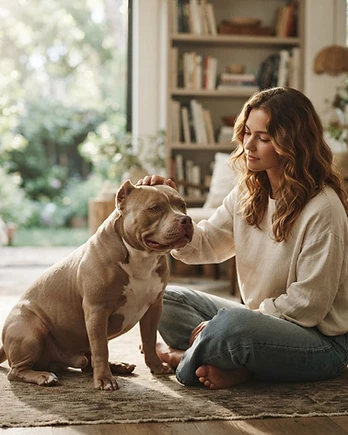
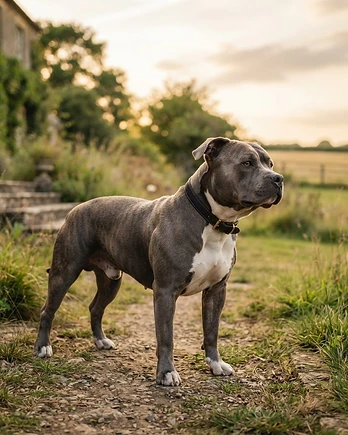
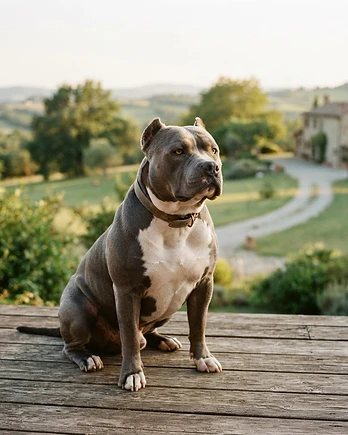
Bringing an American Bully into your home is one of the most rewarding decisions you'll ever make. These dogs are more than a breed — they're a lifestyle, a commitment, and for most owners, an unconditional love story that unfolds over a decade or more. Whether you're welcoming a wiggly Atlas — Lilac Tri-Color Male American Bully puppy or a spirited Hazel — Merle Female American Bully puppy, the care decisions you make from day one will shape their health, temperament, and quality of life for years to come.
This guide is the most comprehensive American Bully care resource you'll find anywhere. We've drawn on our experience as ABKC- and UKC-registered breeders here in Austin, Texas, veterinary best practices, and the real-world wisdom that comes from raising and placing dozens of Bullies in loving homes. We cover everything: the daily routine, age-appropriate exercise, coat and skin care, nutrition fundamentals, home and yard safety, seasonal considerations, travel, and the lifelong wellness habits that separate a thriving Bully from one that merely survives.
Whether you're a first-time owner or a seasoned Bully enthusiast looking to sharpen your care approach, bookmark this page. It's designed to be the one resource you return to at every stage of your dog's life. For even deeper dives into specific subtopics, explore our full resource library — each article in this care cluster goes further into the details we introduce here.
Key Takeaways
- American Bullies thrive on structured daily routines covering nutrition, exercise, socialization, and rest.
- Exercise must be age-appropriate — over-exercising puppies before growth plates close (typically 12–18 months) risks permanent joint damage.
- Short, dense coats require less grooming than most breeds but skin fold care and allergy management are critical.
- ABKC and UKC breed standards recognize four size classes: Pocket, Standard, Classic, and XL — care needs vary slightly by size.
- OFA health testing (hips, elbows, cardiac, eyes) is the gold standard for evaluating breeding stock; ask your breeder for documentation.
- Socialization between 3 and 14 weeks of age is the single most influential period for lifelong temperament.
- Senior Bullies (7+ years) need adjusted nutrition, reduced joint impact, and more frequent veterinary monitoring.
- A safe, enriched environment — indoors and in the yard — prevents the majority of accidental injuries.
Understanding Your American Bully: Breed Basics That Inform Care
Before diving into routines, it helps to understand the physical and genetic makeup of the American Bully, because the breed's unique conformation directly informs its care requirements. Recognized by both the American Bully Kennel Club (ABKC) and the United Kennel Club (UKC), the American Bully was developed in the United States between the 1980s and early 2000s, primarily from American Pit Bull Terrier and American Staffordshire Terrier stock, with influence from several Bulldog-type breeds.
The result is a medium-to-large, heavily muscled dog with a broad, blocky head, wide chest, and surprisingly gentle temperament. The four recognized size classes — Pocket (under 17 inches at the withers for males), Standard (17–19 inches), Classic (same height as Standard but lighter build), and XL (over 20 inches) — each carry slightly different metabolic demands and joint stress profiles. An XL male weighing 100–150 lbs needs more caloric intake and more joint support than a Pocket female at 30–40 lbs, but both share the same fundamental care framework.
Key anatomical considerations that affect care:
- Brachycephalic tendency: Some bloodlines exhibit a moderately shortened muzzle, which can affect thermoregulation and anesthetic risk.
- Heavy musculature: Increases metabolic rate, caloric needs, and susceptibility to heat stress during exercise.
- Skin folds (particularly in XL and Pocket variants): Require regular cleaning to prevent bacterial and yeast dermatitis.
- Compact, low-slung body: Makes swimming less efficient; monitor water safety closely.
For a full exploration of conformation, bloodlines, and ABKC breed standards, see The Complete American Bully Breed Guide: Everything You Need to Know.
The Daily Care Routine: Structure Is Love
American Bullies are routine-oriented dogs. A predictable daily structure reduces anxiety, reinforces training, and supports metabolic health. Here's what a healthy daily routine looks like across life stages.
Morning Routine
- Morning potty break immediately upon waking (within 5 minutes for puppies).
- Breakfast — measured portion of species-appropriate food (see Nutrition section).
- Morning exercise or play session — duration varies by age (see Exercise section).
- Brief training session — 5–10 minutes of obedience or enrichment work.
Midday (especially important for puppies and young dogs)
- Potty break every 2–3 hours for puppies under 6 months.
- Mental enrichment: puzzle feeders, chew toys, or a short sniff walk.
- Nap time: puppies need 16–18 hours of sleep per day for healthy neurological development.
Evening Routine
- Dinner — second measured meal (avoid feeding within 60 minutes of vigorous exercise to reduce bloat risk).
- Evening exercise or walk.
- Bonding time: grooming check, cuddle time, or a calm training session.
- Final potty break before bed.
Consistency in feeding times, sleep location, and exercise windows directly reduces cortisol levels in dogs and supports gut microbiome stability — both of which matter enormously for the immune-sensitive American Bully.
Exercise by Age: The Most Important Care Decision You'll Make
Over-exercising an American Bully puppy is one of the most common and damaging mistakes new owners make. The growth plates (epiphyseal plates) of large, heavily muscled breeds like the American Bully typically don't close until 12–18 months of age — in XL variants, sometimes up to 24 months. High-impact repetitive exercise before growth plate closure can cause permanent orthopedic damage including osteochondrosis dissecans (OCD), hip dysplasia exacerbation, and elbow dysplasia.
Exercise Guidelines by Age
| Age | Exercise Type | Duration | Notes | |---|---|---|---| | 8–12 weeks | Free play, gentle exploration | 10–15 min, 2–3x daily | No forced exercise; let puppy set pace | | 3–6 months | Short leash walks, play sessions | 15–20 min, 2–3x daily | Avoid stairs, jumping, rough play | | 6–12 months | Structured walks, fetch on soft surfaces | 20–30 min, 2x daily | Still avoid high-impact; no jogging | | 12–18 months | Gradual introduction to longer walks, light jogging | 30–45 min, 2x daily | Confirm growth plate closure with vet x-ray | | 18 months–6 years | Full adult exercise: walks, swimming, agility | 45–60 min, 2x daily | Swimming is ideal low-impact conditioning | | 7+ years (senior) | Moderate, low-impact exercise | 30–40 min, 2x daily | Adjust based on mobility and health status |
Swimming is the gold standard exercise for adult American Bullies — it builds lean muscle, supports cardiovascular health, and is completely non-weight-bearing, protecting joints throughout a dog's lifetime.


For Texas owners specifically: avoid exercising your Bully outdoors between 11 AM and 4 PM from May through September. Austin's summer heat regularly exceeds 100°F, and the American Bully's muscular build and moderate brachycephalic tendency make them highly susceptible to heat stroke. Pavement temperatures can exceed 150°F and cause paw pad burns within 60 seconds.
Nutrition: Fueling the American Bully's Impressive Physique
Feeding an American Bully correctly requires understanding their macronutrient needs, caloric density requirements, and life-stage adjustments. The AAFCO (Association of American Feed Control Officials) nutritional adequacy statement on your dog food label is your baseline quality checkpoint — always choose a food that meets AAFCO standards for your dog's life stage.
Macronutrient Targets
- Crude protein: 25–30% for adults; 28–32% for puppies. Biological value matters — named animal proteins (chicken, beef, salmon) should appear in the first two ingredients.
- Crude fat: 12–18% for most adults; slightly higher (18–22%) for high-activity or heavily muscled dogs.
- Digestible carbohydrates: A moderate, not excessive, carbohydrate load supports energy without contributing to inflammatory weight gain.
- Omega-3 fatty acids (EPA and DHA): Critical for coat quality, skin health, and joint lubrication. Supplementing with fish oil (1,000–2,000 mg EPA+DHA daily for adults) is standard practice among experienced Bully owners.
Feeding Schedule by Life Stage
- 8–12 weeks: 3–4 small meals daily; approximately 1–1.5 cups of high-quality puppy food per day (size-dependent).
- 3–6 months: 3 meals daily; gradually increase portion as growth demands rise.
- 6–12 months: Transition to 2 meals daily.
- 12 months+: 2 meals daily; transition to adult formula.
- Senior (7+): 2 meals daily of a senior or joint-support formula; reduce caloric density if activity declines.
Common misconception: Many owners believe that high-protein diets cause aggression or hyperactivity in Bullies. This is not supported by veterinary evidence. Dietary protein does not elevate cortisol or testosterone — behavioral issues stem from genetics, socialization deficits, and training gaps, not protein intake.
Foods to Avoid
- Xylitol, grapes and raisins, macadamia nuts, onions and garlic (allium species), chocolate (theobromine toxicity), raw yeast dough, and alcohol.
- Cooked bones (splintering risk; raw recreational bones are generally safer under supervision).
Grooming: Short Coat, Specific Needs
The American Bully's short, close-lying coat is one of the breed's most manageable features — but it doesn't mean zero maintenance. Skin health and coat condition in Bullies are closely linked to diet, environmental allergen exposure, and regular cleaning routines.
Weekly Grooming Checklist
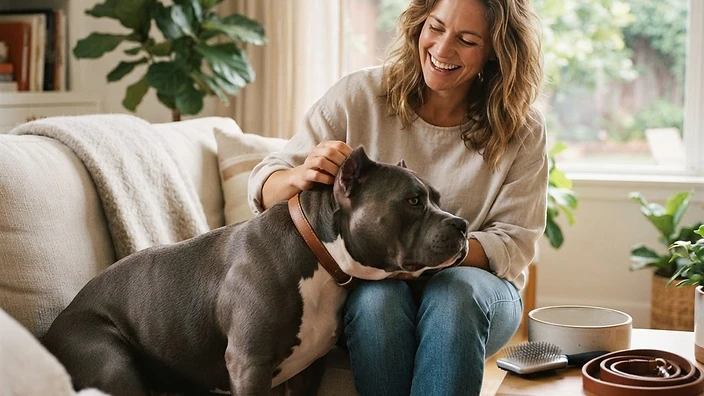
- Brushing: Once or twice weekly with a rubber curry brush or natural bristle brush. This distributes sebum, removes loose hair, and stimulates circulation.
- Bathing: Every 3–6 weeks with a gentle, pH-balanced (4.5–6.5) canine shampoo. Overbathing strips the skin's natural lipid barrier and worsens dryness or atopic dermatitis.
- Ear cleaning: Weekly inspection; clean with a veterinarian-approved ear cleaning solution if wax accumulation is visible. American Bullies are prone to otitis externa (ear canal inflammation), especially in humid climates.
- Nail trimming: Every 3–4 weeks. Overgrown nails alter gait mechanics and increase joint stress — particularly important in a heavily muscled breed.
- Dental hygiene: Daily tooth brushing with enzymatic dog toothpaste is ideal; enzymatic dental chews 3–4x weekly is a practical minimum. Periodontal disease in dogs begins as early as age 3 without intervention.
- Skin fold care: For dogs with facial or body folds, clean folds 2–3x weekly (daily in summer) with unscented baby wipes or chlorhexidine solution to prevent Malassezia yeast and Staphylococcal bacterial infections.

Coat Colors and Genetic Considerations
American Bullies come in a spectacular range of coat colors including blue, chocolate, lilac, merle, tri-color, and tuxedo patterns. Color is determined by genetic expression at the A-locus (agouti), B-locus (brown), D-locus (dilute), and M-locus (merle) among others. Merle coloration carries a double-merle risk — reputable breeders like ourselves test and never breed merle-to-merle. If you're interested in our color genetics, meet Ella — Lilac Tri Female American Bully puppy or Bowie — Blue Tri Male American Bully puppy to see how careful genetic selection produces both beautiful and healthy results.
Home and Yard Safety: Building a Bully-Proof Environment
American Bullies are curious, athletic, and powerful. A puppy-safe home rapidly becomes necessary — and for an XL Bully with adult strength,