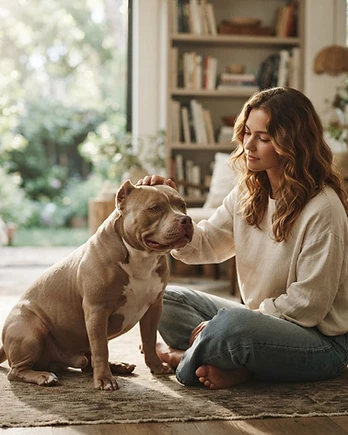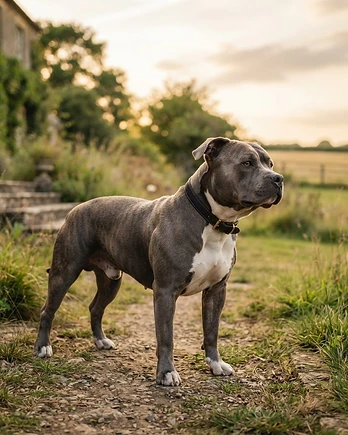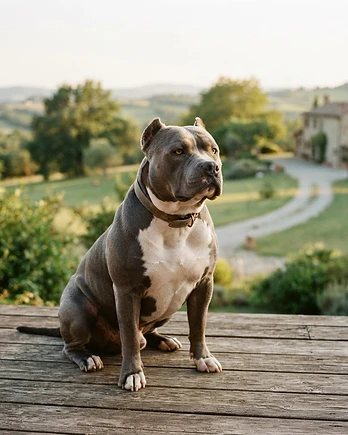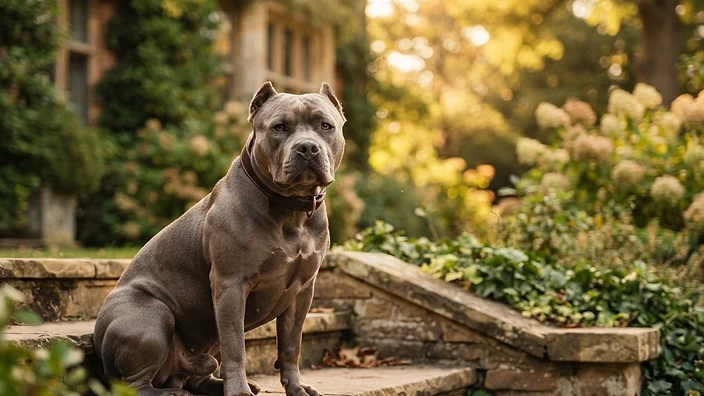
Few breeds inspire as much passion, loyalty, and misunderstanding as the American Bully. From the moment you lock eyes with one — that broad, confident head, that impossibly muscular yet compact frame, and that tail wagging like a helicopter — you sense you're in the presence of something truly special. At American Bully Haven Pups, we've built our entire program around this extraordinary breed, and we believe every prospective owner deserves a thorough, honest, and expert-level understanding of what makes the American Bully the family companion of the modern era.
This guide is the most comprehensive American Bully resource we've assembled. Whether you're a first-time buyer researching the breed, a seasoned enthusiast brushing up on ABKC conformation standards, or a curious reader who stumbled across a stunning lilac tri on social media and needs to know everything — you're in the right place. We'll cover origin and history, all four ABKC-recognized size varieties, temperament and behavioral traits, the full conformation standard, coat color genetics, influential bloodlines, registration bodies, and how this breed compares to its closest relatives.
For deeper dives into specific ownership topics, explore our full resource library. And when you're ready to meet the dogs behind the content, browse our available American Bully puppies here at American Bully Haven Pups in Austin, Texas.
Origin and History of the American Bully
The American Bully is a purpose-bred companion dog developed in the United States during the late 1980s and through the 1990s. The breed emerged primarily from the creative vision of breeders in Virginia and Los Angeles who sought to craft an ideal family dog by combining the loyalty and athleticism of the American Pit Bull Terrier (APBT) with the stockier build and gentler disposition of the American Staffordshire Terrier. Additional breed contributions — most notably from the American Bulldog, English Bulldog, and in some lines the Olde English Bulldogge — introduced the exaggerated musculature and wider frame that defines the modern Bully aesthetic.
Unlike the APBT, which was shaped by working and sporting instincts, the American Bully was intentionally selected for human sociability, low inter-human aggression, and an almost theatrical physical presence. Early foundational kennels including Razor's Edge (Dave Wilson, Northern Virginia) and Gottiline (Richard Barajas, Los Angeles) produced dogs that looked unlike anything previously registered — wide chests, thick bone, heavy heads — yet remained stable, affectionate, and gentle with families.
The American Bully Kennel Club (ABKC) was established in 2004 to provide formal breed recognition, a written conformation standard, and a registry infrastructure. The United Kennel Club (UKC) followed with full breed recognition in 2013. These milestones cemented the American Bully as a legitimate, standardized breed rather than simply an aesthetic trend within bull-breed circles.
The Four ABKC-Recognized Size Varieties
One of the most common sources of confusion for newcomers is the fact that "American Bully" encompasses four officially recognized size varieties, each with distinct height parameters but sharing the same breed standard in all other respects. Size variety is determined solely by height at the withers — not weight, head size, or bone structure.

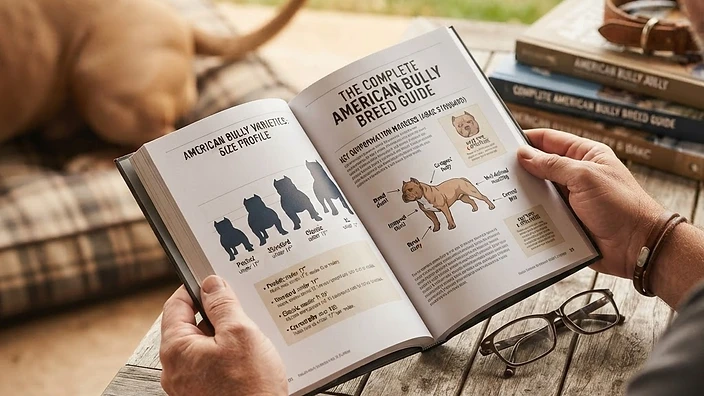
A visual comparison of the four American Bully size varieties recognized by the ABKC, demonstrating the height and body mass differences between Pocket, Standard, Classic, and XL specimens while sharing the same breed standard conformation.
Pocket Bully
The Pocket Bully is the smallest recognized variety. Males measure under 17 inches at the withers (minimum 14 inches); females measure under 16 inches (minimum 13 inches). Despite the name, Pocket Bullies are not fragile lap dogs — they carry the same dense musculature, wide chest, and heavy bone of larger varieties, just compressed into a smaller frame. Adult males typically weigh 30–50 lbs. Pocket Bullies have exploded in popularity due to their apartment-friendly size combined with maximum visual impact. Health considerations in the Pocket variety include heightened vigilance around brachycephalic traits if skull structure is overly compressed.
Standard Bully
The Standard is the benchmark variety against which the breed standard was originally written. Males stand 17–20 inches at the withers; females 16–19 inches. This is the most balanced expression of the breed — substantial muscle and bone, a broad head, and an athletic build capable of moderate exercise. Typical adult weight ranges from 50–80 lbs. The Standard Bully is often recommended for first-time owners who want the full breed experience without the management demands of the XL.
Classic Bully
The Classic Bully shares the same height parameters as the Standard but carries a lighter body frame and less overall body mass. Think of the Classic as the American Bully's nod to its APBT heritage — leaner, more athletic-looking, with less exaggerated musculature. Classic Bullies typically weigh 40–70 lbs depending on sex. They excel in active households and are sometimes preferred by owners who prioritize working athleticism alongside the Bully temperament.
XL Bully
The XL is the largest recognized variety. Males stand over 20 inches up to 23 inches at the withers; females over 19 inches up to 22 inches. XL Bullies are imposing animals — heavily muscled, broad-skulled, and commanding — yet the breed standard demands the same stable, human-friendly temperament regardless of size. Adults often weigh 80–150 lbs. Prospective XL owners should be prepared for higher food costs, larger living space requirements, and more pronounced joint health monitoring needs.
Quick Size Comparison
| Variety | Male Height | Female Height | Typical Weight | |---------|------------|---------------|----------------| | Pocket | 14–<17 in | 13–<16 in | 30–50 lbs | | Standard | 17–20 in | 16–19 in | 50–80 lbs | | Classic | 17–20 in | 16–19 in | 40–70 lbs | | XL | >20–23 in | >19–22 in | 80–150 lbs |
Temperament: The Gentle Giant Behind the Powerful Frame
If there is one truth every experienced American Bully owner agrees on, it is this: the breed's appearance is deeply deceptive. Behind that broad skull and barrel chest lives one of the most affectionate, human-devoted, and socially intelligent dogs in existence. The ABKC breed standard explicitly states that the American Bully should demonstrate a "gentle and loving demeanor" and be "extremely friendly" — human aggression is considered a disqualifying fault.
American Bullies are:
- Deeply people-oriented. They form intense bonds with all household members, including children. Many owners describe their Bully as a "velcro dog" who shadows them from room to room.
- Confident but not dominant. A well-bred Bully carries itself with calm self-assurance rather than anxiety or aggression. This stability makes them excellent therapy candidates.
- Adaptable. Bullies thrive in apartments and large homes alike, provided their exercise and mental stimulation needs are met — typically 30–60 minutes of moderate activity daily.
- Socially motivated. Early socialization (exposing puppies to varied people, sounds, animals, and environments between 3–14 weeks) dramatically enhances adult social confidence.
- Moderately dog-social. Dog-to-dog tolerance varies by individual and bloodline. Early, positive exposure to other dogs is strongly recommended.
A common misconception is that the American Bully's physical power makes it naturally aggressive. In reality, aggression in any bull breed is almost always the product of poor breeding, abuse, or inadequate socialization — not the breed's genetic blueprint. Ethical breeders like American Bully Haven Pups temperament-test breeding stock and select for stable, outgoing, human-friendly dogs across generations.
For a complete guide to raising a well-adjusted Bully from puppyhood through the senior years, see The Complete American Bully Care Guide: Puppyhood to Senior Years.
ABKC Conformation Standard: What Judges Look For
The American Bully Kennel Club conformation standard is the authoritative written description of the ideal specimen. Understanding it helps buyers distinguish quality breeding from trendy exaggeration.
Head and Skull
The head is large, broad, and deep through the skull. The stop (the transition from forehead to muzzle) is well-defined. The muzzle is broad, blocky, and moderately short — but not so short as to impair breathing. Cheek muscles should be pronounced. The lips are semi-close and even. Excessive brachycephaly that impairs respiration is a fault.
Body Structure
The neck is heavy, slightly arched, and tapering from shoulder to skull. The chest is broad, deep, and well-filled. Ribs are well-sprung (rounded rather than flat). The topline (the line from withers to tail base) should be level or with a slight slope toward the hindquarters. The back is strong and muscular.
Limbs and Movement
Forelegs are straight with heavy bone; hindquarters are well-muscled with well-bent stifles. The dog should move with a confident, stable gait. Cow hocks, splay feet, and roaching of the back are faults. The ABKC specifically penalizes dogs whose exaggerated structure compromises functional movement.
Coat and Skin
The coat is short, close, stiff, and glossy. All colors and patterns are accepted except merle in some registration contexts (see color genetics section). Skin should be tight-fitting without excessive wrinkling that could cause dermatological issues.
Disqualifying Faults
- Human aggression or extreme shyness
- Unilateral or bilateral cryptorchidism (in males)
- Albinism
- Viciousness or unprovoked aggression toward people
Coat Colors and Color Genetics
The American Bully is one of the most color-diverse breeds in existence. Understanding color genetics helps buyers appreciate what they're purchasing and why certain colors command premium pricing.


A showcase of American Bully coat color diversity including lilac tri, blue tri, chocolate tri, and merle patterns, reflecting the breed's complex color genetics involving the B, D, A, and M loci.
Base Colors
- Black — Produced by dominant eumelanin expression (BB or Bb genotype at the B locus).
- Chocolate/Brown — Result of two copies of the recessive b allele (bb at B locus), diluting black pigment to brown.
- Blue — A dilution of black caused by two copies of the dilution gene (dd at D locus), shifting black to a steel-blue-gray.
- Lilac — The double-dilute of chocolate: a dog carrying bb (chocolate) AND dd (dilution), producing a pale, silver-lavender coat that is among the most sought-after expressions in the breed.
Patterns and Modifiers
- Tri-Color — Any base color plus tan points (expressed above eyes, on cheeks, chest, legs, and under the tail). Governed by the agouti locus (at/at genotype). Tri-color Bullies have surged in popularity and include blue tri, chocolate tri, lilac tri, and black tri expressions.
- Merle — A pattern modifier caused by the M allele that creates mottled patches of diluted pigment against a darker base. Merle is genetically complex and double merle (MM) breeding is strongly condemned by ethical breeders due to high risk of blindness and deafness. Single merle (Mm) dogs can be healthy when bred responsibly.
- Brindle — Striping pattern of darker pigment over a lighter base, controlled by the K locus.
- Piebald/Pied — White spotting caused by the S locus (sp allele), producing patches of white against any base color.
- Ghost/Ticking — Additional modifiers that affect white areas.
Some of our current litters showcase the full spectrum of this color diversity. Meet Atlas — Lilac Tri-Color Male American Bully puppy, Bowie — Blue Tri Male American Bully puppy, Diesel — Chocolate Tri Male American Bully puppy, Ella — Lilac Tri Female American Bully puppy, and Hazel — Merle Female American Bully puppy.
Influential Bloodlines
Knowledge of bloodlines is essential for evaluating pedigrees and understanding the traits a dog is likely to express. The following are the most historically significant and currently influential American Bully bloodlines:
Razor's Edge
Founded by Dave Wilson in the early 1990s, Razor's Edge is widely considered the foundational bloodline of the modern American Bully. Wilson's dogs introduced heavy bone, wide chests, and the characteristic Bully head, while maintaining the friendly, stable temperament that defines the breed today.
Gottiline
Developed by Richard Barajas around the iconic sire Juan Gotty, Gottiline Bullies became synonymous with extreme width, short stature, and an almost theatrical visual presence. Juan Gotty is credited by many as the most influential sire in breed history, producing thousands of offspring that shaped the Pocket and Standard varieties.
Kurupt Bloodline
Kurupt dogs, often traceable to the legendary sire Kurupt's Caught in a Daze, brought refined head type, color diversity, and impressive physical balance to the breed. Kurupt blood is frequently found in high-end tri-color and lilac programs.
Mikeland
A West Coast bloodline known for producing athletic, well-proportioned dogs with exceptional temperament. Mikeland genetics are often sought by breeders who prioritize structural correctness alongside visual appeal.
Remyline
Founded by Fabian Remy, Remyline dogs are known for refined, athletic Bullies with excellent toplines and outstanding people-focus. Remyline is frequently crossed with Gottiline to balance exaggerated structure with functional athleticism.
Additional Notable Lines
- Watchdog Kennels — Influential in the XL variety
- Kingpin — Known for producing massive, well-tempered XL Bullies
- Camelot Bullies — Prized for color production and structural balance
Registration Bodies: ABKC vs. UKC
Two primary registries govern the American Bully breed in the United States:
American Bully Kennel Club (ABKC): Founded in 2004, the ABKC is the breed's founding registry and remains the gold standard for American Bully registration, conformation showing, and breed standard authority. ABKC registration requires documented pedigree lineage and adherence to breed standards. ABKC conformation shows are the most prestigious events in the Bully community.
United Kennel Club (UKC): The UKC recognized the American Bully in 2013 under its Guardian Dog Group. The UKC standard is slightly different from the ABKC's, with the UKC placing greater emphasis on functional athleticism and penalizing more extreme physical exaggeration. Many ethical breeders pursue dual ABKC/UKC registration for maximum pedigree legitimacy.
Health Registries: Ethical breeders also register health clearances with the Orthopedic Foundation for Animals (OFA), which maintains databases for hip dysplasia evaluations, cardiac screenings, and patella certifications. At American Bully Haven Pups, our breeding dogs receive OFA hip and cardiac evaluations as part of our commitment to producing sound, healthy puppies. Learn more about our breeding program.
American Bully vs. Related Breeds
The American Bully is frequently confused with related bull breeds. Here's how it compares:
| Trait | American Bully | American Pit Bull Terrier | American Staffordshire Terrier | American Bulldog | |---|---|---|---|---| | Primary Purpose | Companion | Working/Sport | Show/Companion | Working/Guardian | | Build | Heavily muscled, wide | Athletic, lean | Moderate muscle | Large, athletic | | Head Type | Broad, blocky | Wedge-shaped | Broad, medium | Large, broad | | Typical Weight | 30–150 lbs (varies) | 30–60 lbs | 40–70 lbs | 60–120 lbs | | Human Aggression | Disqualifying fault | Fault | Fault | Fault | | Registry | ABKC, UKC | UKC, ADBA | AKC, UKC | NKC, ABA |
The most important distinction: the American Bully was selectively bred away from the gameness (fighting drive) historically present in the APBT. The result is a dog that looks more imposing than its terrier relatives but is temperamentally even more family-oriented.
Health Considerations and Lifespan
American Bullies are generally robust dogs with a lifespan of 10–13 years for Standard and Classic varieties; XL Bullies may average 8–10 years given the physiological demands of larger body mass. Key health considerations include:
- Hip and Elbow Dysplasia: Common in heavily muscled breeds. OFA hip evaluations (PennHIP or OFA extended-hip method) should be standard for all breeding stock.
- Brachycephalic Obstructive Airway Syndrome (BOAS): Dogs with excessively compressed muzzles may experience restricted airflow. Ethical breeding selects against extreme brachycephaly.
- Cardiac Disease: Congenital heart defects including pulmonic stenosis have been documented. Annual cardiac auscultation and OFA cardiac certification is best practice.
- Skin and Coat Conditions: Demodetic mange, environmental allergies, and ichthyosis can affect bull breeds. Regular grooming and veterinary dermatological care are important.
- Patella Luxation: More common in Pocket Bullies. OFA patella evaluation is recommended for breeding animals.
- Hypothyroidism: Thyroid dysfunction can affect coat quality, weight, and energy levels; thyroid panels are a routine part of our health screening protocol.
For a comprehensive breakdown of preventive care across your Bully's life stages, see our Complete American Bully Care Guide: Puppyhood to Senior Years.
What to Expect: Pricing and the Buying Process
American Bully puppies from health-tested, ABKC-registered ethical breeders typically range from $2,500 to $10,000+ depending on variety, color, pedigree quality, and breeder reputation. Rare-color Pocket Bullies (lilac tri, merle, ghost tri) from champion bloodlines can command $8,000–$20,000. These prices reflect the substantial investment in health testing, quality nutrition, socialization programs, and professional whelping care.
Red flags to avoid: Breeders who cannot provide ABKC/UKC registration papers, skip health testing, produce multiple litters simultaneously without a clear care infrastructure, or price puppies suspiciously low (under $1,500 for a "rare color") should be approached with extreme caution.
Our adoption guide walks you through every step of our process, from initial inquiry through puppy placement, so you know exactly what to expect when working with American Bully Haven Pups.
Key Takeaways
- The American Bully was purpose-developed in the 1990s as a companion breed, not a fighting or working dog, by crossing American Pit Bull Terriers, American Staffordshire Terriers, and Bulldogs.
- Four size varieties are ABKC-recognized: Pocket, Standard, Classic, and XL — distinguished solely by height at the withers.
- The ABKC breed standard explicitly disqualifies human aggression; the Bully's true character is gentle, affectionate, and family-devoted.
- Coat color genetics in the breed include complex loci governing dilution (D locus), base color (B locus), agouti/tan points (A locus), merle (M locus), and piebald (S locus).
- Foundational bloodlines — Razor's Edge, Gottiline, Kurupt, Remyline — shaped the modern breed and remain influential in pedigrees today.
- Ethical breeders register with the ABKC and/or UKC and submit breeding stock for OFA health certifications including hips, cardiac, and patella.
- Pricing from reputable breeders ranges from $2,500 to $10,000+ depending on color, variety, and pedigree.
- The American Bully is distinct from the APBT: more compact, more heavily muscled, and temperamentally even more human-oriented.
Frequently Asked Questions
Is the American Bully the same as a Pitbull?
No. While the American Bully shares ancestry with the American Pit Bull Terrier, it is a distinct breed with its own ABKC and UKC breed standards. The American Bully was selectively bred for greater musculature, a broader frame, and an even more pronounced affinity for human companionship, deliberately moving away from the APBT's working and sporting instincts. Physically, Bullies are wider, heavier-boned, and shorter-muzzled than the lean, athletic APBT. Lumping them together perpetuates breed-specific legislation misidentification and does a disservice to both breeds.
Are American Bullies good family dogs?
Absolutely — in fact, family companionship is the explicit purpose for which the breed was created. American Bullies are gentle, patient, and deeply affectionate with children, often showing extraordinary tolerance for the unpredictable energy of toddlers and young kids. The ABKC standard disqualifies human aggression as a breed fault, and reputable breeders select multiple generations of temperament-stable dogs. As with any large, powerful dog, adult supervision during interactions with very young children is always sensible — not because of aggression risk, but because of the dog's sheer physical enthusiasm.
What is the rarest American Bully color?
Lilac — produced by the combination of the chocolate gene (bb) and the dilution gene (dd) — is widely considered one of the rarest and most visually striking colors in the breed. When combined with tan point expression (lilac tri) or merle patterning, these dogs are among the most sought-after and highest-priced in the market. Ghost tri (tan points so muted they appear faded) is another rare and highly prized expression. See Atlas — Lilac Tri-Color Male and Ella — Lilac Tri Female for examples from our current program.
How much exercise does an American Bully need?
Despite their powerful appearance, American Bullies have moderate exercise requirements — typically 30–60 minutes of activity per day is sufficient for most adults. They enjoy walks, play sessions, and interactive games. Due to their brachycephalic tendencies (particularly in Pocket and some Standard individuals), exercise in extreme heat should be avoided, and activities should be monitored for signs of respiratory distress. Mental stimulation through puzzle toys, obedience training, and scent games is equally important for preventing boredom-related behaviors.
What health tests should a responsible American Bully breeder perform?
At minimum, responsible breeders should complete OFA hip evaluations (either OFA extended-hip radiographs or PennHIP distraction index), OFA cardiac auscultation by a board-certified cardiologist, OFA patella evaluation (especially important for Pocket Bullies), and thyroid panel testing. CAER (Companion Animal Eye Registry) eye examinations are also increasingly standard, particularly for merle-patterned dogs. DNA testing for breed-relevant genetic conditions and color genetics is an additional best practice. Always ask to see documentation of these clearances before purchasing a puppy.
How do I choose between a Pocket, Standard, Classic, and XL Bully?
The best variety for you depends on your living situation, lifestyle, and aesthetic preferences. Pocket Bullies are ideal for apartment dwellers or those wanting maximum Bully presence in a smaller package. Standard Bullies offer the most balanced expression of the breed and suit most households. Classic Bullies appeal to those who prefer a leaner, more athletic silhouette closer to the APBT influence. XL Bullies are for experienced owners with ample space who want a truly commanding companion. All four share the same foundational temperament — the choice is primarily one of size and structural style.
The American Bully is not just a breed — it's a community, a lifestyle, and for many families, an irreplaceable member of the household. We hope this guide has given you the foundation to understand, appreciate, and confidently pursue this remarkable dog.
If you're ready to take the next step, we'd love to introduce you to the puppies we're raising right now in Austin, Texas. Browse our available American Bully puppies, review our adoption guide to understand our process, or contact us directly with any questions. Every puppy we produce is a reflection of our passion for this breed — and we can't wait to help you find your perfect match.