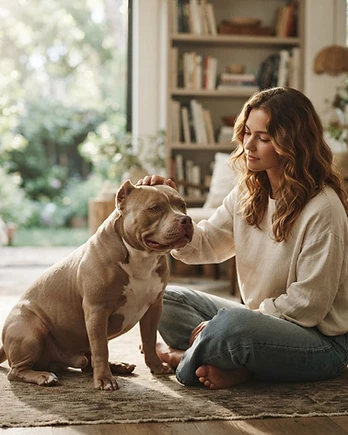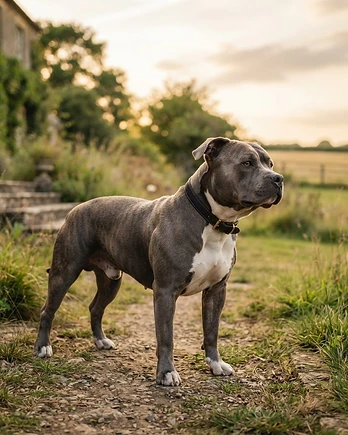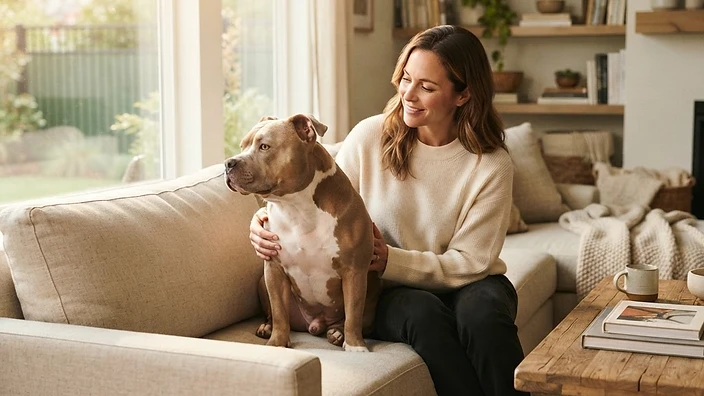
Bringing an American Bully into your home is one of the most rewarding decisions a dog lover can make. These dogs — with their wide chests, blocky heads, and impossibly gentle temperaments — are equal parts athletic and affectionate. They live to be close to their people, and in return, they deserve care that's thoughtful, consistent, and breed-aware. Whether you're welcoming one of our available American Bully puppies or you've had your Bully for years, this guide is designed to be the only resource you'll ever need.
American Bullies aren't simply "pit bulls with a different name." They are a purpose-bred companion breed, developed in the 1990s from American Pit Bull Terrier and American Staffordshire Terrier foundation stock, with selective influence from breeds including the English Bulldog and Staffordshire Bull Terrier. Recognized by both the ABKC (American Bully Kennel Club) and the UKC (United Kennel Club), the breed comes in four standard size classes — Pocket, Standard, Classic, and XL — each with distinct physical characteristics and slightly different care considerations.
This pillar guide covers every dimension of American Bully care across all life stages: puppyhood, adolescence, adulthood, and senior years. We'll walk through daily routines, age-appropriate exercise, nutrition, grooming, home and yard safety, seasonal adjustments, travel, and lifelong wellness habits. For deeper dives into individual topics, we've linked to our full cluster of care articles throughout — consider this your complete care hub. You can also explore our full resource library for even more breed-specific guidance.
Life Stage Overview: What Changes and When
Understanding your Bully's life stages helps you calibrate every aspect of care appropriately. Here's a quick reference:
| Life Stage | Age Range | Key Focus Areas | |---|---|---| | Neonatal & Transitional | 0–3 weeks | Breeder-managed; warmth, nutrition, socialization start | | Socialization Period | 3–12 weeks | Exposure, bite inhibition, human bonding | | Puppyhood | 8 weeks–6 months | Vaccinations, crate training, basic obedience, gentle play | | Adolescence | 6–18 months | Hormonal changes, continued training, controlled exercise | | Young Adult | 18 months–4 years | Peak fitness, structured exercise, preventive care | | Mature Adult | 4–7 years | Maintenance, joint monitoring, dental health | | Senior | 7+ years | Lower-intensity exercise, senior nutrition, increased vet visits |
XL American Bullies, which can reach 70–120+ lbs, tend to age faster than Pocket Bullies (13–17 inches at the withers, 11–22 lbs). Adjust your care calendar accordingly.
American Bully Puppy Care (8 Weeks–6 Months)
Bringing Your Puppy Home
The first 72 hours matter enormously. Set up a confined, comfortable space — a crate (24"–30" for Pocket/Standard, 36"–42" for XL) lined with washable bedding — before your puppy arrives. Limit introductions to calm household members, reduce loud stimuli, and allow your pup to explore at their own pace. Puppies leaving a reputable breeder like American Bully Haven Pups will already have foundational socialization, their first vaccinations, and a health check. Review our adoption guide to understand exactly what documentation and preparation are involved.
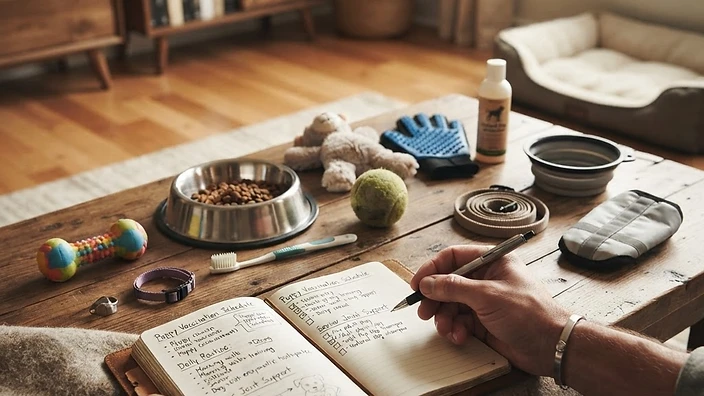
Vaccination and Preventive Health Schedule
Follow a core vaccination protocol in partnership with your veterinarian:
- 6–8 weeks: DA2PP (Distemper, Adenovirus, Parvovirus, Parainfluenza) — typically administered by breeder
- 10–12 weeks: DA2PP booster + Bordetella
- 14–16 weeks: DA2PP booster + Rabies (legally required in Texas)
- 12–16 months: Full booster series
- Ongoing: Annual or triennial boosters per your vet's protocol
Heartworm prevention (year-round in Texas), flea and tick prevention, and deworming are non-negotiable from 8 weeks onward. Interceptor Plus, Heartgard Plus, and NexGard are common veterinarian-recommended options.
Nutrition for Growing Puppies
Puppies 8–12 weeks should eat three to four times daily. Transition to twice daily at around 6 months. Choose a large-breed puppy formula with a named protein source (chicken, beef, salmon) listed first, a crude protein content of 28–32%, and a calcium-to-phosphorus ratio of approximately 1.2:1 to support skeletal development without overstimulating bone growth. AAFCO (Association of American Feed Control Officials) "complete and balanced for growth" labeling is your baseline standard.
For an XL American Bully puppy, controlled caloric intake is critical — rapid weight gain stresses developing growth plates and can contribute to hip dysplasia or elbow dysplasia. Avoid free feeding. Target a body condition score (BCS) of 4–5 on a 9-point scale.
Crate Training and Sleep
Puppies sleep 16–18 hours per day. A consistent crate routine builds security, accelerates housetraining, and prevents destructive behavior. Never use the crate as punishment. Place it in a bedroom so your puppy feels connected to the family. Expect nighttime waking for bathroom trips until 12–16 weeks; most Bully puppies are reliably housetrained by 4–5 months with consistent scheduling.

A young American Bully puppy sitting attentively on grass during a positive socialization session, representing the critical early care window covered in the puppyhood section of this guide.
Early Socialization: The Single Most Important Investment
The socialization window closes around 12–16 weeks. During this period, expose your puppy to a wide variety of sounds, surfaces, people (hats, beards, children, uniforms), animals, vehicles, and environments. Positive, force-free exposure during this window builds the confident, stable temperament that American Bullies are celebrated for. Puppy classes accredited by a Certified Professional Dog Trainer (CPDT-KA) are an excellent investment.
Exercise Guidelines by Age
One of the most common mistakes Bully owners make is over-exercising young dogs. American Bullies have open growth plates until 12–18 months (longer in XL varieties). High-impact exercise on hard surfaces — running on pavement, jumping, stair climbing — before plates close can cause lifelong orthopedic issues.
Exercise by Life Stage
Puppies (8 weeks–6 months): The "5-minute rule" — 5 minutes of structured exercise per month of age, twice daily. At 4 months, that's 20-minute sessions of leash walking on soft surfaces or free play in a grass yard. No forced jogging, no agility jumping, no rough play on stairs.
Adolescents (6–18 months): Gradually increase duration. By 12 months, 30–45 minute walks twice daily are appropriate. Introduce controlled swimming (low-impact, excellent for muscle development), short fetch sessions on grass, and confidence-building obstacle work at ground level.
Young Adults (18 months–4 years): Full exercise capacity. American Bullies thrive on 45–90 minutes of daily activity: brisk leash walks, swimming, weight pulling (if properly conditioned and equipment-fitted), flirt pole work, and structured play. Mental stimulation through puzzle feeders and nose work is equally important — a bored Bully is a destructive Bully.
Mature Adults (4–7 years): Maintain activity levels but monitor for signs of joint discomfort — reluctance to rise, bunny hopping, stiffness after rest. OFA (Orthopedic Foundation for Animals) hip and elbow evaluations between 24–36 months of age establish a baseline and are a hallmark of responsible breeding.
Seniors (7+ years): Shorter, more frequent sessions of 20–30 minutes. Low-impact activities like swimming and gentle leash walks preserve muscle mass and cardiovascular health. NSAIDs or joint supplements (glucosamine, chondroitin, omega-3 fatty acids) may be recommended by your vet.
Grooming: Simple but Consistent
The American Bully's short, stiff, glossy coat is one of the breed's most practical features — but "low maintenance" doesn't mean "no maintenance."
Coat Care
- Brushing: Weekly brushing with a rubber curry brush or hound mitt removes dead hair, distributes natural oils, and stimulates circulation. Increase to twice weekly during seasonal shedding (spring and fall).
- Bathing: Every 4–6 weeks with a gentle, pH-balanced canine shampoo. Over-bathing strips the coat's natural sebum. American Bullies with skin fold wrinkles (particularly around the face and tail pocket in some individuals) need fold cleaning every 1–2 weeks with a damp cloth or chlorhexidine wipe to prevent bacterial or yeast dermatitis.
- Coat supplements: Fish oil (EPA/DHA) at 20 mg/kg/day supports coat luster, reduces inflammatory skin conditions, and benefits joint health simultaneously.
Ears, Eyes, Nails, and Teeth
- Ears: Check weekly. American Bullies' semi-erect or rose ears can trap moisture. Clean with a veterinarian-approved ear cleaner; never insert cotton swabs into the ear canal. Malodor or dark discharge signals otitis — see your vet.
- Eyes: Wipe any discharge with a damp cloth. Cherry eye (prolapse of the third eyelid gland) has some prevalence in bully breeds; surgical correction is routine if it occurs.
- Nails: Trim every 2–3 weeks. Overgrown nails alter gait and increase stress on joints. Use a guillotine-style clipper or grinder; avoid the quick (blood vessel) by trimming small amounts frequently rather than large cuts infrequently.
- Teeth: Dental disease affects 80% of dogs by age 3 (AVMA data). Brush your Bully's teeth 3–5 times per week with enzymatic canine toothpaste (never human toothpaste — xylitol is toxic to dogs). Dental chews (VOHC-approved) and water additives complement brushing.

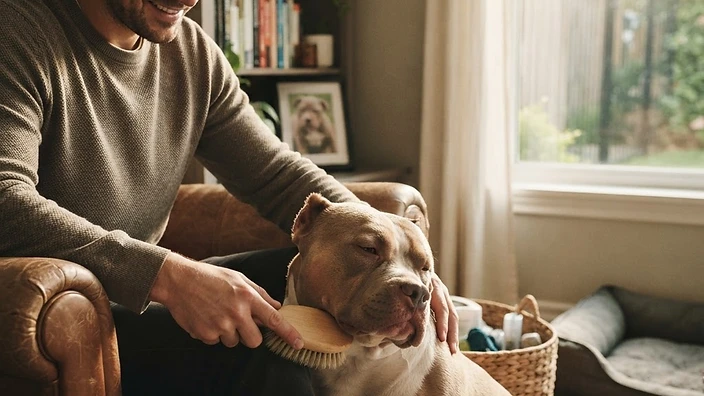
An American Bully receiving a gentle grooming session with a rubber curry brush, illustrating the breed's manageable but important coat and skin care routine described in the grooming section of this care guide.
Daily Routine: Structure Equals Security
American Bullies are routine-oriented dogs. A predictable daily schedule reduces anxiety, supports housetraining, and reinforces your role as a consistent leader. Here's a sample adult routine:
| Time | Activity | |---|---| | 6:30 AM | Morning potty, 30-min walk or play session | | 7:00 AM | Breakfast (measured portion) | | 7:30 AM–12:00 PM | Rest/crate time or yard access | | 12:00 PM | Midday potty and mental enrichment (puzzle feeder, training) | | 5:00 PM | Evening exercise: 45-min walk, fetch, or swim | | 6:00 PM | Dinner | | 8:00 PM | Calm family time, chew activity | | 10:00 PM | Final potty, settle for the night |
Consistency in feeding times supports digestive health and weight management. Two meals daily — rather than one large meal — reduces the risk of bloat (gastric dilatation-volvulus), which, while less common in Bullies than deep-chested breeds, is not impossible in larger XL individuals.
Nutrition Across Life Stages
Nutrition is the foundation of every other health outcome. The core principles:
- Protein: 25–30% crude protein for adults; prioritize animal-sourced proteins with high biological value (chicken meal, beef, salmon, lamb).
- Fat: 12–18% crude fat for active adults; omega-3 to omega-6 ratio matters — target approximately 1:5 to 1:10.
- Carbohydrates: Complex, digestible sources (brown rice, sweet potato, oats) preferred over corn syrup or excessive fillers.
- Avoid: Grain-free diets with legumes as primary protein replacers have been associated with dilated cardiomyopathy (DCM) in some breeds per FDA investigation; consult your vet before feeding grain-free.
- Hydration: Fresh water available at all times; an average 60 lb Bully needs approximately 40–50 oz of water daily, more in heat.
For a comprehensive look at breed-specific nutritional needs, explore our Complete American Bully Breed Guide.
Home and Yard Safety
Indoor Safety
- Secure cleaning products, medications (including OTC drugs like ibuprofen, acetaminophen, and xylitol-containing products), and small objects that can be swallowed.
- American Bullies are powerful chewers — provide appropriate chew outlets (bully sticks, Nylabones, Kong toys) to protect furniture and prevent intestinal obstruction from ingested debris.
- Baby gates protect staircases for puppies and senior dogs.
- Electric cords should be managed with cord covers or furniture placement.
Yard Safety
- Fencing: A minimum 5–6 foot solid fence is recommended; American Bullies are athletic and some individuals are capable climbers. Privacy fencing also reduces fence reactivity.
- Toxic plants: Common Texas landscaping plants toxic to dogs include lantana, sago palm, oleander, and Texas mountain laurel. Remove or fence off these plants.
- Pool safety: American Bullies can swim but their muscular, front-heavy conformation means they tire quickly and can struggle to exit pools. A dog ramp and supervised access are essential.
- Heat: Austin summers routinely exceed 100°F. Shade, fresh water, and limited outdoor time between 11 AM–4 PM are critical. American Bullies are brachycephalic-adjacent — their shorter muzzles (especially in Pocket variety) reduce thermoregulatory efficiency.
Seasonal Care
Summer (Texas-Specific)
Heat stress and heatstroke are genuine risks. Pavement temperatures that exceed 125°F on a 90°F day can cause paw pad burns in 60 seconds. Use the back-of-hand test: if you can't hold your hand on the pavement for 7 seconds, it's too hot for your dog's paws. Walk early morning or after sunset. Always carry water. Signs of heatstroke — excessive panting, drooling, disorientation, collapse — require immediate veterinary emergency care.
Winter
American Bullies have single-layer coats and minimal body fat insulation. Below 45°F, especially with wind chill, a fitted dog coat or sweater is appropriate. Paw protection (dog boots or paw wax) prevents chemical burns from road salt and ice melt.
Allergy Season
Environmental allergies (atopic dermatitis) are common in American Bullies. Cedar, oak, and ragweed — all prevalent in Central Texas — frequently trigger itching, paw licking, ear inflammation, and red skin. Wipe paws after outdoor exposure, consider antihistamines (cetirizine at your vet's guidance), and discuss Cytopoint or Apoquel with your veterinarian for moderate-to-severe cases.
Travel With Your American Bully
- By car: Secure your Bully in a crash-tested crate or with a certified vehicle harness. Unrestrained dogs are projectiles in accidents and can interfere with driver control. Never leave a Bully in a parked car — interior temperatures reach dangerous levels within 10 minutes even on mild days.
- By air: Most airlines do not allow American Bullies in cabin due to size and brachycephalic breed policies. Cargo travel is stressful and carries risk — ground transport is strongly preferred for long distances.
- Hotel/lodging: Book pet-friendly accommodations in advance. Bring your dog's crate, familiar bedding, food, and water from home — changes in water mineral content can occasionally cause loose stools.
- Health certificates: If crossing state lines or traveling internationally, a USDA-accredited veterinarian must issue a health certificate within 10 days of travel.
Senior American Bully Care (7+ Years)
The senior years are when your investment in lifelong preventive care pays dividends. Key considerations:
- Biannual vet exams: Twice-yearly wellness exams (vs. annual for adults) allow earlier detection of hypothyroidism, kidney disease, heart disease, and cancer — all of which increase in prevalence after age 7.
- Senior nutrition: Transition to a senior formula with reduced calories (prevent obesity, which accelerates joint degeneration), increased omega-3 fatty acids, and added antioxidants (Vitamin E, beta-carotene). Some senior Bullies benefit from reduced phosphorus if early kidney disease is detected.
- Joint support: Glucosamine (500–1000 mg/day), chondroitin sulfate, and EPA/DHA supplementation are evidence-supported for canine osteoarthritis management.
- Cognitive health: Canine cognitive dysfunction (CCD), analogous to Alzheimer's, affects approximately 28% of dogs aged 11–12. Symptoms include disorientation, sleep disruption, and house soiling. SAMe, melatonin, and prescription Anipryl (selegiline) can slow progression.
- Dental disease: Accelerates with age; annual professional dental cleanings under anesthesia are often necessary from age 5–6 onward.
For a complete picture of what makes this breed tick through every year of life, our American Bully breed guide covers temperament, genetics, and health in depth.
Lifelong Wellness Habits
The healthiest American Bullies share these habits from day one:
- Weight management: Obesity is the single most preventable health threat. Maintain BCS 4–5/9 throughout life. Ribs should be easily felt but not seen.
- Parasite prevention: Year-round heartworm, flea, and tick prevention without exception — especially in Texas.
- Dental hygiene: Daily or near-daily brushing beginning in puppyhood.
- Mental enrichment: Training, puzzle feeders, nose work, and social interaction prevent boredom-driven behavior problems and support cognitive longevity.
- Consistent veterinary relationship: Establish care with a veterinarian familiar with bully breeds before health issues arise. OFA evaluations for hips, elbows, and cardiac health between 24–36 months provide a genetic health baseline — and should be expected from any responsible breeder. Learn more about our breeding program and the OFA and ABKC standards we uphold.
- Socialization maintenance: Adult socialization classes, dog-friendly outings, and consistent positive reinforcement training maintain the American Bully's famous stable temperament.
Care Cluster Deep Dives
This pillar guide connects to our full care cluster. For detailed, topic-specific guidance, explore each article below:
- American Bully puppy nutrition and feeding schedules
- Exercise and conditioning for American Bullies
- American Bully grooming routines and skin care
- Socialization and training foundations
- Home environment and safety setup
- Seasonal care and Texas climate tips
- Senior American Bully health and wellness
- Veterinary care and preventive health calendar
Key Takeaways
- American Bullies are a distinct, purpose-bred companion breed recognized by the ABKC and UKC — their care needs differ from other bully-type dogs in important ways.
- Life stage matters: adjust nutrition, exercise intensity, and veterinary frequency at each milestone.
- Over-exercising puppies before growth plates close (12–18 months) is one of the most common and preventable causes of orthopedic disease.
- Short coats are low-maintenance but wrinkle care, dental hygiene, and nail trimming are non-negotiable weekly tasks.
- Texas heat is a genuine health hazard — build your daily routine around it from May through October.
- OFA evaluations, ABKC registration, and a documented health testing protocol are hallmarks of an ethical breeder.
- Consistent routine, lifelong socialization, and mental enrichment are as important as physical care.
- Weight management and year-round parasite prevention are the two highest-ROI health investments you can make.
Frequently Asked Questions
How much exercise does an American Bully need daily?
An adult American Bully needs 45–90 minutes of physical activity per day, divided into two or more sessions. This should include a combination of leash walking, structured play, and mentally stimulating activities like fetch or nose work. Puppies need far less — follow the 5-minute rule per month of age — and XL Bullies should avoid high-impact exercise until 18 months of age when growth plates are fully closed. Senior Bullies do best with 20–30 minute low-impact sessions twice daily.
What should I feed my American Bully?
Feed an AAFCO-approved, life-stage-appropriate diet with a named animal protein as the first ingredient. Adults do well on 25–30% crude protein, 12–18% crude fat formulas. Avoid diets with legumes (peas, lentils, chickpeas) as primary ingredients due to the FDA's ongoing DCM investigation. Measure portions — don't free feed — and adjust based on your dog's body condition score. Two meals daily are preferable to one. Fresh water must always be available.
Do American Bullies have a lot of health problems?
American Bullies from health-tested lines are generally robust dogs. The most common breed-specific concerns include hip dysplasia, elbow dysplasia, atopic dermatitis, cherry eye, and — in some bloodlines — congenital heart defects. Responsible breeders conduct OFA hip, elbow, and cardiac evaluations and share these results openly. The ABKC encourages health testing as part of responsible breeding standards. Purchasing from a tested, registered breeder dramatically reduces your puppy's risk of inherited conditions.
Are American Bullies good with children and other pets?
When properly socialized and raised in a stable environment, American Bullies are exceptionally gentle, tolerant family dogs. Their development history emphasized human-directed affection and low aggression. That said, any dog — regardless of breed — should be supervised with young children, and early positive exposure to other animals is essential. American Bullies can coexist peacefully with cats and other dogs when introduced appropriately and given consistent training.
How often should my American Bully see a vet?
Puppies need veterinary visits every 3–4 weeks from 8–16 weeks for their vaccination series, then at 12 months for their annual booster. Healthy adults should have a full wellness exam annually, including heartworm test, fecal parasite screen, and physical assessment. Dogs aged 7 and older benefit from biannual exams to catch age-related conditions early. OFA evaluations are ideally conducted at 24 months for breeding dogs but provide valuable health data for any Bully owner.
What is the lifespan of an American Bully?
American Bullies typically live 10–13 years, with Pocket Bullies often reaching the higher end of that range and XL Bullies sometimes trending toward 8–10 years due to the general correlation between larger body size and shorter canine lifespan. Genetics, nutrition, weight management, veterinary care, and environment all significantly influence individual longevity. Dogs maintained at a healthy weight with consistent preventive care routinely live well into their early teens.
Ready to Welcome Your American Bully?
Caring for an American Bully is a genuinely joyful responsibility. These dogs give everything they have — loyalty, affection, playfulness, and an endearing stubbornness — and they deserve owners who are equally committed in return. Whether you're still researching or ready to bring a puppy home, we're here to help every step of the way.
Browse our current litters — including Atlas, our Lilac Tri-Color male, Ella, our Lilac Tri female, Bowie, our Blue Tri male, Diesel, our Chocolate Tri male, and Hazel, our beautiful Merle female — and contact us any time with questions. Every puppy we place comes with health documentation, ABKC/UKC registration, a structured care packet, and our ongoing support for the life of your dog.