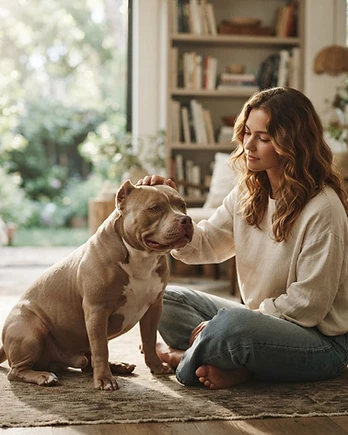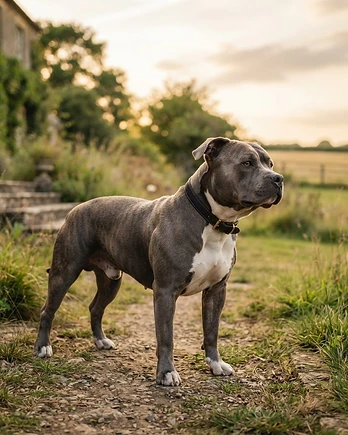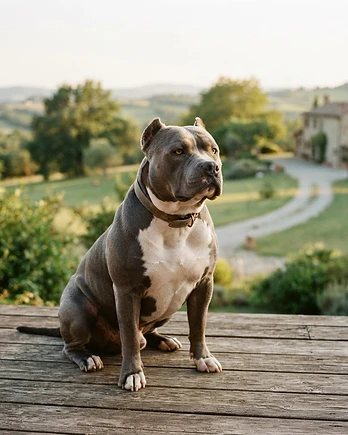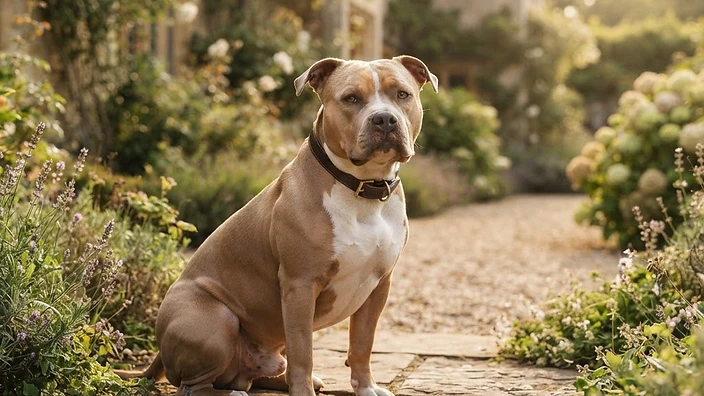
Few breeds in modern canine history have risen as swiftly — or as dramatically — as the American Bully. In just three decades, this dog has gone from a niche enthusiast's project to one of the most recognized, beloved, and sought-after companion breeds in the world. Yet despite that popularity, misconceptions still swirl around this breed like fog that refuses to lift.
At American Bully Haven Pups, we've dedicated ourselves to producing structurally sound, health-tested, emotionally balanced American Bullies here in Austin, Texas. We've watched families transform when the right bully enters their home — a 70-pound muscle-wrapped teddy bear claiming the couch and every heart in the room. This guide exists because we believe every future owner deserves the full picture: the history, the science, the standards, and the soul of this remarkable breed.
Whether you're researching the American Bully for the first time, comparing size classes, trying to understand coat color genetics, or looking for a reputable ABKC-registered breeder, you've found the most comprehensive resource available. Let's dig in.
Origin and History of the American Bully
The American Bully was developed in the United States between approximately 1980 and 1990, primarily on the East Coast and West Coast. The foundational stock was the American Pit Bull Terrier (APBT) and the American Staffordshire Terrier (AmStaff), both UKC- and AKC-registered terrier-type breeds with working-dog heritage.
The goal of early bully breeders was deliberate and distinct: selectively breed away from the high gameness and dog-on-dog aggression historically prized in working terriers, while amplifying the APBT's legendary human-friendliness, loyalty, and physical presence. Additional foundational influence came from English Bulldogs, Staffordshire Bull Terriers, and to a lesser degree American Bulldogs — contributing to the broader, heavier, lower-slung silhouette that defines the breed today.
The American Bully Kennel Club (ABKC) was founded in 2004 by Dave Wilson of Razor's Edge Kennels and Carlos Barrera, providing the first formal registry and breed standard specifically for the American Bully. The United Kennel Club (UKC) recognized the breed in 2013, cementing its legitimacy in mainstream purebred dog culture.
Today the American Bully is recognized as a distinct breed — not a type of Pit Bull, not a variant of the AmStaff, but its own entity with its own standard, its own registry infrastructure, and its own rapidly growing global community.
The Four ABKC Size Varieties
One of the most unique aspects of the American Bully is its formally recognized size spectrum. The ABKC recognizes four size classes, each judged against a consistent type standard with height being the primary differentiator at the withers.
Pocket American Bully
- Males: under 17 inches at the withers
- Females: under 16 inches at the withers
- Typical weight: 11–22 kg (roughly 25–50 lbs), though no weight limit is codified
- The Pocket is compact and heavily muscled relative to its frame. It is NOT a miniature or toy breed — it is simply a shorter bully with the same structural requirements as other classes.
- High demand in the market; quality Pocket Bully puppies from proven health-tested lines typically range from $3,000–$10,000+.
Standard American Bully
- Males: 17–20 inches at the withers
- Females: 16–19 inches at the withers
- Typical weight: 25–40 kg (55–88 lbs)
- The Standard is the benchmark class — the one against which type is most classically measured. It represents the original vision of bully breeders most closely.
Classic American Bully
- Same height parameters as the Standard class
- Key distinction: lighter body frame, less overall body mass, less exaggerated features — essentially a Standard-height bully with a body style closer to the APBT foundation stock
- Ideal for owners who want the bully temperament and registration with a more athletic, less exaggerated build
XL American Bully
- Males: over 20 inches at the withers
- Females: over 19 inches at the withers
- Typical weight: 40–60+ kg (88–130+ lbs)
- The XL commands the room — massive, imposing, yet gentle. Quality XL Bully puppies from health-tested bloodlines often range from $5,000–$15,000+.
- The Extreme designation (sometimes seen in older ABKC documentation) refers to exaggeration of bully features within any class — not a separate size class.

A visual comparison of the four American Bully size varieties recognized by the ABKC: Pocket, Standard, Classic, and XL. Each class is differentiated by height at the withers while maintaining consistent structural type requirements.
Temperament: The American Bully's Greatest Attribute
If there is one thing every credible breeder, owner, and judge agrees on, it's this: the American Bully's temperament is extraordinary. The ABKC breed standard explicitly states that the American Bully is "a companion dog first" and that any form of human aggression is a disqualifying fault.
In practice, this means:
- Exceptionally people-oriented: American Bullies form intense bonds with their families and are known for their affectionate, almost clingy behavior with people they love.
- Gentle with children: Their patience and tolerance make them outstanding family dogs. Their physical sturdiness means they can handle the rough-and-tumble of family life.
- Social and confident: A well-bred, properly socialized American Bully is neither shy nor aggressive. They approach the world with calm confidence.
- Dog-to-dog dynamics: Early socialization is important. Some individual bullies carry a degree of dog selectivity inherited from terrier roots. Responsible breeders select away from this trait.
- Intelligence: Bullies are trainable, food-motivated, and responsive to positive reinforcement. They thrive with consistent, reward-based training begun in puppyhood.
For a deep dive into raising a well-adjusted American Bully from 8 weeks to senior years, explore The Complete American Bully Care Guide: Puppyhood to Senior Years.
ABKC Conformation Standard: What Judges Look For
The ABKC conformation standard is the definitive document governing how American Bullies are evaluated in the show ring. Understanding it helps buyers recognize quality structure — and avoid dogs with exaggerations that compromise health.
Head
The head is large, broad, and in proportion to the body. The skull is wide with a pronounced stop. The muzzle is short to medium in length, broad, and blocky. Tight, dry lips are preferred. Eyes are round to oval, set low on the skull, and wide apart. Ears are either rose, semi-prick, or cropped (where legal).
Body
The neck is heavy, muscular, and slightly arched. The chest is broad, deep, and full — pectoral muscles clearly defined. Ribs are well-sprung. The back is strong and level or slightly sloping toward the rear. The topline should be firm and level in motion.
Limbs
Forelegs are heavy-boned, straight, and set wide. Hindquarters are well-muscled with well-bent stifles and low hocks. Feet are round, compact, and well-arched. Loose, splayed feet are a fault.
Coat and Skin
Short, close, stiff to the touch, and glossy. All colors and patterns are accepted except merle in some older ABKC documentation — however, merle is not a disqualification under current ABKC policy though it remains a topic of discussion in the fancy. Albinism (lack of pigmentation) is a disqualification.
Movement
The American Bully should move with confidence and power — a smooth, effortless gait that reflects structural soundness. Paddling, crossing over, or hackney action are faults.
Disqualifying Faults
- Viciousness toward humans
- Extreme shyness
- Merle-to-merle breeding offspring (double merle — see genetics section)
- Unilateral or bilateral cryptorchidism in males
- Albinism
Coat Colors and Color Genetics
The American Bully is one of the most color-diverse breeds in existence. Understanding the genetics behind bully coat colors helps buyers make informed decisions and helps breeders produce ethically.
Base Colors
- Black (dominant K locus)
- Blue (dilute black; dd genotype at the D locus)
- Chocolate/Brown (bb at the B locus)
- Lilac (double dilute: dd + bb — dilute chocolate)
- Red/Fawn (expression of phaeomelanin at agouti locus)
- Brindle (striping pattern; K^br allele)
Pattern Modifiers
- Tri-color — tan point expression (at/at at the A locus) producing tan points on the face, chest, and legs alongside a base color. Our Atlas — Lilac Tri-Color Male American Bully puppy and Ella — Lilac Tri Female American Bully puppy are stunning examples of lilac tri expression.
- Blue Tri — blue base with tan points. See our Bowie — Blue Tri Male American Bully puppy for a classic example.
- Chocolate Tri — chocolate base with tan points, as seen in our Diesel — Chocolate Tri Male American Bully puppy.
- Merle — a complex pattern caused by the M locus (PMEL17 gene) producing mottled patches of diluted pigment. Beautiful but requiring careful, responsible breeding — see our Hazel — Merle Female American Bully puppy.
- Piebald/White markings — caused by the S locus (MITF gene)
- Ghost tan / Seal — subtle tan point expression
- Ticking — small spots of color in white areas
The Merle Controversy and Double Merle Risk
Merle is a partially dominant gene. Two merle parents (Mm × Mm) produce double merle offspring (MM) at a statistical rate of 25%. Double merle dogs face serious health risks including microphthalmia, blindness, and deafness due to pigment cell abnormality in the eyes and cochlea. Ethical breeders always DNA-test for merle status and never breed merle to merle. A responsible breeder will always provide genetic test documentation.

A collection of American Bully puppies displaying the breed's remarkable coat color diversity, including lilac tri-color, blue tri, chocolate tri, and merle patterns produced through complex interactions of the A, B, D, K, and M genetic loci.
Influential Bloodlines in American Bully History
The American Bully's gene pool has been shaped by a handful of foundational bloodlines whose influence is felt in virtually every quality kennel today.
Razor's Edge
Founded by Dave Wilson in the mid-1990s in the Washington D.C. area. Razor's Edge dogs were heavily influential in establishing the classic bully type — wide, heavy, shorter-faced, with exceptional human temperament. Dave Wilson co-founded the ABKC.
Gottiline (Gotti)
Originating from the Notorious Juan Gotti dog bred by Richard Barajas of West Side Kennels. Gotti blood became perhaps the most widespread bully bloodline in existence, contributing extreme mass, wide heads, and short stature.
Remyline
Developed by Fabian Chichester, Remyline dogs were known for their clean structure, athletic build, and excellent temperament. Remyline influence helped balance some of the extreme exaggeration that was creeping into the breed.
Kurupt Bloodline
Originates from Kurupt Cartel Kennels. Known for producing extreme body mass combined with correct limb structure — highly influential in XL Bully development.
Miagi Bloodline
Founded by Eduardo Ventura. The Miagi line contributed heavily to the Pocket Bully market, producing consistently compact dogs with wide heads and deep chests.
Other Notable Bloodlines
- Watchdog Kennels (Ohio) — structural correctness
- Nakamoto Bullies — clean, athletic type
- Grey Line Bullies — influential in blue and lilac color proliferation
Understanding bloodline heritage helps buyers evaluate a pedigree — and helps breeders make intelligent, health-conscious outcrossing decisions. Learn more about our breeding program and the pedigrees behind our Austin-bred litters.
Registration Bodies: ABKC vs. UKC
American Bully Kennel Club (ABKC)
- Founded: 2004
- The primary and most recognized registry for the American Bully
- Maintains the official breed standard
- Sanctions conformation shows, weight pull, and other events
- Offers DNA profiling and parentage verification
- Registration requires both parents to be ABKC-registered
United Kennel Club (UKC)
- Founded: 1898 (one of the oldest all-breed registries in the world)
- Recognized the American Bully in 2013
- UKC registration is valuable for multi-registry recognition and events
- Some breeders dual-register litters in both ABKC and UKC
Other Registries
- BBCR (Bully Breed Coalition Registry) — smaller, emerging registry
- ARF, NKC — less common, not equivalent to ABKC or UKC in terms of breed standard enforcement
At American Bully Haven Pups, all of our breeding dogs and puppies are ABKC- and UKC-registered, with health testing through OFA (Orthopedic Foundation for Animals) for hips, elbows, cardiac, and BAER (hearing) where applicable.
American Bully vs. Related Breeds: Key Distinctions
| Feature | American Bully | American Pit Bull Terrier | American Staffordshire Terrier | English Bulldog | |---|---|---|---|---| | Registry | ABKC, UKC | UKC | AKC | AKC | | Build | Heavy, wide, muscular | Athletic, lean-muscular | Medium, muscular | Low, broad, heavy | | Height (male) | 13–23+ in | 18–21 in | 17–19 in | 14–15 in | | Temperament | Companion-focused, gentle | Active, tenacious | Confident, stubborn | Calm, affectionate | | Human aggression | Disqualifying fault | Serious fault | Serious fault | Rare | | Energy level | Moderate | High | Moderate-high | Low | | Lifespan | 10–13 years | 12–16 years | 12–16 years | 8–10 years |
The biggest misconception: The American Bully is NOT a Pit Bull. While it shares ancestry, it is a distinct breed with its own standard, its own registry, and a purposefully different temperament profile. Calling an American Bully a "Pit Bull" is as inaccurate as calling a Labrador a "Golden Retriever."
For deeper reading on breed-specific topics, explore our full resource library.
Health Considerations and Testing
American Bullies are generally robust, but responsible breeding requires awareness of breed-predisposed conditions:
- Hip Dysplasia: The broad, heavy build places mechanical stress on coxofemoral joints. OFA hip certification (PennHIP or standard radiograph grading) is essential in any breeding program.
- Elbow Dysplasia: Similar concerns; OFA elbow grading recommended.
- Brachycephalic Obstructive Airway Syndrome (BOAS): Short-muzzled individuals, particularly extreme-type Pockets, may have narrow nares, elongated soft palate, or hypoplastic trachea. Breeding away from respiratory dysfunction is an ethical imperative.
- Cardiac conditions: Dilated cardiomyopathy (DCM) and aortic stenosis are documented in bully breeds. OFA cardiac evaluation by a board-certified cardiologist is recommended.
- Hypothyroidism: Thyroid function testing is advisable in breeding stock.
- Skin conditions: Demodex mange and environmental allergies are common. Regular grooming, quality nutrition, and veterinary oversight keep skin healthy.
- Eye conditions: Particularly relevant in merle dogs — CAER eye certification is advisable.
For a complete health and care roadmap from puppyhood through senior years, see The Complete American Bully Care Guide: Puppyhood to Senior Years.
Key Takeaways
- The American Bully was developed between 1980–1990 from APBT, AmStaff, and bulldog foundation stock, with the ABKC founded in 2004 to provide a formal breed standard.
- Four ABKC-recognized size classes exist: Pocket, Standard, Classic, and XL — differentiated primarily by height at the withers.
- Temperament is the breed's defining quality: deeply people-oriented, gentle, and human-aggression-free by standard.
- Coat genetics are complex and beautiful — tri-color, merle, lilac, blue, and chocolate patterns are all possible; merle-to-merle breeding is an ethical prohibition.
- Foundational bloodlines including Razor's Edge, Gottiline, Remyline, Kurupt, and Miagi shaped the breed's modern phenotype.
- ABKC is the primary registry; UKC recognition since 2013 adds mainstream legitimacy.
- The American Bully is NOT a Pit Bull — it is a distinct breed purpose-bred for companionship.
- Health testing (OFA hips, elbows, cardiac, BAER, CAER) is non-negotiable in ethical breeding programs.
- Quality puppies from health-tested lines range from approximately $3,000 to $15,000+ depending on size class, color, and pedigree.
Frequently Asked Questions
Is the American Bully a dangerous breed?
No. The American Bully was purpose-bred to eliminate human aggression from the gene pool. Human aggression is a disqualifying fault under the ABKC breed standard — no dog displaying it can be shown or ideally bred. Well-bred American Bullies are among the most reliably gentle, human-friendly dogs in existence. Like any breed, proper socialization, training, and responsible ownership are essential — but the genetic foundation is unambiguously companion-focused.
What is the difference between a Pocket Bully and a Standard Bully?
The difference is entirely height at the withers. Pocket Bullies measure under 17 inches (males) or 16 inches (females); Standard Bullies measure 17–20 inches (males) or 16–19 inches (females). Both classes share the same structural type requirements — the same head, chest, muscling, and movement standards apply. Pocket Bullies are not "mini" dogs; they are fully muscled, structurally correct bullies in a shorter package.
How much does an American Bully puppy cost?
Price varies significantly based on registry status, health testing, bloodline, color, and size class. From a reputable ABKC-registered breeder with OFA health testing, expect to pay $3,000–$6,000 for a Standard or Classic puppy, $3,500–$10,000 for a quality Pocket Bully, and $5,000–$15,000+ for XL or exotic-color (lilac tri, merle) puppies. Be wary of unusually low prices — quality health testing, registry fees, nutrition, and veterinary care have real costs that ethical breeders cannot cut corners on.
Are American Bullies good with children?
American Bullies are exceptional family dogs and are widely regarded as one of the best breeds for families with children. Their physical sturdiness means they are not easily injured by rough play, and their patience and affection toward people — including small children — is well-documented. As with any dog and child interaction, adult supervision and teaching children respectful dog handling remain best practices.
What is the lifespan of an American Bully?
Typically 10–13 years with proper nutrition, veterinary care, and appropriate exercise. XL Bullies may trend toward the lower end of that range due to the physical demands of greater body mass. Pocket and Standard class Bullies from health-tested lines regularly reach 12–13 years. Maintaining a healthy weight — avoiding obesity, which compounds joint and cardiac stress — is one of the most impactful things an owner can do for longevity.
What's the difference between ABKC and UKC registration?
The ABKC (founded 2004) is the primary breed registry created specifically for the American Bully and maintains the official breed standard under which dogs are shown and bred. The UKC (founded 1898) is a large all-breed registry that recognized the American Bully in 2013. Both registrations are legitimate and valuable; many top breeders dual-register their dogs. ABKC registration carries more weight within the bully community and at breed-specific events, while UKC registration opens access to UKC-sanctioned all-breed events and provides additional pedigree documentation.
Ready to Meet Your American Bully?
The American Bully is more than a breed — it's a lifestyle choice, a commitment to a dog whose entire reason for existing is to love you and your family with everything it has. At American Bully Haven Pups in Austin, Texas, every puppy we produce is ABKC- and UKC-registered, health-tested through OFA, and raised with the early socialization and neurological stimulation that sets them up for a lifetime of confident companionship.
Explore our available American Bully puppies — including stunning tri-color, merle, and exotic-color individuals ready for their forever families. When you're ready to take the next step, review our adoption guide or contact us directly. We'd love to help you find the perfect match.
For more in-depth guides on every aspect of bully ownership — from nutrition and training to health and socialization — browse our full resource library. Every article in our cluster connects back to this hub, and together they represent everything we know about this extraordinary breed.