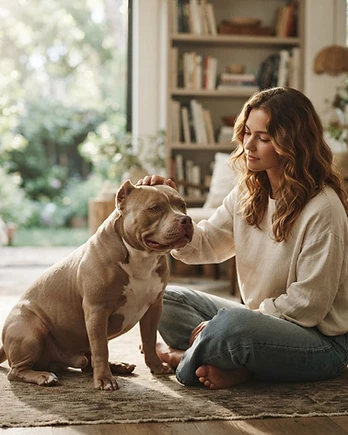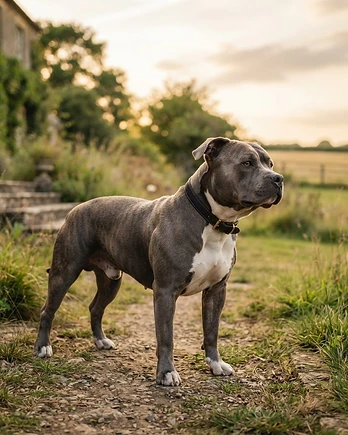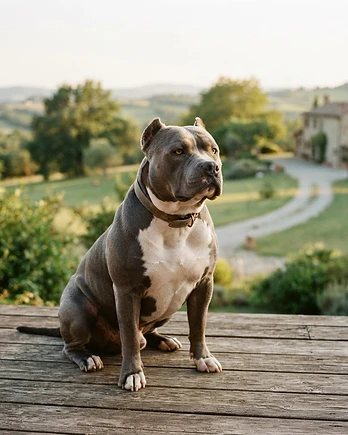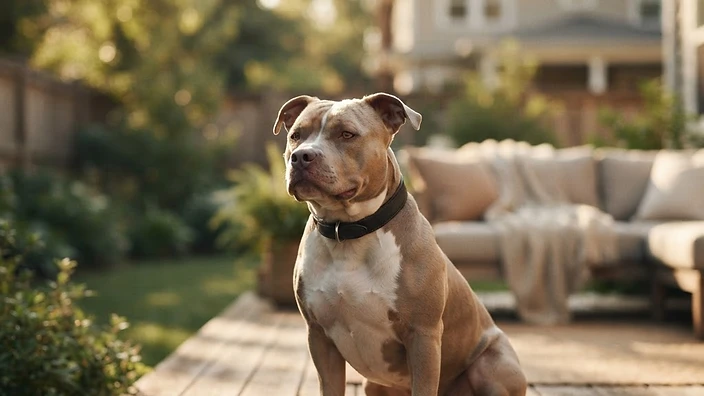
Owning an American Bully is one of the most rewarding commitments a dog lover can make. These dogs are muscular in body but enormous in heart — loyal, affectionate, surprisingly gentle with children, and endlessly devoted to the people they call family. But that devotion deserves a return investment: informed, consistent, lifelong care that honors the breed's unique physiology, temperament, and needs at every stage of life.
This guide is the most comprehensive American Bully care resource we've written — a true pillar reference you can return to again and again as your dog moves from curious 8-week-old puppy through energetic adolescence, confident adulthood, and dignified senior years. Whether you're preparing to bring home one of our available American Bully puppies or you've owned Bullies for years and want to level up your knowledge, you'll find practical, veterinary-aligned guidance here.
Every section of this guide connects to deeper resources in our full resource library for those who want to go even further. Let's start from the very beginning.
Understanding the American Bully: A Quick Breed Context
Before diving into care specifics, it helps to understand who you're caring for. The American Bully was developed in the 1980s and 1990s from American Pit Bull Terrier and American Staffordshire Terrier bloodlines, with selective crosses to produce a compact, heavily muscled dog with a pronounced blocky head, broad chest, and notably stable, human-friendly temperament. The breed is formally recognized by the American Bully Kennel Club (ABKC) and the United Kennel Club (UKC), and exists in four size classes: Pocket, Standard, Classic, and XL.
For a full breakdown of breed history, genetics, size classes, and conformation standards, read The Complete American Bully Breed Guide: Everything You Need to Know. Understanding the breed's origin informs everything from joint-appropriate exercise to coat care and health screening.
Bringing Your Puppy Home: The First 8–12 Weeks
Setting Up a Safe Environment
Before your puppy arrives, puppy-proof your home methodically. American Bully puppies are curious, low-to-the-ground, and surprisingly strong for their size. Secure electrical cords, remove toxic houseplants (philodendron, pothos, sago palm), latch lower cabinets, and block access to staircases with baby gates — joint stress on developing growth plates is a real concern if puppies tumble down stairs repeatedly.
Your puppy's primary space should include:
- A crate sized appropriately (enough to stand, turn, and lie down — not so large they toilet in the corner)
- A orthopedic or memory foam puppy bed to protect developing joints
- Stainless steel or ceramic food and water bowls (easier to sanitize, BPA-free)
- Interactive puzzle toys and appropriate chew toys (bully sticks, Kongs, Nylabones rated for power chewers)
- A designated potty area — outdoors if possible, or a pee-pad zone if you're in an apartment
For a detailed room-by-room setup checklist, see our guide on Bringing Home an American Bully Puppy: Your First-Week Checklist.
Vaccination and Veterinary Schedule (Weeks 8–16)
Your puppy should begin their core vaccine series at 8 weeks if not already started by the breeder. The standard protocol follows:
| Age | Vaccines / Procedures | |-----|----------------------| | 8 weeks | DA2PP (Distemper, Adenovirus, Parvovirus, Parainfluenza) | | 11–12 weeks | DA2PP booster, Bordetella | | 14–16 weeks | DA2PP final puppy booster, Rabies | | 12–16 months | All boosters repeated, Leptospirosis if high-risk area |
Flea, tick, and heartworm prevention should begin at 8 weeks with a veterinarian-approved product. In Austin, Texas, where heartworm pressure is high year-round, monthly heartworm prevention (ivermectin-based or milbemycin oxime) is non-negotiable.
Early Socialization: The Critical Window
The socialization window for puppies closes around 12–16 weeks of age. What your puppy encounters positively during this period shapes their confidence, adaptability, and temperament for life. Prioritize:
- People diversity: men, women, children, people in hats or uniforms
- Sound exposure: traffic, vacuum cleaners, thunder recordings, doorbells
- Surface variety: grass, gravel, tile, grates, stairs
- Dog-friendly dog interactions: supervised playdates with vaccinated, calm adult dogs
- Handling desensitization: ear checks, paw handling, mouth opening — all critical for grooming and vet visits
Nutrition: Fueling the American Bully at Every Life Stage
Puppy Nutrition (8 Weeks – 12 Months)
American Bully puppies are rapidly developing muscle mass, bone density, and neurological architecture simultaneously. Their diet must deliver high biological-value protein (minimum 28–32% crude protein on dry matter basis), appropriate calcium-to-phosphorus ratios (ideally 1.2:1 to 1.4:1), and controlled caloric density to prevent rapid growth that stresses developing joints.
Look for foods that carry an AAFCO (Association of American Feed Control Officials) nutritional adequacy statement for "growth" or "all life stages." Avoid generic grain-free formulas without established brands behind them — the FDA investigated a potential link between certain grain-free diets and dilated cardiomyopathy (DCM), particularly in muscle-heavy breeds.
Top protein sources for Bully puppies: chicken, beef, lamb, salmon. Avoid diets where the first ingredient is a "meal" byproduct without a named species.
Feeding frequency:
- 8–12 weeks: 4 meals/day
- 3–6 months: 3 meals/day
- 6–12 months: 2 meals/day
Adult Nutrition (1–7 Years)
Adult American Bullies need 25–30% crude protein, 12–18% fat (adjusted for activity level), and robust joint support. Given the breed's predisposition to hip and elbow dysplasia, diets supplemented with or paired with glucosamine (500–1000 mg/day) and omega-3 fatty acids (EPA/DHA from fish oil) are strongly recommended.
Caloric needs vary significantly by size class:
- Pocket Bully (13–17 inches, 11–22 kg): ~900–1,200 kcal/day
- Standard (17–20 inches, 22–36 kg): ~1,200–1,800 kcal/day
- XL (20–23 inches, 36–54 kg): ~1,800–2,800 kcal/day
Avoid free-feeding — American Bullies are prone to obesity, which dramatically worsens joint degeneration, cardiac workload, and lifespan. Weigh food portions using a kitchen scale, not scoops.
Senior Nutrition (7+ Years)
At 7 years, begin transitioning to a senior-formulated diet or maintain current diet with targeted supplementation. Senior Bullies benefit from:
- Reduced caloric density (activity typically drops ~20–30%)
- Increased omega-3s for joint and cognitive health
- Higher digestibility proteins (egg, fish) as gut efficiency declines
- Joint support: glucosamine, chondroitin, MSM
- Antioxidants: Vitamin E, beta-carotene for immune function and cognitive support

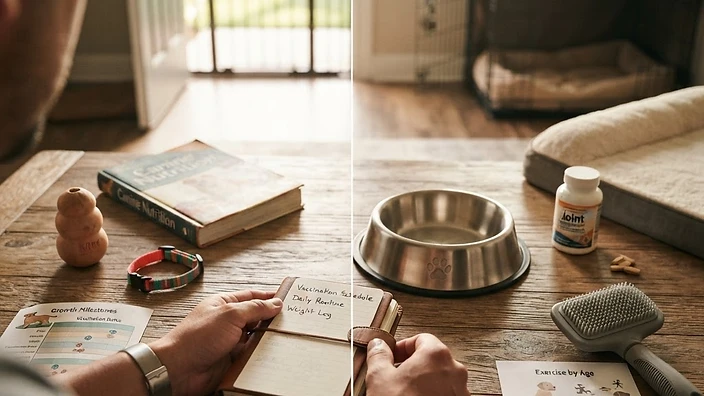
A young American Bully puppy feeds from a stainless steel bowl, representing the importance of AAFCO-compliant, high-protein nutrition during the critical growth phase. This image accompanies the nutrition section of the American Bully care guide.
Exercise: Age-Appropriate Activity for a Muscular Breed
One of the most common American Bully care mistakes is either under-exercising (leading to obesity and destructive behavior) or over-exercising young dogs (causing growth plate damage). Here's how to get it right at every stage.
Puppies (8 Weeks – 12 Months)
The widely accepted guideline for puppies is 5 minutes of structured exercise per month of age, twice daily. So a 3-month-old gets 15 minutes twice a day. This isn't about being overly restrictive — it's about protecting growth plates, which in large-breed dogs don't fully ossify until 12–18 months of age.
- Avoid: repetitive high-impact activities — long runs, jumping, forced fetch on hard surfaces
- Encourage: free play on soft grass, short leash walks, swimming (low-impact, excellent muscle development)
- Mental exercise counts: training sessions, puzzle feeders, sniff walks
Adolescents and Adults (1–6 Years)
Mature American Bullies are athletic, powerful, and need 45–90 minutes of daily activity to maintain healthy body composition, joint health, and mental balance. Mix modalities:
- Leash walks: 20–30 minutes minimum, twice daily
- Structured play: fetch, tug (excellent for jaw muscle development and bonding)
- Weight pulling: A popular, ABKC-sanctioned sport that channels the breed's natural drive — start with minimal resistance and build slowly
- Flirt pole sessions: 10–15 minutes, excellent cardiovascular work
- Swimming: ideal for muscle development without joint impact
Always exercise before meals, not after, to reduce risk of gastric dilatation — less common in Bullies than in deep-chested breeds but worth respecting.
Seniors (7+ Years)
Maintain daily movement — inactivity accelerates joint degeneration and muscle atrophy in senior Bullies. Shift toward:
- Shorter, more frequent walks (three 15–20 minute walks instead of one long session)
- Swimming or hydrotherapy for arthritic dogs
- Low-impact enrichment: sniff walks, mental stimulation games
- Regular range-of-motion massage to maintain mobility
Grooming: Coat, Skin, Ears, Nails, and Dental Health
Coat and Skin Care
The American Bully's short, dense, glossy coat is low-maintenance but not no-maintenance. Brush weekly with a rubber curry brush or silicone grooming mitt to remove dead hair, distribute natural oils, and stimulate circulation. Bathe every 4–6 weeks or as needed using a pH-balanced, moisturizing dog shampoo — human shampoos disrupt the skin's acid mantle (pH ~6.5–7.5 in dogs vs. ~5.5 in humans).
Bullies are prone to environmental and food allergies, often presenting as recurrent pyoderma (skin infections), hot spots, interdigital cysts, and facial fold dermatitis. Check skin folds (around the face, tail pocket if present) weekly and keep them dry and clean.
Ear Care
Floppy-rose ears trap moisture and warmth — ideal conditions for Malassezia yeast and bacterial otitis externa. Clean ears every 1–2 weeks with a veterinarian-approved ear cleaning solution (containing salicylic acid or acetic acid). Never use cotton swabs past the visible canal entrance.
Nail Trimming
Trim nails every 2–3 weeks. Overgrown nails alter gait mechanics, placing added stress on the wrist (carpus) and elbow joints — a significant concern in a breed predisposed to elbow dysplasia. Use a guillotine or scissor-style clipper and have styptic powder on hand. Introduce nail handling during puppyhood as part of desensitization protocol.
Dental Health
Periodontal disease affects 80% of dogs over 3 years (American Veterinary Dental Society). For American Bullies, daily tooth brushing with a dog-safe enzymatic toothpaste is the gold standard. Supplement with:
- Dental chews (VOHC-accepted products: Greenies, OraVet)
- Water additives with chlorhexidine
- Professional dental cleanings every 1–2 years under anesthesia

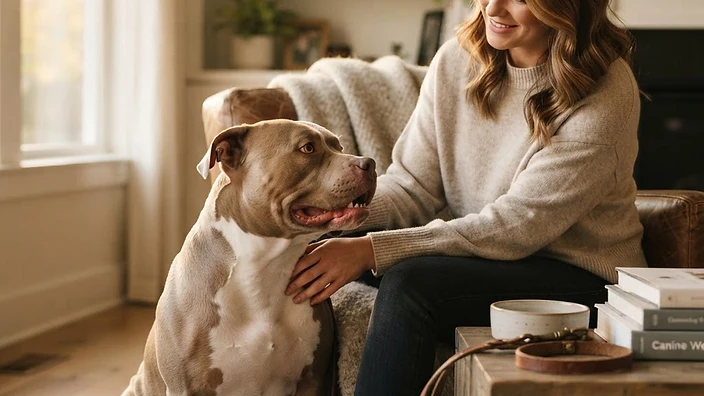
An American Bully stands calmly while being groomed with a rubber curry brush, demonstrating proper short-coat maintenance technique. This image supports the grooming section of the complete American Bully care guide, covering coat care, skin health, and desensitization to handling.
Home and Yard Safety
Indoor Hazards
- Xylitol: found in sugar-free gum, peanut butter, baked goods — causes life-threatening hypoglycemia in dogs
- Grapes and raisins: nephrotoxic, even in small quantities
- Medications: ibuprofen, acetaminophen, and many human supplements are toxic
- Laundry pods and cleaning products: extremely caustic
- Recliner and sofa-bed mechanisms: crush injuries in curious, floor-dwelling puppies
Outdoor Hazards
- Fence integrity: American Bullies are powerful and motivated — check fencing monthly. Minimum recommended fence height: 5–6 feet. Bury wire apron 12 inches below grade to deter digging escape.
- Pool safety: Bullies are not natural swimmers despite their muscular build — body composition (low fat, high muscle) means many are negatively buoyant. Install a pool fence or teach pool exit protocol.
- Toxic plants in Austin-area yards: Lantana, oleander, sago palm, Texas mountain laurel, and bluebonnets in quantity can cause GI distress or worse
- Heat: Austin summers routinely exceed 100°F. American Bullies are brachycephalic-adjacent — their broad head and compact muzzle reduce airflow efficiency. Limit outdoor activity to early morning (before 9 AM) and evening (after 7 PM) in peak summer.
Seasonal Care in Central Texas
Summer (June–September)
- Walk on grass, not asphalt — pavement at 95°F air temperature exceeds 125°F surface temperature, causing paw pad burns within 60 seconds
- Provide constant access to fresh water and shaded rest areas
- Watch for heat exhaustion signs: excessive panting, drooling, brick-red gums, disorientation — requires immediate cool water immersion and emergency vet care
- Parasite pressure peaks: monthly flea/tick/heartworm prevention is essential
Winter (December–February)
Austin winters are mild but can include ice events. American Bullies have minimal body fat and a single-layer short coat — they can become hypothermic in prolonged cold exposure below 40°F.
- Provide a dog coat or sweater for short-coated Bullies during cold snaps
- Rinse paws after walks to remove road salt and ice melt chemicals (sodium chloride, calcium chloride — both irritating and potentially toxic if ingested)
Training and Mental Stimulation
American Bullies are highly intelligent and people-pleasing, making them exceptionally trainable when approached with positive reinforcement methods. Punishment-based or aversive training (prong collars, shock collars, alpha rolls) is counterproductive with this breed — it erodes the trust that makes them such exceptional companions and can trigger defensive behavior.
Foundation Training (8–16 Weeks)
Begin immediately. Priorities:
- Name recognition and recall — the most important safety skill a dog can have
- Crate training — creates security, aids housetraining
- Sit, down, stay, leave it — foundational impulse control
- Loose-leash walking — critical given adult Bully strength (30–120+ lbs pulling with full body weight)
Training sessions should be 3–5 minutes maximum for young puppies — their attention spans are short, and ending on success is more valuable than drilling repetitions.
Ongoing Training and Enrichment (All Ages)
- Obedience classes: AKC Canine Good Citizen (CGC) certification is an excellent structured goal and demonstrates the breed's true temperament to skeptical neighbors
- Nose work and scent games: mentally exhausting (in the best way), accessible at any fitness level
- Trick training: maintains cognitive engagement in seniors, deepens the owner-dog bond at all ages
Health Screening and Preventive Care
Breed-Specific Health Concerns
American Bullies are generally hardy, but responsible breeding and proactive monitoring help owners stay ahead of breed-predisposed conditions:
| Condition | Prevalence | Screening Protocol | |-----------|------------|-------------------| | Hip Dysplasia | Moderate-High | OFA Hip Evaluation (radiograph, minimum 24 months) | | Elbow Dysplasia | Moderate | OFA Elbow Evaluation | | Hereditary Cardiac Disease | Low-Moderate | OFA Cardiac Exam (ABKC requirement) | | Congenital Hypothyroidism with Goiter (CHG) | Breed-specific | DNA test (UC Davis) | | Ichthyosis | Low | DNA screening available | | Allergic Dermatitis | High | Environmental + dietary management |
Ethical breeders — including our program at American Bully Haven Pups — complete OFA health testing on all breeding dogs prior to pairing. When evaluating breeders, ask specifically for OFA test certificates; see our guide on How to Find an Ethical American Bully Breeder: Red & Green Flags for what documentation to request.
Veterinary Wellness Schedule
- 0–12 months: Monthly weigh-ins, vaccine series, parasite prevention, spay/neuter discussion
- 1–6 years: Annual comprehensive wellness exam, heartworm test, fecal parasite screen, dental eval
- 7+ years: Biannual comprehensive exams, senior bloodwork panel (CBC, chemistry, thyroid), urinalysis, blood pressure monitoring, arthritis assessment
Travel and Boarding
Traveling With Your Bully
- Use a crash-tested crate or seatbelt harness — unrestrained dogs become projectiles in accidents and are a distraction hazard while driving
- Never leave a Bully in a parked car in Texas — temperatures can reach 130°F+ within minutes, even on mild days
- For air travel: American Bullies are classified as brachycephalic breeds by most airlines and are restricted from cargo hold travel. Check airline policies; cabin travel in an approved carrier is sometimes possible for Pocket Bullies under weight limits
Boarding and Pet Care
- Tour facilities before booking; verify staff-to-dog ratios and separation of large/small dogs
- Provide written care instructions, your vet's contact information, and vaccination records
- Bring familiar bedding and toys to reduce cortisol elevation from environmental change
Key Takeaways
- American Bully puppies require protected, low-impact exercise until growth plates close at 12–18 months
- Nutrition quality is the single highest-impact daily care decision you'll make — prioritize AAFCO-compliant, high-protein, species-appropriate formulas
- Socialization between 8–16 weeks is irreplaceable; expose puppies to diverse people, sounds, surfaces, and animals in controlled, positive settings
- Grooming is more than aesthetics — skin fold hygiene, ear cleaning, and dental care directly affect health outcomes
- Heat management is critical in Austin's climate — schedule outdoor activity around peak temperatures and never leave dogs in vehicles
- OFA health testing in breeding dogs is the foundation of a healthy puppy; always ask to see certificates
- Senior Bullies (7+) need biannual vet visits, joint support supplementation, and modified activity — not retirement
- Positive reinforcement training builds the cooperative, confident companion this breed was designed to be
- This pillar guide connects to in-depth resources covering every aspect of care in our full resource library
Frequently Asked Questions
How much exercise does an American Bully need per day?
Adult American Bullies (1–7 years) thrive with 45–90 minutes of daily activity broken into multiple sessions. This should include a mix of leash walks, structured play (fetch, tug, flirt pole), and off-leash time in a securely fenced area. Puppies under 12 months need significantly less structured exercise — the "5 minutes per month of age, twice daily" guideline protects developing growth plates. Senior Bullies should remain active but with shorter, gentler sessions; hydrotherapy or swimming is excellent for arthritic older dogs.
What should I feed my American Bully?
Choose an AAFCO-certified, life-stage-appropriate kibble, raw, or fresh diet with a named protein source as the first ingredient. Puppies need formulas labeled "for growth" or "all life stages" with 28–32% crude protein and controlled calcium levels. Adults do well on 25–30% protein with moderate fat (12–18%). Avoid perpetually grain-free diets without consulting your vet, as the FDA investigated a DCM link in certain formulas. Add omega-3 fish oil supplementation for coat health and joint support, especially in adults and seniors.
Are American Bullies good with children and other pets?
Yes — the American Bully was selectively bred to amplify the gentle, human-affectionate traits of its Pit Bull and AmStaff ancestry. When properly socialized from puppyhood, they are remarkably patient and playful with children. Like any large, powerful dog, interactions with very young children should be supervised. With other pets, early, positive introductions during the socialization window set the foundation for harmonious coexistence. Individual temperament varies by bloodline, which is why reputable, ABKC-registered breeders who prioritize temperament in their breeding selections matter enormously.
How long do American Bullies live?
The average American Bully lifespan is 10–12 years, with XL-class dogs often trending toward the lower end (8–10 years) due to the metabolic and cardiac demands of larger body mass. Longevity is significantly influenced by: quality of nutrition throughout life, maintenance of healthy body weight (avoiding obesity), frequency of preventive veterinary care, OFA-tested lineage, and activity levels in adulthood. Many well-cared-for Standard and Pocket Bullies live to 12–13 years.
When should I spay or neuter my American Bully?
This is a nuanced topic — emerging research, including studies on large and muscular breeds, suggests that delaying spay/neuter until 18–24 months allows sex hormones to support musculoskeletal development and may reduce risks of joint disease and certain cancers. Discuss timing specifically with your veterinarian, considering your individual dog's sex, size class, and lifestyle. Many ethical breeders, including our program, provide guidance in their puppy contracts or adoption agreements — see our adoption guide for details.
Do American Bullies need a lot of grooming?
Relative to many breeds, no — their short, single-layer coat sheds moderately and requires only weekly brushing and monthly baths. However, breed-specific grooming needs (facial fold cleaning, ear care, nail trimming, dental hygiene) are genuine health requirements, not optional. Neglecting skin folds can lead to bacterial or yeast dermatitis within days in humid conditions. Build a consistent grooming routine from puppyhood so your Bully accepts handling calmly throughout life.
Ready to Welcome an American Bully Into Your Home?
You now have the foundation to provide exceptional, informed care at every stage of your American Bully's life. From your puppy's first night in their crate to their gray-muzzled senior naps on the couch, every day is an opportunity to honor the extraordinary breed that chose — and was chosen by — you.
If you're ready to take the next step, we'd love to introduce you to our current litter. Meet Diesel — Chocolate Tri Male, Atlas — Lilac Tri-Color Male, Bowie — Blue Tri Male, Hazel — Merle Female, and Ella — Lilac Tri Female — all ABKC-registered, health-tested lineage, raised in our home with early neurological stimulation and socialization from day one.
Explore our adoption guide to understand our process, or contact us with any questions. We're here to support you not just through adoption, but for the lifetime of your dog.