Few breeds inspire as much devotion — or as much misunderstanding — as the American Bully. With a physique that commands attention and a temperament that melts hearts, this breed occupies a unique place in the canine world: a dog built like a gladiator with the soul of a therapy companion. Whether you're a first-time buyer researching your next family member or a seasoned enthusiast diving deeper into conformation and genetics, you deserve a resource that leaves nothing out.
At American Bully Haven Pups, our ABKC- and UKC-registered program in Austin, Texas has given us an intimate, hands-on understanding of this breed across multiple generations of carefully planned litters. Everything we share here is grounded in that lived experience, aligned with veterinary best practices, and cross-referenced against the official breed standards that govern ethical breeding worldwide.
This is your complete, no-fluff reference — from the breed's founding bloodlines in the early 1990s to the nuanced genetics behind a lilac tri coat. Bookmark it, share it, and come back to it as your knowledge grows. And when you're ready to bring one of these extraordinary dogs home, explore our available American Bully puppies or review our adoption guide to understand what our placement process looks like.
Origin and History of the American Bully
The Founding Era: 1980s–2004
The American Bully emerged from American Kennel Club–unrecognized crossbreeding programs in the United States, primarily in Virginia and Southern California, during the late 1980s and early 1990s. Breeders sought to isolate the loyal, human-friendly temperament of the American Pit Bull Terrier (APBT) while amplifying a heavier, more compact muscular structure — reducing the gameness and prey drive that characterized working terrier lines.
The primary foundational cross was American Pit Bull Terrier × American Staffordshire Terrier, with documented influence from the American Bulldog, English Bulldog, Olde English Bulldogge, and, in some XL lines, the Mastiff. This is not a mutt or a designer dog — it is a deliberately developed breed with a consistent, reproducible type that was fixed over multiple generations through selective pressure on structure and temperament.
Key founding kennels include Razor's Edge (Dave Wilson, Northern Virginia), Gaff (Carlos Barksdale), and Gottiline (Richard Barajas, West Coast). These programs established the visual hallmarks and temperament profile that define the breed today.
Official Recognition
In 2004, the American Bully Kennel Club (ABKC) was founded to provide the breed its own registry, conformation standard, and show circuit — separate from APBT lineage. The United Kennel Club (UKC) formally recognized the American Bully as a distinct breed on July 15, 2013, granting it full show eligibility under its Guardian Dog Group. The breed is not currently recognized by the American Kennel Club (AKC).
The Four Size Varieties
The ABKC recognizes four official size classes, differentiated primarily by height at the withers — not weight. All four share the same breed standard for structure, temperament, and type; only the size parameters differ.
| Variety | Height at Withers (Male) | Height at Withers (Female) | |---|---|---| | Pocket | 14–17 inches | 13–16 inches | | Standard | 17–20 inches | 16–19 inches | | Classic | 17–20 inches | 16–19 inches | | XL | 20–23 inches | 19–22 inches |
Pocket Bully
The Pocket is the smallest recognized variety, standing under 17 inches at the withers for males. Despite the name, these dogs are not small in body — they carry the same dense musculature and broad chest as larger varieties, just compressed into a shorter frame. Adult males typically weigh 30–50 lbs. Their compact, low-to-ground silhouette often makes them appear even more heavily muscled than their taller counterparts. The Pocket Bully has become enormously popular as a family companion due to its manageable size and characteristically affectionate nature.
Standard Bully
The Standard is the baseline variety against which the breed type is most often measured. Males stand 17–20 inches and weigh approximately 65–85 lbs in athletic condition. The Standard exhibits the full breadth of ideal Bully structure: wide chest, thick bone, prominent musculature, and a broad, blocky head — without the extremes of the XL's height or the Classic's lighter body mass.
Classic Bully
The Classic shares the same height parameters as the Standard but carries a lighter body frame and less overall mass. It more closely resembles the foundational American Pit Bull Terrier in body composition while still presenting the broad head and characteristic Bully expression. The Classic is often preferred by owners who want an athletic, agile dog with a slightly less extreme physique.
XL Bully
The XL stands over 20 inches at the withers for males and can weigh 80–150 lbs depending on structure and conditioning. These dogs are genuinely imposing in presence, combining the breed's signature temperament with a truly large frame. Responsible XL breeding demands rigorous health testing — particularly for hip dysplasia and cardiac function — given the demands that mass places on the skeletal and cardiovascular systems.
Note on the "Extreme" label: The ABKC does not officially recognize "Extreme" as a separate class; it is an informal descriptor for dogs exhibiting exaggerated structure. Responsible breeders prioritize health and function over extremity.

A visual comparison of the four official American Bully size classes recognized by the ABKC: Pocket, Standard, Classic, and XL. Each variety shares the same breed standard for structure and temperament, differing only in height parameters.
American Bully Temperament
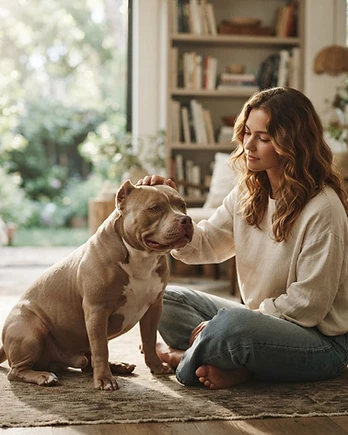
If the American Bully's appearance is its billboard, its temperament is its soul — and the two could not be more at odds with public perception.
Hallmark Personality Traits
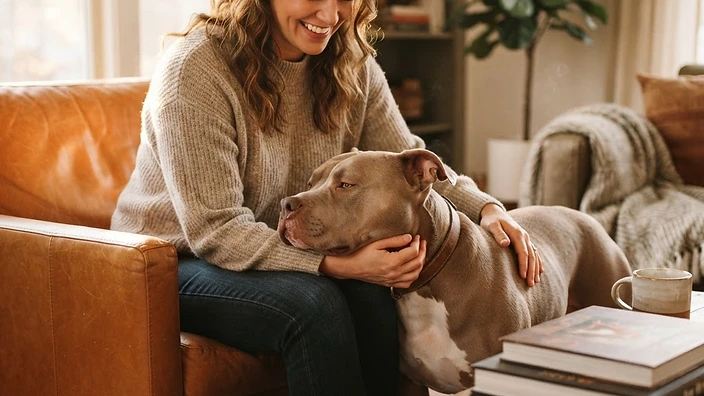
The ABKC breed standard explicitly describes the American Bully as "gentle and loving to people" with "exceptional stability and confidence." These are not marketing words; they are measurable behavioral traits selected for over 30+ years of intentional breeding. Key temperament attributes include:
- Human-directed affection: American Bullies are profoundly people-oriented. They seek out physical contact, thrive on human companionship, and are prone to separation anxiety if left isolated for extended periods.
- Child-tolerant and patient: The breed's pain tolerance and emotional stability make it exceptionally forgiving with toddlers. Supervision, as with any breed, remains non-negotiable.
- Confidence without aggression: A well-bred American Bully exhibits calm confidence — curious and alert without reactive aggression toward people or novel stimuli.
- Dog-social variability: Dog-to-dog tolerance varies by individual and bloodline. Some are highly social; others exhibit same-sex dog selectivity. Early socialization is critical (see The Complete American Bully Training Guide for socialization protocols).
The Aggression Myth — Addressed Directly
One of the most persistent misconceptions about bully breeds is that their physical power predicts aggression toward humans. The opposite is true in well-bred American Bullies. The ABKC standard explicitly lists "human aggression" as a disqualifying fault — dogs exhibiting unprovoked aggression toward people are removed from breeding programs by ethical breeders. Temperament is heritable, and decades of selection against human aggression have produced a breed that is, by measurable behavioral assessment, among the most people-friendly in existence.
ABKC Conformation Standard
Understanding the conformation standard helps buyers distinguish between well-bred dogs and those produced purely for visual extremity without regard for health or function.
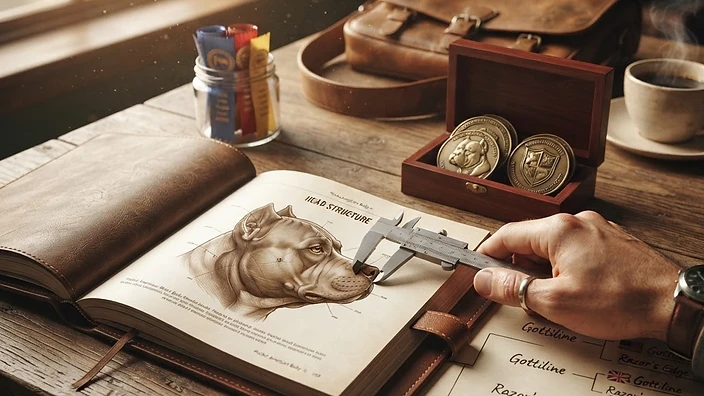
Head and Expression
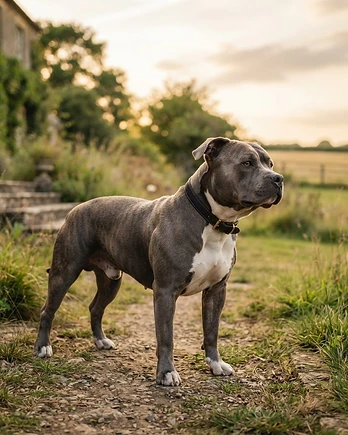
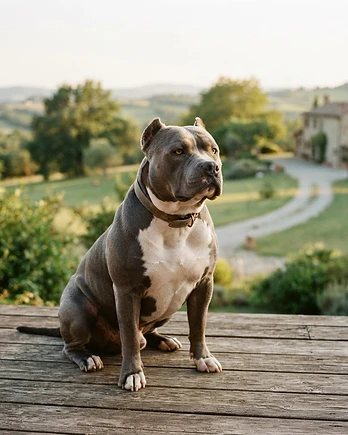
The American Bully head is large, broad, and blocky — one of the breed's most recognizable features. The skull is large with a pronounced stop (the transition from forehead to muzzle). The muzzle is broad, deep, and medium in length with well-defined jaws. The cheek muscles are prominent. Eyes are medium-sized, set low and wide, and may be any color except albinism. Ears are set high — cropped or natural (rose, semi-prick, or tulip).
Body and Structure
- Neck: Heavy, muscular, slightly arched, of medium length
- Chest: Broad, deep, with well-sprung ribs — the forechest should be well-defined
- Back: Short to medium in length, strong and firm with a slight slope from withers to rump
- Topline: Level to slightly sloping — a roached or swayed topline is a fault
- Hindquarters: Well-muscled, broad thighs, well-let-down hocks
- Tail: Low-set, tapering to a fine point; carried low when relaxed
Movement and Gait
Despite their mass, American Bullies should move with power and efficiency — a springy, confident gait that covers ground without wasted motion. Paddling, rolling, or crabbing are structural faults indicating poor angulation.
Disqualifying Faults
Under ABKC rules, disqualifying faults include: albinism, viciousness or unprovoked aggression toward humans, height outside the class range, and merle-to-merle breeding offspring (double merle, associated with blindness and deafness).
Coat Colors and Genetics
The American Bully exhibits one of the widest color palettes in all of dogdom — a direct result of the genetic diversity introduced during the breed's founding crosses.

A collection of American Bully puppies demonstrating the breed's remarkable coat color diversity, including blue tri, lilac tri-color, chocolate tri, and merle patterns. Color expression is governed by multiple genetic loci including the K, A, B, D, E, and M loci.
Base Colors and Genetic Loci
Color expression is governed by multiple gene loci. The most relevant:
- K locus (dominant black): Controls whether agouti patterning is expressed. K^B (dominant black) suppresses agouti; k^y/k^y allows it.
- A locus (agouti): Determines pattern — sable (A^w), tan points (a^t), or recessive black (a)
- B locus: Controls black vs. chocolate (brown) pigment. Two copies of b allele = chocolate
- D locus: Controls pigment dilution. Two copies of d allele = blue (diluted black) or lilac (diluted chocolate)
- E locus: Controls whether black pigment is expressed at all. e/e = yellow/red/fawn
- M locus: Merle pattern — dominant, M/m = merle. M/M (double merle) = health risks
Color Varieties
| Color | Genetics Summary | |---|---| | Black | K^B/- or a/a | | Blue | dd + black base | | Chocolate | bb | | Lilac | bb + dd (double dilute) | | Fawn / Red | e/e | | Brindle | k^br present | | Tri-color (tan points) | a^t/a^t | | Merle | M/m | | Tuxedo | Piebald (S locus) |
Our current available puppies showcase several of these stunning color expressions: Diesel — Chocolate Tri Male, Atlas — Lilac Tri-Color Male, Bowie — Blue Tri Male, Hazel — Merle Female, and Ella — Lilac Tri Female — each a testament to responsible color genetics.
A Note on Merle Ethics
Merle is a beautiful and legitimate color in the American Bully, but it carries a critical caveat: merle-to-merle (M/M) breeding produces double merle puppies with a high statistical probability of severe vision and hearing impairment. Ethical breeders always DNA-test for the merle allele and never breed two merle-carrying dogs together.
Influential Bloodlines
Knowledge of bloodlines helps buyers understand the genetic composition and likely phenotype of a puppy. The following are the most historically significant American Bully bloodlines:
Razor's Edge
Founded by Dave Wilson in the early 1990s in Northern Virginia. Razor's Edge dogs are characterized by broad heads, heavy bone, loose skin, and the calm, "couch potato" temperament that became a hallmark of the modern Bully. This bloodline is the single most influential foundation line in the breed.
Gottiline
Developed on the West Coast around Juan Gotty (registered name: The Notorious Juan Gotty), bred by Richard Barajas of West Side Kennels. Gottiline dogs introduced extreme mass, shorter legs, and an even wider chest — heavily influencing the Pocket and Extreme phenotypes.
Remyline
Founded by Fabian Negron, Remyline is associated with clean, refined structure, good movement, and consistent temperament. Remyline dogs are highly regarded in the show ring.
Kurupt Bloodline
A more recent but tremendously influential line, Kurupt dogs — particularly Kurupt Farmstaff kennels — have produced some of the most decorated XL Bullies in ABKC competition, known for massive frames combined with surprisingly correct structure.
Mikeland, Daxline, and Grey Line
These lines contributed refined heads, improved rear angulation, and color genetics (particularly the grey/blue dilutes) that are now common across all varieties.
Registration Bodies: ABKC vs. UKC
Two primary registries govern the American Bully, and understanding their differences matters for buyers and breeders alike.
American Bully Kennel Club (ABKC)
- Founded specifically for the American Bully in 2004
- Maintains the breed's conformation standard and show circuit
- Registers all four size varieties
- Operates ABKC DNA testing and parentage verification
- Widely regarded as the primary authority on breed type and conformation
United Kennel Club (UKC)
- Recognized the breed in 2013
- Classifies the American Bully in the Guardian Dog Group
- Offers dual registration for ABKC-registered dogs
- UKC shows operate under slightly different conformation criteria
At American Bully Haven Pups, all our breeding dogs and puppies carry dual ABKC and UKC registration, providing our buyers with maximum flexibility for showing and breeding programs. Learn more about our standards at about our breeding program.
American Bully vs. Related Breeds
One of the most common sources of confusion — and unfair legislation — stems from conflating the American Bully with visually similar breeds.
| Feature | American Bully | American Pit Bull Terrier | American Staffordshire Terrier | American Bulldog | |---|---|---|---|---| | Primary purpose | Companion | Working / sport | Show / companion | Working farm dog | | Body type | Heavy, compact | Athletic, lean | Athletic, moderate | Large, powerful | | Head type | Broad, blocky | Wedge-shaped | Broad, rounded | Large, square | | Prey drive | Low–moderate | Moderate–high | Moderate | Moderate | | ABKC registered | Yes | No | No | No | | AKC recognized | No | No | Yes | No | | Temperament | Extremely human-friendly | Loyal, high-energy | Loyal, confident | Independent, loyal |
The American Bully is not an American Pit Bull Terrier, despite sharing ancestry. Breed-specific legislation (BSL) that targets "pit bulls" often incorrectly ensnares American Bullies — underscoring why proper registration and breed identification matter for owners.
Health Considerations and Testing
The American Bully's broad, muscular physique brings specific health vulnerabilities that responsible breeders proactively screen for.
Common Health Concerns
- Hip and elbow dysplasia: The most prevalent orthopedic issue, particularly in XL and heavier Standard dogs. OFA (Orthopedic Foundation for Animals) hip and elbow evaluations should be performed on all breeding stock — ideally preliminary evaluations at 12 months and formal certification at 24 months.
- Brachycephalic obstructive airway syndrome (BOAS): Dogs with extremely shortened muzzles may exhibit exercise intolerance, snoring, and heat sensitivity. Buyers should insist on sires and dams with functional airways.
- Cardiac disease: ABKC and OFA recommend cardiac evaluations (echocardiogram) for all breeding animals, given the elevated risk of dilated cardiomyopathy (DCM) and pulmonic stenosis in heavily muscled breeds.
- Skin fold dermatitis: Dense wrinkles around the face and body can trap moisture and bacteria. Weekly cleaning and drying of skin folds prevents chronic dermatitis.
- Hypothyroidism: Relatively common in bully breeds; manifests as weight gain, lethargy, and coat changes. OFA thyroid evaluations are recommended at 24 months.
For a comprehensive deep-dive into lifelong health care from puppyhood through the senior years, read The Complete American Bully Care Guide: Puppyhood to Senior Years.
Health Testing Protocols We Follow
At American Bully Haven Pups, every breeding dog undergoes: OFA hip and elbow evaluation, OFA cardiac exam, OFA thyroid panel, CAER (Canine Eye Registry) ophthalmologic exam, and DNA panel testing (color genetics, MDR1, and breed-specific disease markers). Results are publicly listed in the OFA database.
Key Takeaways
- The American Bully was developed in the late 1980s–1990s from APBT, AmStaff, and Bulldog crosses, achieving breed status with ABKC recognition in 2004 and UKC recognition in 2013.
- Four official size varieties exist: Pocket, Standard, Classic, and XL — differentiated by height, not weight.
- The breed's defining trait is its exceptionally human-friendly temperament; human aggression is a disqualifying fault under the ABKC standard.
- Coat color genetics are complex and beautiful — from blue and chocolate to lilac, tri-color, and merle — but require responsible DNA testing to avoid harmful double merle combinations.
- Foundational bloodlines — Razor's Edge, Gottiline, Remyline — shaped the modern breed's type and temperament.
- Health testing (OFA hips/elbows/cardiac/thyroid, CAER eyes) is non-negotiable in an ethical breeding program.
- The American Bully is distinct from the American Pit Bull Terrier and should not be subject to breed-specific legislation targeting that breed.
- Dual ABKC and UKC registration provides the most flexibility for buyers interested in showing or breeding.
Frequently Asked Questions
Is the American Bully a good family dog?
Absolutely — the American Bully is widely regarded as one of the most family-oriented breeds in existence. The ABKC conformation standard explicitly describes the ideal American Bully as "gentle and loving to people" and notes that human aggression is a disqualifying fault in the show ring. Well-bred American Bullies are patient, affectionate, and highly tolerant of children. They thrive on human companionship and are most content when integrated fully into family life. As with any large, powerful dog, responsible supervision around small children and early socialization are always recommended.
How much does an American Bully puppy cost?
Pricing varies significantly by variety, bloodline, color, and breeder reputation. Expect to pay $2,500–$5,000 for a well-bred Standard or Pocket from a health-tested, ABKC-registered program. XL Bullies from elite bloodlines can command $5,000–$15,000+, and exotic color combinations (lilac tri, merle, ghost tri) from proven champions can exceed $20,000 in some markets. Be cautious of prices below $1,500 — they often indicate absence of health testing, registration, or ethical breeding practices. The cost of a responsibly bred puppy is always less than the long-term veterinary costs of a poorly bred one.
What is the difference between a Pocket Bully and a Standard Bully?
The only official distinction is height at the withers: Pocket males stand under 17 inches; Standard males stand 17–20 inches. Both carry the same desired structure, head type, and temperament per the ABKC standard. The Pocket's shorter frame can make it appear more heavily muscled and compact, which appeals to many buyers. Weight in Pocket Bullies typically ranges from 30–50 lbs versus 65–85 lbs for Standards in athletic condition.
Are American Bullies subject to breed-specific legislation (BSL)?
This is an important question with a nuanced answer. BSL most commonly targets "pit bull type" dogs, and some jurisdictions do include American Bullies by name or description. However, the American Bully is a registered, distinct breed — not an American Pit Bull Terrier — and ABKC/UKC registration documentation can be critical in jurisdictions that allow breed identification to exempt dogs from restrictions. Always research local ordinances before acquiring any bully breed and maintain comprehensive documentation including registration papers, pedigree, and veterinary records.
What health tests should a reputable American Bully breeder perform?
At minimum, responsible breeders should conduct: OFA hip and elbow evaluations (preliminary at 12 months, certified at 24 months), OFA cardiac examination by a board-certified cardiologist, OFA thyroid panel, CAER ophthalmologic exam, and a DNA health panel covering breed-relevant mutations. Results should be verifiable in the public OFA database (ofa.org). Ask for documentation proactively — a trustworthy breeder will share it freely and discuss results openly.
How long do American Bullies live?
The average American Bully lifespan is 10–13 years for Pocket and Standard varieties. XL Bullies, due to their greater body mass, typically average 8–11 years, consistent with the general principle that larger dogs have shorter lifespans. Longevity is directly influenced by breeding quality, diet, exercise, preventive veterinary care, and weight management. Dogs maintained at lean, athletic body condition consistently outlive those allowed to carry excess weight.
Ready to Meet Your American Bully?
You've just completed one of the most comprehensive deep-dives into the American Bully breed available anywhere. But knowledge becomes experience the moment you meet one of these dogs in person — and there's nothing quite like it.
If this guide has confirmed what you already felt — that the American Bully might be the right breed for your family — we invite you to take the next step. Browse our available American Bully puppies, including stunning individuals like Atlas — Lilac Tri-Color Male and Ella — Lilac Tri Female. Review our adoption guide to understand our placement process, or explore our full resource library to continue your education. When you're ready to talk, contact us — we're always happy to help you find the right match.
For further reading on breed-specific care, training, and health, explore these cluster resources: