
Feeding an American Bully well is one of the most powerful investments you can make in their health, longevity, and quality of life. These dogs are muscular, athletic, and structurally impressive — but that iconic physique doesn't maintain itself. Behind every well-conditioned Bully is an owner who understands nutrition at a level most casual dog owners never reach. Whether you're welcoming your first pup home or refining a feeding plan for a seasoned adult, this guide is designed to be the only resource you'll ever need.
At American Bully Haven Pups, we're ABKC- and UKC-registered breeders based in Austin, Texas, and nutrition is a cornerstone of everything we do. We send every puppy home with a personalized feeding plan, and we stay available to guide our families through every life stage. This article distills years of hands-on experience alongside veterinary-aligned best practices into one comprehensive, honest reference. We'll cover macronutrient targets, caloric density, AAFCO standards, raw vs. kibble debates, portion sizing by age and body class, supplement protocols, food allergy management, and a lifelong dietary strategy — nothing left out.
Consider this your definitive companion to Feeding Your American Bully: A Nutrition Guide, expanded into a full pillar resource. Bookmark it, share it with your vet, and revisit it at every life stage. Your Bully deserves nothing less than your best effort — and this guide makes that effort straightforward.
Understanding the American Bully's Unique Nutritional Needs
The American Bully is not a generic medium-large breed dog. Developed from American Pit Bull Terrier and American Staffordshire Terrier bloodlines — with selective influence from English Bulldog and other molosser breeds — the Bully carries a distinctly high muscle-to-fat ratio, a broad chest, and a compact, powerful frame. The ABKC recognizes four size classes: Pocket (under 17 inches at the withers), Standard (17–20 inches), Classic, and XL (over 20 inches). Each class has meaningfully different caloric needs, metabolic rates, and macro targets.
Because of their muscular composition and brachycephalic-adjacent skull structure in some lines, American Bullies can be prone to:
- Obesity if caloric intake exceeds energy expenditure
- Skin and coat issues linked to dietary fat quality and omega fatty acid imbalance
- Food sensitivities to common proteins like chicken or grains like corn and wheat
- Joint stress from excess weight bearing down on already compact skeletal structures
Understanding these predispositions shapes every nutritional decision we'll discuss below.
Macronutrient Targets for American Bullies
Protein
Protein is the cornerstone of the American Bully diet. Muscle synthesis, immune function, enzyme production, and coat health all depend on adequate, high-quality protein. For adult American Bullies, target crude protein of 24–30% on a dry matter basis (DMB). Puppies in rapid growth phases need even more — 28–32% DMB — to support skeletal and muscular development without triggering the accelerated bone growth that causes joint problems.
Biological value (BV) matters as much as percentage. Animal-sourced proteins — beef, lamb, salmon, turkey, duck — have BV scores of 70–100, meaning the amino acid profile closely matches what dogs actually need. Plant proteins like soy or pea protein have lower BV scores and are harder for dogs to utilize. Always choose a food where a named animal protein (e.g., "deboned beef" or "salmon") is the first ingredient — not a meal byproduct or plant protein concentrate.
Fat
Dietary fat is the most calorie-dense macronutrient at 9 kcal/gram, and it serves critical roles in hormone production, fat-soluble vitamin absorption (A, D, E, K), and coat conditioning. Target 12–18% crude fat DMB for active adult Bullies. The quality and type of fat matters enormously: omega-3 fatty acids (EPA and DHA) from fish oil support joint health, reduce systemic inflammation, and give the Bully coat its characteristic shine. Omega-6 fatty acids from poultry fat support skin barrier function. An optimal omega-6 to omega-3 ratio is 4:1 to 6:1.
Carbohydrates
Dogs are not obligate carnivores, but they have limited enzymatic capacity to process high-glycemic carbohydrates. For American Bullies — especially those prone to weight gain — choose complex, low-glycemic carbohydrates: sweet potato, brown rice, oats, and legumes (in moderation). Total carbohydrate content should be no more than 40–50% DMB, and ideally lower for less active dogs. Avoid foods where corn syrup, white rice, or refined starches dominate the carbohydrate profile.
Moisture
Often overlooked, moisture is a macronutrient. American Bullies on dry kibble diets are chronically under-hydrated relative to their ancestors' prey-based diet (which was ~70% moisture). Always provide fresh water ad libitum, and consider adding wet food, bone broth, or water to kibble to increase moisture intake — especially important for Bullies prone to urinary issues or skin problems.

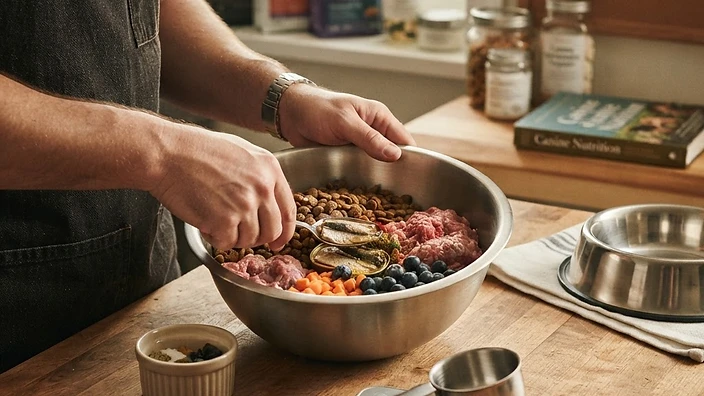
A young American Bully puppy eating from a bowl of premium, AAFCO-compliant kibble, illustrating the importance of macronutrient targets and proper caloric density during the critical growth phase.
AAFCO Standards and How to Read a Dog Food Label
The Association of American Feed Control Officials (AAFCO) sets the nutritional adequacy standards used in the U.S. pet food industry. Every food you consider should carry an AAFCO nutritional adequacy statement — look for the phrase "formulated to meet the nutritional levels established by the AAFCO Dog Food Nutrient Profiles" or "feeding trials using AAFCO procedures." The latter is the gold standard, as it means the food was actually fed to dogs, not just mathematically calculated.
How to decode the guaranteed analysis panel:
- Crude protein minimum (%)
- Crude fat minimum (%)
- Crude fiber maximum (%)
- Moisture maximum (%)
To compare foods accurately, convert all values to dry matter basis by dividing the as-fed percentage by (100 minus the moisture percentage). This eliminates the distorting effect of water content and lets you make apples-to-apples comparisons between kibble, wet food, and raw.
Red flags on an ingredient label:
- Generic "meat meal" or "animal fat" (unnamed source)
- Artificial preservatives: BHA, BHT, ethoxyquin
- Artificial colors: Red 40, Yellow 5, Blue 2
- Sugar, corn syrup, or propylene glycol
- More than two or three plant proteins in the first five ingredients
Kibble vs. Raw vs. Fresh: A Structured Comparison
One of the most debated topics in American Bully nutrition is the choice between conventional dry kibble, raw food diets (BARF — Biologically Appropriate Raw Food), and fresh/gently-cooked commercial options. Here's an honest, balanced breakdown:
| Factor | Premium Kibble | Raw (BARF) | Fresh/Gently Cooked | |---|---|---|---| | Convenience | High | Low-Medium | Medium | | Cost | $80–$150/month | $150–$400/month | $150–$300/month | | Digestibility | Moderate–High | High | High | | Pathogen risk | Very low | Moderate (Salmonella, E. coli) | Low | | Nutrient completeness | Consistent (AAFCO) | Variable without expertise | High (if formulated properly) | | Coat/skin impact | Good (quality brands) | Excellent | Excellent | | Dental health | Moderate (crunching) | High (raw meaty bones) | Moderate | | Best for | Most owners | Experienced owners | Health-conscious owners |
Our take at American Bully Haven Pups: We start our puppies on premium kibble for consistency and ease of transition, but we routinely add raw meaty bones, fish oil, and whole-food toppers to bridge the gap. If you choose raw, consult a veterinary nutritionist (board-certified, DACVN) to ensure the diet is balanced — unbalanced raw diets are one of the most common nutritional mistakes we see in the Bully community.
Feeding by Life Stage and Size Class
American Bully Puppies (8 Weeks – 12 Months)
This is the most nutritionally critical window of your Bully's life. Rapid skeletal growth, muscle fiber development, and immune system maturation all depend on getting the basics right. Choose a food specifically formulated for large-breed puppies — despite some Bullies being compact, the caloric and calcium requirements of large-breed puppy formulas are better suited to their growth trajectory.
Key puppy nutrition targets:
- Crude protein: 28–32% DMB
- Crude fat: 14–17% DMB
- Calcium: 1.2–1.8% DMB (critical — excess calcium causes developmental orthopedic disease)
- Phosphorus: 1.0–1.6% DMB
- Caloric density: ~380–420 kcal/cup
Feeding frequency:
- 8–12 weeks: 4 meals/day
- 12–16 weeks: 3 meals/day
- 4–12 months: 2–3 meals/day
Sample daily caloric needs by projected adult weight:
- Pocket (25–35 lbs adult): ~700–900 kcal/day as a puppy
- Standard (50–70 lbs adult): ~1,100–1,400 kcal/day
- XL (80–120 lbs adult): ~1,600–2,200 kcal/day
For puppies like Atlas — our Lilac Tri-Color Male, Bowie — Blue Tri Male, and Diesel — Chocolate Tri Male, we provide individualized feeding plans tailored to their specific body type and projected adult size. The same applies to our females — Ella — Lilac Tri Female and Hazel — Merle Female each have their own nutritional profiles we walk every family through before they go home.
Adult American Bullies (1–6 Years)
Once growth plates close — typically around 12–18 months depending on size class — transition to an adult maintenance formula over 10–14 days. XL class Bullies may continue on large-breed puppy food until 18 months.
Adult feeding targets:
- Crude protein: 24–28% DMB
- Crude fat: 12–16% DMB
- Feed 2 meals/day (morning and evening) to reduce bloat risk
- Adjust portions based on body condition score (BCS) — target BCS 4–5 on a 9-point scale
Caloric estimates for moderately active adults:
- Pocket (25–40 lbs): 600–900 kcal/day
- Standard (50–70 lbs): 1,000–1,400 kcal/day
- XL (80–130 lbs): 1,500–2,400 kcal/day
These are starting points — body condition, activity level, spay/neuter status, and individual metabolism all affect actual needs. A spayed or neutered Bully typically needs 20–30% fewer calories than an intact dog of the same size.
Senior American Bullies (7+ Years)
Senior Bullies face a metabolic shift: muscle mass tends to decline (sarcopenia), joints accumulate wear, and organ function may begin to change. Counterintuitively, many seniors need more protein, not less — targeting 28–30% DMB — to preserve lean muscle mass. Simultaneously, caloric intake often needs to decrease by 15–20% to prevent obesity.
Key senior adjustments:
- Increase EPA/DHA supplementation for joint support
- Consider a joint-support formula with added glucosamine and chondroitin
- Monitor kidney function annually (BUN, creatinine); reduce phosphorus if indicated
- Add moisture through wet food or bone broth
- Feed 2–3 smaller meals to ease digestion
Essential Supplements for American Bullies
Even the best kibble leaves nutritional gaps that targeted supplementation can fill. Here are the supplements we recommend at American Bully Haven Pups, aligned with veterinary best practices:
Fish Oil (EPA/DHA): The single most impactful supplement for Bullies. Dosage: 20–55 mg EPA+DHA per kg body weight daily. Supports coat shine, skin health, joint lubrication, and cognitive function. Use a purified, heavy-metal-tested marine oil — not flaxseed oil, which lacks direct EPA/DHA.
Probiotics: American Bullies are prone to digestive sensitivity. A multi-strain probiotic (Lactobacillus acidophilus, Bifidobacterium animalis) at 1–10 billion CFU daily supports gut microbiome balance and reduces loose stools during diet transitions.
Glucosamine & Chondroitin: Particularly important for XL class Bullies whose joints bear significant structural load. Glucosamine sulfate at 500–1,000 mg daily (weight-dependent) supports cartilage synthesis. Start by age 3–4 in larger dogs as a preventive measure.
Vitamin E: An antioxidant that works synergistically with fish oil to prevent lipid peroxidation. If supplementing with fish oil, add 100–400 IU vitamin E per day.
Digestive Enzymes: Beneficial for Bullies with chronic soft stools or nutrient malabsorption. Protease, amylase, and lipase blends support macronutrient breakdown.
What NOT to supplement without veterinary guidance: Calcium (excess causes developmental orthopedic disease in puppies), Vitamin D (toxic in overdose), and iron (can cause oxidative damage).

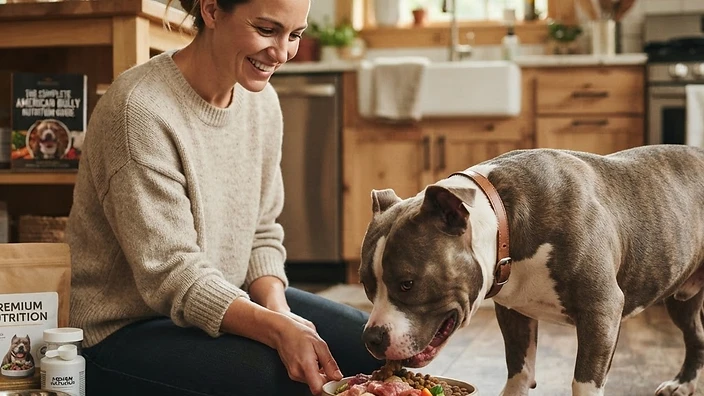
A healthy, well-conditioned adult American Bully displaying a lustrous coat and strong muscular build — physical evidence of a properly balanced diet with adequate omega fatty acids, protein, and supplementation.
Food Allergies and Sensitivities in American Bullies
Food allergies and environmental allergies are among the most common health challenges in the American Bully breed. Differentiating between the two requires veterinary guidance, but diet is almost always the first intervention explored. True food allergies involve an IgE-mediated immune response to a specific protein; food sensitivities involve a non-immune digestive intolerance — both cause overlapping symptoms.
Common signs of food allergy or sensitivity:
- Chronic itching, especially paws, ears, groin, and armpits
- Recurrent ear infections
- Chronic loose stools, gas, or vomiting
- Red, inflamed, or hyperpigmented skin
- "Hot spots" (acute moist dermatitis)
Most common allergens in American Bullies:
- Chicken (most prevalent)
- Beef
- Dairy
- Wheat/gluten
- Soy
- Corn
- Egg
The elimination diet protocol: The gold standard for identifying food allergies is a strict 8–12 week hydrolyzed protein or novel protein elimination diet. Every ingredient must be new to the dog — common novel proteins include kangaroo, venison, rabbit, alligator, or duck (if the dog has never eaten it). No treats, chews, flavored medications, or table scraps during the trial period. After 8–12 weeks, reintroduce one protein at a time every 2 weeks to identify the trigger.
For comprehensive health guidance alongside nutrition, explore The Complete American Bully Health Guide and American Bully Wellness: A Complete Preventive Guide.
Weight Management: Keeping Your Bully Lean and Powerful
Obesity is the most common preventable health condition in American Bullies. Even 10–15% above ideal body weight significantly increases risk of joint disease, diabetes, heart disease, and shortened lifespan. The challenge is that Bullies are inherently food-motivated and their muscular build can mask early fat accumulation.
Body Condition Scoring (BCS): Learn to assess your Bully's BCS monthly. On the 9-point WSAVA scale:
- BCS 1–3: Underweight (ribs, spine, hip bones prominent)
- BCS 4–5: Ideal (ribs easily felt under light fat cover, waist visible from above)
- BCS 6–7: Overweight (ribs felt only with firm pressure, waist absent)
- BCS 8–9: Obese (ribs not palpable, significant fat deposits on neck, limbs)
If your Bully is overweight:
- Reduce current food by 10–20% and reassess after 3–4 weeks
- Switch to a high-protein, lower-calorie formula (look for ~300–340 kcal/cup)
- Eliminate calorie-dense treats — use the Bully's regular kibble as training rewards instead
- Increase structured exercise: two 20–30 minute walks daily plus play sessions
- Target weight loss of 0.5–1% body weight per week — faster than this risks muscle loss
If your Bully is underweight:
- Rule out parasites, malabsorption, or underlying illness first
- Increase food by 10–15% and recheck BCS in 3 weeks
- Add calorie-dense toppers: sardines in water, cooked sweet potato, coconut oil (in moderation)
For a holistic approach to your Bully's wellbeing, The Complete American Bully Care Guide: Puppyhood to Senior Years is an essential companion read.
Raw Meaty Bones and Dental Health
Dental disease affects over 80% of dogs by age three, and American Bullies are no exception. Raw meaty bones are nature's toothbrush — the mechanical action of chewing scrapes plaque and tartar from tooth surfaces. Safe options for Bullies include:
- Raw beef knuckle bones (supervised, never cooked — cooking makes bones brittle and dangerous)
- Raw chicken necks and backs (for Pocket and smaller Standard Bullies)
- Raw duck necks
- Raw turkey necks (excellent for larger Bullies)
Never feed cooked bones of any kind. Always supervise bone chewing sessions. For dogs that gulp rather than chew, skip raw bones and use veterinary dental chews (VOHC-approved) instead.
Transitioning Foods Safely
A sudden diet change is one of the most common causes of digestive upset in American Bullies. Follow this transition schedule whenever switching foods:
- Days 1–2: 25% new food, 75% old food
- Days 3–4: 50% new food, 50% old food
- Days 5–6: 75% new food, 25% old food
- Day 7+: 100% new food
If loose stools appear, slow the transition. Adding a probiotic during transitions significantly reduces gastrointestinal upset. Puppies and dogs with sensitive stomachs may need a 14-day transition rather than 7.
Our Recommended Premium Kibble Brands (As of 2024)
We are not sponsored by any brand. These are genuine recommendations based on ingredient quality, AAFCO compliance, nutritional density, and real-world results in our breeding program:
- Purina Pro Plan Sport 30/20: 30% protein, 20% fat, excellent digestibility, backed by feeding trial data
- Orijen Original: High-protein (38%), biologically appropriate, limited carbohydrates
- Fromm Gold Large Breed Adult: Well-balanced, excellent palatability, consistent quality
- Victor Hi-Pro Plus: Cost-effective, high protein, popular in working dog and Bully communities
- Taste of the Wild Pacific Stream: Novel protein (salmon), excellent for allergy-prone dogs
Always verify the current formula against the FDA's DCM (dilated cardiomyopathy) research updates — the FDA has flagged a potential link between grain-free, legume-heavy diets and DCM in some breeds. Until the science is fully resolved, we recommend choosing foods with traditional grain sources (oats, brown rice, barley) unless your dog has a confirmed grain allergy.
Lifelong Dietary Strategy: A Timeline
| Life Stage | Age | Key Focus | |---|---|---| | Neonatal | 0–4 weeks | Maternal milk / puppy milk replacer | | Weaning | 4–8 weeks | Transitioning to softened puppy kibble | | Early Puppyhood | 8 weeks – 4 months | High protein, high fat, 4 meals/day | | Growth | 4–12 months | Large-breed puppy formula, 2–3 meals/day | | Transition to Adult | 12–18 months | Gradual switch to adult maintenance | | Active Adult | 1–6 years | Balanced maintenance, monitor BCS monthly | | Senior | 7+ years | High protein, joint support, increased moisture |
For new owners just starting this journey, The First-Time American Bully Owner's Complete Guide provides the broader context you need alongside nutrition.
Key Takeaways
- Target 24–30% crude protein DMB for adults; 28–32% for puppies — prioritize named animal proteins
- Always choose foods with a valid AAFCO nutritional adequacy statement
- Feed 2 meals per day to adult Bullies to reduce bloat risk and maintain stable blood glucose
- Fish oil (EPA/DHA) is the single most impactful supplement for coat, skin, and joints
- Conduct monthly Body Condition Scoring — obesity is the most preventable health threat
- Food allergies most commonly involve chicken, beef, dairy, and wheat — an 8–12 week elimination diet is the gold standard diagnostic
- Transition all diet changes over 7–14 days to prevent digestive upset
- Raw meaty bones support dental health but must always be raw, never cooked, and always supervised
- Grain-free diets have a potential link to DCM — choose traditional grains unless medically indicated
- Senior Bullies often need more protein, not less, alongside reduced total calories
Frequently Asked Questions
How much should I feed my American Bully per day?
Daily caloric needs vary significantly by size class, age, activity level, and reproductive status. As a starting point: Pocket Bullies need roughly 600–900 kcal/day as adults; Standard Bullies need 1,000–1,400 kcal/day; XL Bullies may require 1,500–2,400 kcal/day. Always start at the lower end of the manufacturer's feeding guidelines and adjust based on monthly Body Condition Scoring. Spayed or neutered dogs need approximately 20–30% fewer calories than intact dogs. Two meals per day (morning and evening) is the ideal feeding frequency for adult Bullies.
Is raw food better than kibble for American Bullies?
Raw diets can offer superior digestibility, exceptional coat condition, and natural dental benefits — but they also carry meaningful risks including pathogen exposure (Salmonella, Listeria), nutritional imbalance if not properly formulated, and significantly higher cost and preparation time. Premium kibble from AAFCO-compliant brands with feeding trial data provides consistent, complete nutrition with minimal risk. Our recommendation: start with a high-quality kibble and supplement with fish oil and whole-food toppers, then explore raw feeding under the guidance of a veterinary nutritionist (DACVN) if you're committed to it.
What are the signs of a food allergy in American Bullies?
The most common signs include chronic itching (especially paws, ears, and groin), recurrent ear infections, loose stools or vomiting, red or inflamed skin, and hot spots. These symptoms often begin between 6 months and 3 years of age. Because environmental allergies (pollen, dust mites) produce nearly identical symptoms, diagnosis requires a structured 8–12 week elimination diet using a novel or hydrolyzed protein — not a simple food swap. Work with your veterinarian to design a proper elimination protocol before drawing conclusions.
Can I give my American Bully human food?
Some human foods are safe and genuinely beneficial as occasional toppers: cooked lean chicken or turkey, canned salmon or sardines in water, cooked sweet potato, blueberries, carrots, and plain cooked eggs. However, many common foods are toxic to dogs: grapes and raisins, onions and garlic, xylitol (in sugar-free products), chocolate, macadamia nuts, and avocado. Keep human food to less than 10% of total daily caloric intake to preserve nutritional balance. Never feed cooked bones of any kind.
Should American Bully puppies eat large-breed puppy food?
Yes — with nuance. Standard, Classic, and XL class American Bullies benefit from large-breed puppy formulas because these foods are calibrated to support slower, controlled bone growth with appropriate calcium-to-phosphorus ratios (1.2–1.8% Ca DMB) that reduce the risk of developmental orthopedic disease. Pocket Bullies, with projected adult weights under 40 lbs, can thrive on standard puppy formulas. The critical rule is to avoid generic "all life stages" foods for large-breed puppies — the calcium content is often too high for safe skeletal development.
When should I switch my American Bully from puppy to adult food?
Most American Bullies should transition to adult food between 12 and 18 months. Pocket class Bullies typically reach skeletal maturity closer to 12 months; Standard class around 12–14 months; XL class may need to remain on large-breed puppy formula until 18 months to support their extended growth window. The transition should be gradual — 7 to 14 days — mixing increasing proportions of adult food with decreasing puppy food to prevent digestive upset. When in doubt, confirm growth plate closure with your veterinarian via X-ray before switching.
Your Next Steps
Nutrition is a lifelong commitment, not a one-time decision. As your American Bully moves through life stages, their needs will evolve — and staying informed is the single best thing you can do for their health and happiness. Explore our full resource library for guidance on training, behavior, health, and care. For a complete wellness framework, pair this guide with Understanding American Bully Behavior: A Complete Guide and How to Train an American Bully Puppy the Right Way.
If you're ready to bring home a puppy with a full nutritional head start, meet our available American Bully puppies — each one leaves our program with a personalized feeding plan, a health guarantee, and the support of a breeder who genuinely cares. You can also learn more about our standards and values by reading about our breeding program, or review our adoption guide to understand what the process looks like. Questions about a specific puppy's diet or nutritional needs? Contact us anytime — we're always happy to help.
Your Bully's best years start with what's in their bowl. Feed them like they deserve it.