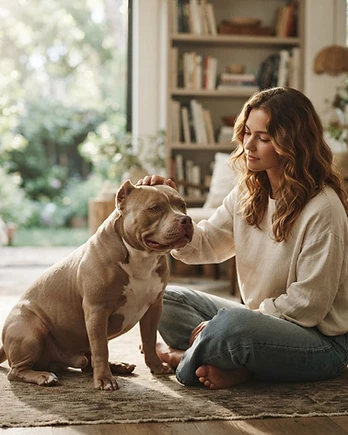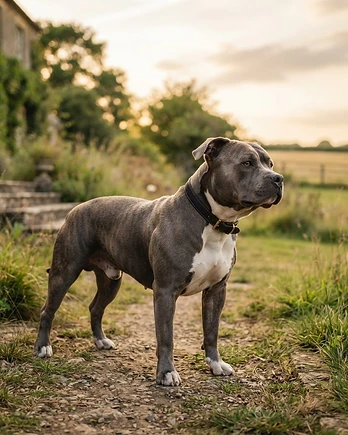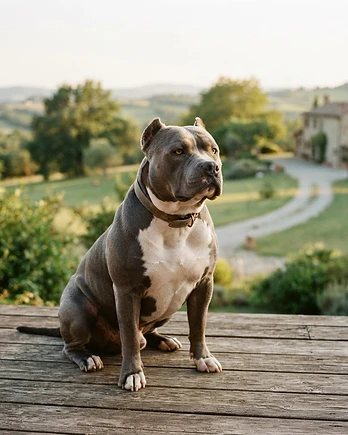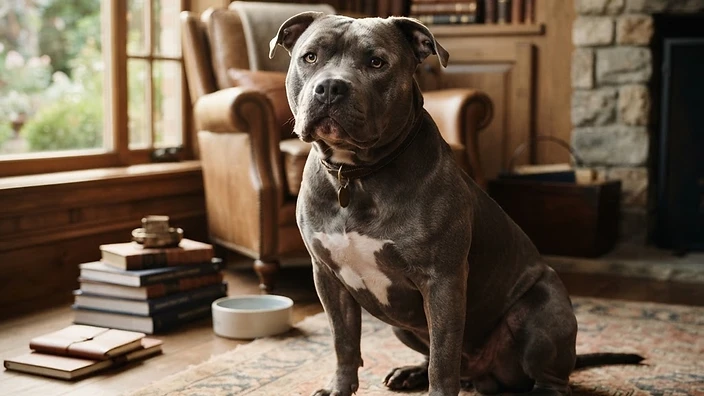
Few breeds capture hearts quite like the American Bully. With a chest like a barrel, a head full of presence, and eyes that overflow with warmth, this dog is simultaneously the most misunderstood and most adored breed in modern canine culture. Walk one through a park and you'll see it happen in real time — a stranger's hesitation dissolving the moment that blocky head pushes into their hand, tail whipping furiously.
At American Bully Haven Pups in Austin, Texas, we've dedicated ourselves to breeding healthy, structurally correct, temperament-tested American Bullies registered with both the ABKC and UKC. We've watched this breed transform families, provide emotional support, and become the calm, confident anchor of countless households. We've also watched misinformation follow it everywhere it goes.
This guide is our answer to that. Whether you're a first-time researcher, a seasoned enthusiast, or someone on the verge of bringing one home, this is the most comprehensive American Bully resource we know how to write. From origin story to coat color genetics, from the ABKC conformation standard to the most influential bloodlines in the breed's short but explosive history — it's all here. Explore our full resource library for deep dives on every topic we touch below.
Origin and History of the American Bully
The American Bully is a deliberately developed breed, not an accident of nature. Its origins trace to the early 1990s in the United States, where dedicated breeders — primarily on the East and West coasts — began selectively crossing the American Pit Bull Terrier (APBT) with the American Staffordshire Terrier (AmStaff) and, to varying degrees, other bully-type breeds including the American Bulldog, English Bulldog, and Olde English Bulldogge.
The founding vision was specific: retain the loyalty, athleticism, and intelligence of the APBT while amplifying the physical mass, bone density, and gentle disposition that made bully-type dogs such exceptional family companions. Early pioneer kennels — Razor's Edge (Dave Wilson, Virginia), Gottiline (Richard Barajas, California), and Remyline (Fabian Chichester) — are credited with establishing the foundational phenotype that defines the breed today.
In 2004, the American Bully Kennel Club (ABKC) was founded to provide a dedicated registry, conformation standard, and show structure specifically for the American Bully — separating it formally from the APBT. The United Kennel Club (UKC) granted official breed recognition in 2013, a milestone that cemented the American Bully's status as a distinct breed rather than a Pit Bull variant. Today, the breed is one of the fastest-growing in the world by registration numbers.
The Four Official Size Varieties
One of the most distinctive aspects of the American Bully is its official size classification system. The ABKC recognizes four varieties: Pocket, Standard, Classic, and XL. These are not separate breeds — they share the same breed standard in terms of structure, temperament, and type — but they differ in height at the withers.
Pocket Bully
- Height: Males under 17 inches; Females under 14 inches at the withers
- Weight: Typically 11–22 kg (25–50 lbs), though no weight disqualification exists
- The Pocket variety is the most compact expression of the breed. Despite their smaller frame, Pocket Bullies carry the same heavy bone, wide chest, and broad head as their larger counterparts. They are enormously popular for apartment and urban living. Common crosses in Pocket development often trace to Miagi Kennels and Blue Venom lines.
Standard Bully
- Height: Males 17–20 inches; Females 16–19 inches
- The Standard is the original and foundational variety — the benchmark against which all others are measured. Medium in height, the Standard Bully carries maximum muscle mass relative to its frame, with a pronounced stop, wide muzzle, and powerful rear drive. Most ABKC show champions throughout the 2000s and 2010s were Standard variety dogs.
Classic Bully
- Height: Same measurements as Standard
- The Classic shares height with the Standard but carries a lighter body frame with less overall muscle bulk. Think of it as a tribute to the breed's APBT roots — a more athletic, refined silhouette without sacrificing the bully head and disposition. The Classic is often favored by owners who want a slightly more agile dog while staying within official breed type.
XL Bully
- Height: Males over 20 inches; Females over 19 inches
- The XL is the most visually commanding variety. Males can exceed 65–90 lbs or more while remaining structurally sound and athletically capable. XL Bullies trace heavily to Gottiline and Razors Edge genetics, amplified over generations for sheer size without sacrificing the breed's hallmark temperament.
Note: The Extreme Bully is an informal descriptor sometimes used in the community to describe dogs with exaggerated physical traits — extreme head size, exaggerated body mass — but it is not a separate ABKC-recognized variety. Buyers should be cautious of breeders using "Extreme" as a marketing term if it comes at the cost of structure and health.

A comparative visual of the four official American Bully size varieties recognized by the ABKC — Pocket, Standard, Classic, and XL — illustrating the range of height and body mass while maintaining consistent breed type and conformation.
ABKC Conformation Standard: What Judges Look For
Understanding the ABKC breed standard helps buyers distinguish a well-bred American Bully from a dog with structural faults that could cause health problems. Here are the key elements:
Head and Expression
The head is large and broad, with a wide skull, pronounced cheek muscles, and a well-defined stop. The muzzle is broad, blocky, and deep — roughly 25–35% of the skull's total length. Eyes are round to oval, set low and wide, and can be any color except albinism. Ears may be natural (rose or half-prick) or cropped.
Neck, Topline, and Body
The neck is heavy and muscular, slightly arched, tapering from shoulders to skull. The topline should be level to slightly sloping from withers to rump. The chest is broad and deep, with well-sprung ribs — brisket reaching to the elbow. The back is short, strong, and firm.
Forequarters and Hindquarters
Shoulder blades are well laid back with upper arms roughly equal in length. Front legs are straight and parallel with heavy round bone. Hindquarters show broad, well-muscled thighs and well-let-down hocks. Cowhocks and sickle hocks are faulted.
Coat and Skin
The coat is short, close, stiff to the touch, and glossy. All colors and color patterns are accepted except merle — though note that merle has become widely accepted in the show and pet community outside formal ABKC conformation classes. Skin should be relatively tight.
Gait
Movement should be confident, powerful, and fluid — driven from the rear with strong forward reach. A Bully that moves with paddling, crabbing, or restricted rear drive has structural faults that should concern any buyer.
Disqualifications
Vicious or uncontrollable behavior, unilateral or bilateral cryptorchidism in males, and severe albinism are disqualifying faults. Undershot bites beyond ½ inch overlap and overshot bites are serious faults.
For a full breakdown of raising your Bully from puppyhood through their senior years, visit our Complete American Bully Care Guide.
Temperament: The True American Bully Personality
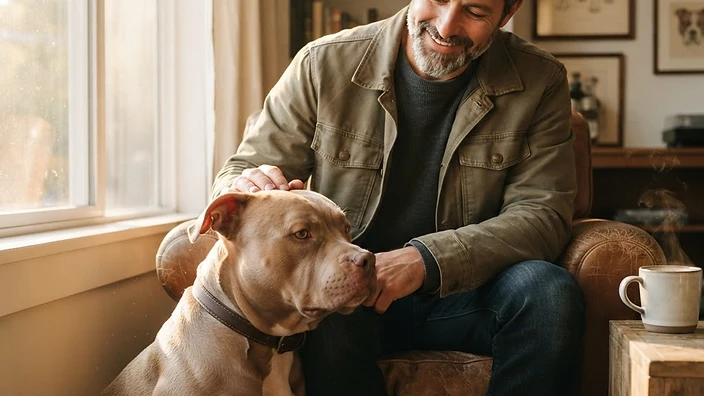
If the American Bully's body is its calling card, its temperament is its soul — and it is here that this breed utterly defies its intimidating exterior.
The ABKC breed standard describes the ideal American Bully temperament as outgoing, stable, gentle, confident, and highly people-oriented. Aggression toward humans is explicitly considered a disqualifying fault — a crucial distinction from working guard breeds. The American Bully was engineered to be a companion animal, and after three decades of selective breeding, it excels at exactly that.
Key Temperament Traits
- Human affiliation: Arguably the strongest human bond of any bully-type breed. American Bullies actively seek physical contact, thrive on attention, and suffer from prolonged isolation.
- Child tolerance: Exceptional patience and gentleness with children — the breed has earned its nickname "nanny dog" in many households.
- Dog sociability: Variable. Well-socialized Bullies typically coexist peacefully with other dogs. Early socialization from 3–16 weeks is essential.
- Stranger acceptance: Most American Bullies are friendly to neutral with strangers after an initial assessment period. They are not guard dogs by nature, though their physical presence is a deterrent.
- Drive and trainability: Moderate to high trainability with positive reinforcement methods. Food motivation is typically very strong. For a structured approach, see The Complete American Bully Training Guide.
Coat Colors and Color Genetics
The American Bully's color palette is one of the most expansive in the canine world — a direct result of the genetic diversity introduced through its founding crosses. Here's a breakdown of the primary color genetics at play:
Base Colors
- Black (dominant): Controlled by the K locus (dominant black, KB) and E locus
- Blue (dilute black): Two copies of the dilution gene (dd at the D locus) produce the blue/grey coat
- Chocolate (brown): bb at the B locus — two recessive brown alleles
- Lilac: dd + bb — double dilution producing the soft lavender-grey coat
- Champagne (dilute red/fawn): dd acting on a yellow/red base
- Fawn and Red: Phaeomelanin-dominant expression at the E locus and A locus
Pattern Genetics
- Tri-color: Expression of the at allele (tan points) at the A locus, typically hidden under dominant black; requires kyky at the K locus to express
- Brindle: kbr allele at the K locus — one of the most common patterns
- Merle: M locus — a dominant incomplete mutation causing random pigment dilution; double merle (MM) produces significant health risks including blindness and deafness
- Tuxedo/Piebald: White spotting controlled by the S locus
Our current available puppies showcase this genetic diversity beautifully. Atlas — Lilac Tri-Color Male carries the rare dd + bb + at combination. Bowie — Blue Tri Male expresses dd + at with stunning ghost tan points. Diesel — Chocolate Tri Male is a bb + at expression in rich chocolate. Ella — Lilac Tri Female is a breathtaking dd + bb tri, and Hazel — Merle Female carries the merle pattern with responsible single-merle breeding practices.

A group of American Bully puppies displaying a range of rare coat colors including lilac tri-color, blue tri, chocolate tri, and merle, demonstrating the complex multi-locus color genetics that make this breed visually extraordinary.
Influential Bloodlines in American Bully History
Understanding bloodlines helps buyers evaluate pedigrees and anticipate the traits their puppy may carry. These are the most historically significant lines:
Razor's Edge
Founded by Dave Wilson in Virginia in the early 1990s. Razor's Edge dogs were known for their extreme width, short backs, and heavy bone — the foundational template for Standard and XL Bullies. GRCH Razor's Edge Iron Cross is considered one of the most influential sires in breed history.
Gottiline
Developed by Richard Barajas around the dog The Notorious Juan Gotty — arguably the single most influential sire in American Bully history. Gotty produced over 900 registered offspring and is found in the pedigrees of most XL Bullies alive today. Gottiline dogs are characterized by wide heads, loose skin, and massive rear quarters.
Remyline
Founded by Fabian Chichester, Remyline contributed refinement in head structure and color genetics, particularly in the development of blue and tri-color expressions.
Miagi
Founded by David Lee, Miagi Kennels were pivotal in the development of the Pocket variety — producing compact dogs with extreme head and body proportions in a small package.
Kurupt Bloodline
A newer but explosively influential line, particularly in the Micro and Pocket markets, known for producing dogs with extremely wide chests and heavy muscle mass relative to height.
Registration Bodies: ABKC vs. UKC
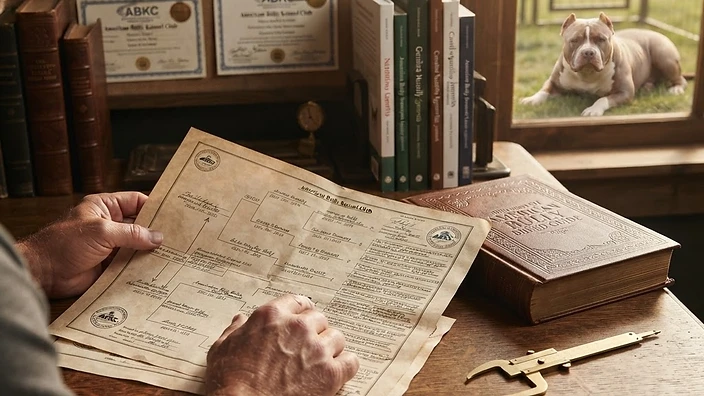
| Feature | ABKC | UKC | |---|---|---| | Founded | 2004 | 1898 (American Bully recognized 2013) | | Primary focus | American Bully exclusively | Multi-breed registry | | Show format | Conformation, weight pull | Conformation, performance events | | Size varieties recognized | Pocket, Standard, Classic, XL | Standard, Pocket, XL, Classic | | Merle in conformation | Penalized/faulted | Penalized/faulted | | DNA registration | Available | Available |
Both registries require documented pedigrees and provide permanent registration numbers. At American Bully Haven Pups, all breeding dogs and puppies are registered with both the ABKC and UKC, ensuring your puppy has recognized credentials for showing, breeding, and records. Learn more about our breeding program.
American Bully vs. Related Breeds: Key Distinctions
The American Bully is frequently confused with related breeds. Here's how to tell them apart:
| Trait | American Bully | APBT | American Staffordshire Terrier | American Bulldog | |---|---|---|---|---| | Primary purpose | Companion | Working/sport | Show/companion | Working/guard | | Head type | Very broad, blocky | Moderate, wedge | Moderate, broad | Large, square | | Body mass | Heavy for height | Athletic, lean | Athletic, moderate | Tall, powerful | | Temperament | Very people-soft | Energetic, driven | Stable, confident | Protective, loyal | | Recognition | ABKC, UKC | UKC, ADBA | AKC | NKC, ABRA | | Human aggression | Disqualifying fault | Serious fault | Serious fault | Guarding tendency |
The most important distinction: the American Bully was purpose-bred as a companion animal. The APBT was purpose-bred as a working and sporting dog. While they share ancestry, their selective breeding trajectories diverged significantly — in both physical structure and behavioral temperament — beginning in the early 1990s.
Health, Lifespan, and OFA Testing
The American Bully is a generally healthy breed with a lifespan of 10–13 years for Standard and Classic varieties, and 8–11 years for XL. Responsible breeders health-test all breeding stock through the Orthopedic Foundation for Animals (OFA) for:
- Hip dysplasia (OFA Hip Evaluation)
- Elbow dysplasia
- Congenital cardiac disease (OFA Cardiac Exam by a cardiologist)
- Eye conditions (OFA Eye Exam — CAER certified)
Additionally, brachycephalic obstructive airway syndrome (BOAS) is a concern in dogs with extremely short muzzles. Reputable breeders select for functional muzzle length — a Bully should be able to breathe freely, exercise without distress, and thermoregulate in heat. Skin fold dermatitis is common in heavily wrinkled individuals and requires routine cleaning.
For a complete health care schedule from 8 weeks through senior years, our American Bully Care Guide walks you through every stage.
Key Takeaways
- The American Bully was developed in the early 1990s from APBT, AmStaff, and bully-type crosses, with the ABKC founded in 2004 and UKC recognition granted in 2013.
- Four official ABKC size varieties exist: Pocket (under 17"/14"), Standard (17–20"/16–19"), Classic (same height as Standard, lighter frame), and XL (over 20"/19").
- The breed standard prioritizes a broad head, heavy bone, level topline, and — most critically — stable, human-friendly temperament. Human aggression is a disqualifying fault.
- Color genetics involve the B, D, K, A, E, S, and M loci — producing everything from solid black to lilac tri-color and merle.
- Foundational bloodlines — Razor's Edge, Gottiline, Remyline, Miagi — shaped the modern breed and appear in virtually every pedigree.
- The American Bully is not the same as an APBT. It was purpose-bred as a companion animal with a distinctly softer, more people-oriented temperament.
- Health testing (OFA hips, elbows, cardiac, eyes) is non-negotiable in a responsible breeding program.
- Expect to invest $2,500–$10,000+ for a well-bred, health-tested American Bully from a reputable ABKC/UKC-registered breeder, depending on variety, color, and pedigree.
Frequently Asked Questions
Is the American Bully the same as a Pit Bull?
No — and this distinction matters deeply. The American Bully is a separate, officially recognized breed with its own ABKC and UKC registry, breed standard, and documented pedigrees distinct from the American Pit Bull Terrier. While they share common ancestry, the American Bully was selectively bred away from the APBT's working-dog intensity and toward a softer, heavier-bodied, companion-focused phenotype. Calling an American Bully a "Pit Bull" is comparable to calling a Labrador a "Retriever" — technically related but imprecise and potentially misleading, especially in jurisdictions with breed-specific legislation (BSL) that targets Pit Bulls specifically.
Are American Bullies aggressive?
The American Bully breed standard explicitly identifies human aggression as a disqualifying fault — meaning dogs that show aggression toward people should not be bred or shown. Well-bred American Bullies are known for their exceptional people-friendliness, patience with children, and stable temperament. Like any breed, individual dogs can develop behavioral problems through poor socialization, neglect, or abuse — but these are failures of environment and breeding, not inherent breed traits. The American Bully's instinct is to lean into a stranger's hand, not threaten it.
How much does an American Bully puppy cost?
Price varies significantly by variety, color rarity, pedigree depth, and breeder credentials. From ethical, health-testing ABKC/UKC-registered breeders, expect:
- Standard/Classic: $2,500–$5,000
- Pocket: $3,000–$8,000
- XL: $3,000–$7,000
- Rare colors (lilac tri, merle, champagne tri): $5,000–$15,000+ Beware of breeders offering American Bullies under $1,500 — at that price point, health testing, genetic screening, quality nutrition, and veterinary care for the litter are almost certainly being cut. Visit our adoption guide to understand what our process includes.
What is the difference between the four American Bully size varieties?
All four varieties share the same breed standard for structure, type, and temperament — the only official difference is height at the withers. Pocket Bullies are under 17 inches (males); Standard Bullies are 17–20 inches; Classic Bullies match Standard height but carry a lighter, more athletic frame; XL Bullies exceed 20 inches. In practice, the varieties also differ in typical weight and bone density, with XL Bullies often exceeding 80–100 lbs and Pockets rarely exceeding 50 lbs.
Is the merle color pattern healthy in American Bullies?
Single merle (Mm genotype) dogs are generally healthy, though they may carry slightly increased risk of eye irregularities. The serious health concern is double merle (MM genotype) — produced when two merle-carrying dogs are bred together. Double merle dogs face up to 25–30% rates of blindness, deafness, and other developmental defects. At American Bully Haven Pups, we never breed merle to merle. Our Hazel — Merle Female was produced with a non-merle sire, ensuring she carries a single merle allele only.
How do I find a reputable American Bully breeder?
Look for breeders who: (1) register with ABKC and/or UKC and can provide documented pedigrees; (2) perform OFA health testing on all breeding stock and share results publicly; (3) raise puppies in a home or enriched kennel environment with socialization protocols; (4) provide a written health guarantee and contract; (5) are transparent about bloodlines and breeding goals. Red flags include no health testing, no pedigree documentation, pressure to buy quickly, and prices that seem too low. Read through our breed guides for more guidance on evaluating breeders.
Ready to Meet Your American Bully?
If this guide has done its job, you now understand why we pour everything we have into this breed. The American Bully is not just a dog — it's a carefully crafted companion animal, purpose-built for the human family, backed by three decades of intentional breeding, and protected by a community of dedicated enthusiasts who care deeply about health, structure, and temperament.
We invite you to explore our available American Bully puppies — each one health-tested, ABKC/UKC-registered, and raised in our home with the socialization protocols that set them up for a lifetime of confidence and connection. When you're ready to take the next step, contact us — we're always happy to answer questions, walk you through pedigrees, or help you find the right variety and temperament match for your family.
The right Bully is out there. Let's find them together.