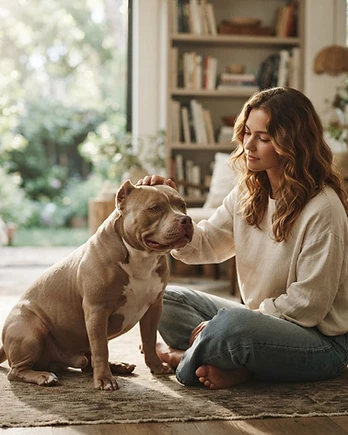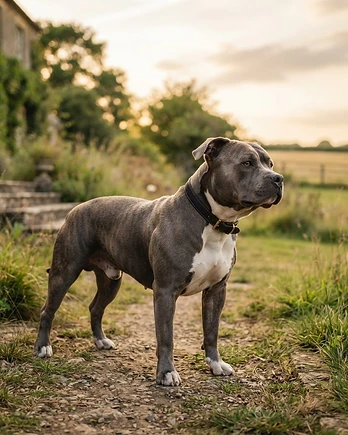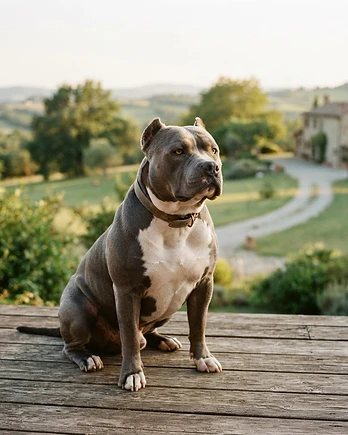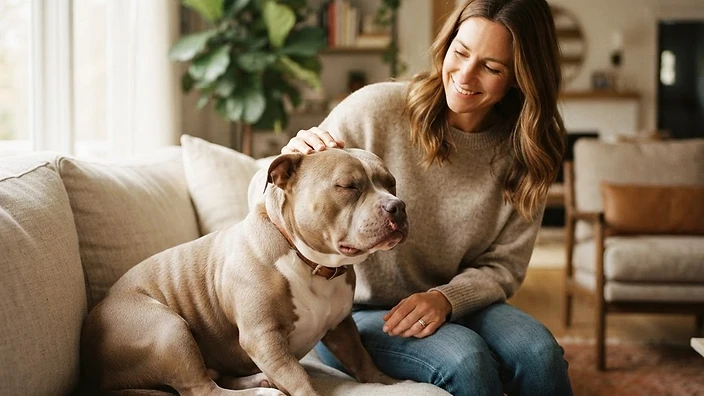
Bringing an American Bully into your life is one of the most rewarding decisions you'll ever make. These dogs — broad-chested, soft-hearted, and fiercely loyal — are not just pets; they become the emotional anchor of your household. But their well-being depends entirely on the quality of care you provide, and that care changes significantly as they move from a wobbly eight-week-old puppy to a dignified senior dog. This guide is your complete roadmap.
At American Bully Haven Pups, an ABKC- and UKC-registered breeder based in Austin, Texas, we've poured years of hands-on experience into understanding what these dogs truly need at every life stage. Whether you're preparing for your first Bully or adding another to your pack, this pillar resource covers everything: daily routines, age-appropriate exercise, coat and skin care, home safety, seasonal adjustments, travel, veterinary protocols, and the lifelong habits that separate a dog that merely survives from one that genuinely thrives.
This is the most comprehensive American Bully care resource we've ever published — a living hub that connects to every deep-dive care topic in our full resource library. Bookmark it, share it, and return to it as your dog grows.
Understanding the American Bully: A Care Context
Before diving into routines and checklists, it helps to understand the biological and temperamental profile you're working with. The American Bully is a relatively young breed, formally recognized by the ABKC (American Bully Kennel Club) and the UKC (United Kennel Club), developed primarily from the American Pit Bull Terrier and American Staffordshire Terrier, with contributions from breeds like the English Bulldog, Olde English Bulldogge, and Staffordshire Bull Terrier.
The breed is divided into four main size classes: Pocket (under 17 inches at the withers for males), Standard (17–20 inches), Classic, and XL (over 20 inches). Each class carries slightly different care considerations, especially around exercise load, caloric requirements, and joint stress. The Complete American Bully Breed Guide: Everything You Need to Know covers breed history, conformation standards, and temperament in full detail — essential reading before diving into care specifics.
Key physiological traits that directly affect care:
- Brachycephalic tendencies in some lines — short muzzles increase heat sensitivity and airway vulnerability
- Muscular, heavy build — impressive mass puts load on joints, especially hips, elbows, and the thoracolumbar spine
- Short, single-layer coat — low shedding but high skin sensitivity; prone to environmental allergies and contact dermatitis
- Moderate prey drive and high social intelligence — these are people-oriented dogs that suffer with isolation
Puppyhood Care (8 Weeks – 6 Months)
The First 48 Hours: Setting the Foundation
The first two days at home shape your puppy's entire relationship with their environment. A structured, calm introduction — not an overwhelming flood of people, noise, and new stimuli — is essential for neurological and emotional regulation. We've dedicated a full article to this critical window: Bringing Your American Bully Puppy Home: The First 48 Hours.
Essential first-week priorities:
- Crate introduction: Use a 36"–42" crate with a divider. Line it with a worn t-shirt carrying your scent.
- Feeding schedule: 3 meals per day on a fixed schedule. Puppies 8–12 weeks need approximately 1–1.5 cups of high-protein kibble (minimum 28–30% crude protein, 18–20% fat) per meal, divided appropriately by body weight.
- Potty training cadence: Take outside immediately after waking, eating, and playing. Puppies have a bladder control window of roughly one hour per month of age.
- Veterinary visit: Schedule within 72 hours of pickup to confirm health, review the vaccination record, and establish your primary care relationship.
For a complete room-by-room setup checklist, see our Bringing Home an American Bully Puppy: Your First-Week Checklist.
Vaccination and Deworming Schedule
Your puppy should arrive with their first DHPP (Distemper, Hepatitis, Parvovirus, Parainfluenza) combination vaccine administered at 6–8 weeks. Your veterinarian will administer boosters at:
- 10–12 weeks: DHPP booster + Bordetella (kennel cough)
- 14–16 weeks: Final DHPP booster + Rabies (legally required in Texas)
- 12–16 months: First annual boosters
Deworming should occur at 2, 4, 6, and 8 weeks by the breeder, then monthly until 6 months of age. Discuss heartworm prevention with your vet — in Austin's warm climate, year-round preventive (e.g., monthly ivermectin-based chewables) is strongly advised.
Socialization: The Critical Window
The socialization window for dogs closes between 12 and 16 weeks. Every positive exposure during this period — different surfaces underfoot, traffic sounds, children, other dogs, men with hats, vacuum cleaners — literally wires the brain for resilience. American Bullies are genetically predisposed toward human affiliation, but without socialization, their size and strength make behavioral issues genuinely dangerous.
Aim for 3–5 new, positive experiences per day during weeks 8–16. Keep sessions short (5–10 minutes), reward generously, and never force an interaction that triggers fear responses.

A young American Bully puppy engages in gentle self-directed play in a fenced yard, illustrating the importance of low-impact, age-safe activity during the critical growth plate development window.
Exercise by Life Stage: Protecting Joints and Building Strength
Exercise is one of the most misunderstood aspects of American Bully care. Owners often either under-exercise (contributing to obesity and behavioral problems) or over-exercise young dogs (causing irreversible growth plate damage). Our dedicated deep-dive — American Bully Exercise Guide: Age-Safe Activity & Joint Care — covers this topic exhaustively. Here's the framework:
The 5-Minute Rule for Puppies
For puppies under 12 months, follow the 5-minute rule: 5 minutes of structured exercise per month of age, twice daily. An 8-week-old puppy should have no more than 10 minutes of leash walking or structured play per session. Unstructured, self-directed play in a safe yard is generally fine — puppies self-regulate better than forced exercise allows.
Why this matters: American Bully puppies have open growth plates (physeal cartilage) until approximately 12–14 months. Repetitive impact on unclosed growth plates causes microfractures and early-onset osteoarthritis. High-impact activities — jumping from heights, long-distance running, rough stair climbing — should be avoided until growth plates have closed, confirmed by X-ray if desired.
Exercise by Age: Quick Reference
| Age | Activity Level | Recommended Activities | Avoid | |---|---|---|---| | 8–12 weeks | Very low | Short yard play, socialization walks | Stairs, jumping, hard surfaces | | 3–6 months | Low | 15–20 min walks, gentle play | Long runs, agility | | 6–12 months | Moderate | 20–30 min walks, swimming | High-impact fetch, treadmill | | 1–3 years | Active | 45–60 min varied activity daily | Overheating, extreme heat | | 3–7 years | Moderate-active | 45 min daily, strength activities | Forced long-distance running | | 7+ years | Gentle | 20–30 min leisurely walks | Joint-stressing impact |
Joint Supplements: Starting Early
Joint support should begin proactively, not reactively. From 12 months onward, consider:
- Glucosamine hydrochloride (500–1000mg/day for Standard/XL)
- Chondroitin sulfate (400–800mg/day)
- Omega-3 fatty acids (fish oil, EPA + DHA at 1000–2000mg/day) — reduces systemic inflammation and supports synovial fluid quality
- Methylsulfonylmethane (MSM) — complementary anti-inflammatory
Discuss OFA (Orthopedic Foundation for Animals) hip and elbow evaluations with your vet, especially if you're planning to breed. Ethical breeders — like us — health-test breeding pairs before every litter. Learn more about our breeding program.
Nutrition: Fueling the American Bully at Every Stage
Puppy Nutrition (8 Weeks – 12 Months)
American Bully puppies need calorie-dense, protein-rich food formulated for large/giant breed puppies. Look for:
- Named meat protein as the first ingredient (chicken, beef, salmon — not