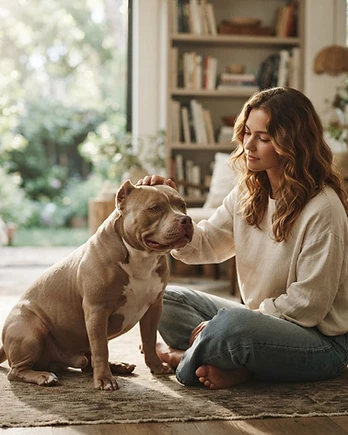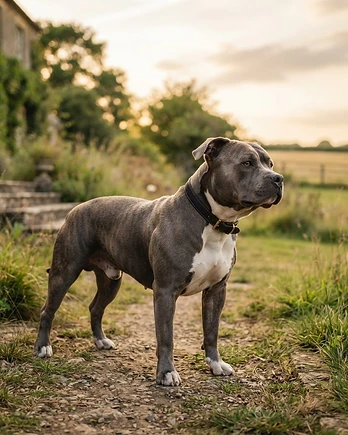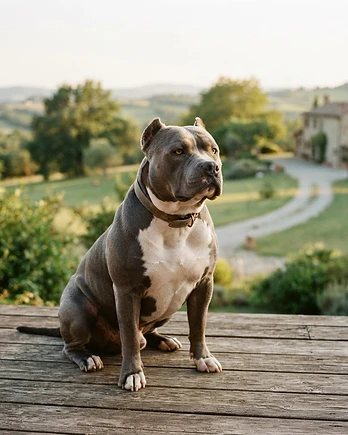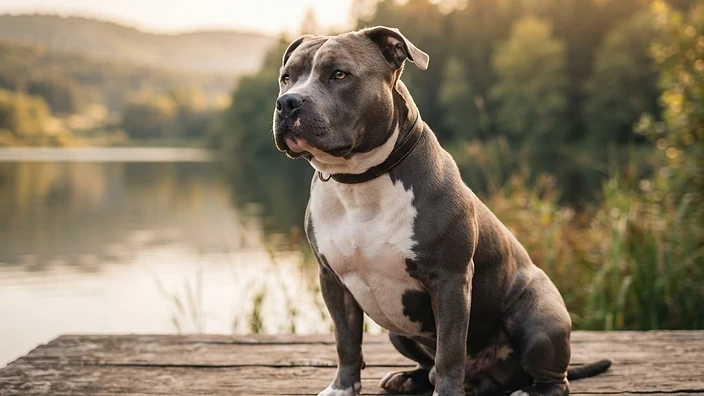
Few breeds inspire the kind of devoted following that the American Bully commands. With their broad, muscular frames, expressive faces, and an almost magical gentleness with children and families, these dogs manage to be simultaneously awe-inspiring and deeply tender. If you've found yourself captivated by the breed — scrolling through photos, researching bloodlines, or wondering whether an American Bully is the right fit for your home — you're in exactly the right place.
This guide is the most comprehensive resource we've built at American Bully Haven Pups. As ABKC- and UKC-registered breeders based in Austin, Texas, we've spent years studying pedigrees, attending conformation events, health-testing our breeding dogs, and placing Bullies in homes across the country. Everything in this article reflects real-world experience alongside the official breed standards and genetic science that define the breed today.
Whether you're a first-time prospective owner, an experienced enthusiast, or a fellow breeder deepening your knowledge, consider this your definitive starting point. Bookmark it, share it, and use it alongside our full resource library to guide every decision you make about this extraordinary breed.
Origin and History of the American Bully
The Founding Decade: 1980s–1990s
The American Bully is a deliberately developed breed, not an accidental byproduct of random crossing. Its roots trace to the United States in the late 1980s and early 1990s, primarily in Virginia and Southern California, where breeders sought to create a companion dog that retained the athletic build of the American Pit Bull Terrier (APBT) while amplifying its naturally gentle, people-oriented temperament.
The primary foundation breeds were the American Pit Bull Terrier and the American Staffordshire Terrier (AmStaff). Over time, selective breeders carefully introduced genetics from the English Bulldog, Olde English Bulldogge, and in some lines, the Staffordshire Bull Terrier — all to broaden the chest, widen the head, lower the topline, and soften the working-dog drive that defined the APBT. The goal was never a fighting dog or a guard dog; it was a loyal, stable, family-first companion with a commanding physical presence.
Dave Wilson of Razor's Edge Kennels and Richard Barajas of Gottiline are widely credited as two of the most influential founding figures. Their bloodlines — Razor's Edge and Gottiline/Gotti — remain foundational to the breed's DNA to this day.
Official Recognition
The American Bully Kennel Club (ABKC) was founded in 2004, providing the breed's first formal registry and conformation standard. This was a landmark moment: the American Bully was recognized as its own distinct breed, not a variant of the APBT. The United Kennel Club (UKC) followed in 2013, further legitimizing the breed on the national stage. Neither the American Kennel Club (AKC) nor the Fédération Cynologique Internationale (FCI) currently recognize the American Bully, though UKC and ABKC registration is widely respected in the breeding and show community.
The Four ABKC Size Varieties
One of the most distinctive and often misunderstood aspects of the American Bully is its size classification system. The ABKC recognizes four official varieties, differentiated primarily by height at the withers — not by weight alone. Each variety shares the same breed standard for structure, temperament, and type; only the size parameters differ.
| Variety | Height at Withers (Males) | Height at Withers (Females) | Typical Weight Range | |---|---|---|---| | Pocket | 14–17 inches | 13–16 inches | 30–50 lbs | | Standard | 17–20 inches | 16–19 inches | 65–85 lbs | | Classic | 17–20 inches | 16–19 inches | 65–85 lbs | | XL | 20–23 inches | 19–22 inches | 80–150+ lbs |
Pocket Bully
The Pocket Bully is the smallest variety and arguably the most in-demand. Despite the name, there is nothing diminutive about its structure — a proper Pocket Bully is compact, heavily muscled, and exudes the same powerful presence as its larger counterparts. Males stand 14–17 inches at the withers; females 13–16 inches. Because of their manageable size, they adapt well to apartment living while still requiring consistent daily exercise. Their compact frame makes them popular with urban owners and families in smaller spaces.
Standard Bully
The Standard is the blueprint variety — the size class against which the breed's conformation ideal is most commonly evaluated. Males reach 17–20 inches; females 16–19 inches. The Standard possesses the breed's signature broad chest, heavy bone, and short, well-muscled body with a moderate to heavy build. This is the variety most frequently seen in ABKC conformation rings.
Classic Bully
The Classic occupies the same height parameters as the Standard but carries a lighter body frame with less overall bulk and muscle mass. Think of it as a bridge between the APBT's leaner athlete and the Bully's characteristic heaviness. The Classic retains all the breed's hallmark structural features — wide head, deep chest, pronounced stop — just in a more moderate package. This variety appeals to owners who love the Bully aesthetic but prefer a slightly more agile, less extreme build.
XL Bully
The XL is the largest recognized variety, with males standing 20–23 inches and capable of exceeding 100–150 lbs in a well-conditioned, properly structured specimen. XL Bullies must maintain correct breed type — extreme size without structural soundness is a fault. Legitimate XL specimens are impressively powerful yet move with surprising fluidity. They require larger living spaces, higher-calorie diets, and owners experienced with large, strong breeds.
A note on the "Micro" and "Extreme" labels: These are marketing terms, not official ABKC classifications. Dogs marketed as "Micro Bullies" are typically Pocket Bullies selectively bred for minimum height; "Extreme Bullies" emphasize exaggerated body mass. Ethical breeders prioritize health and structural correctness over extreme phenotypes.

A visual comparison of the four official American Bully size varieties as recognized by the ABKC, illustrating the differences in height, body mass, and overall structure while sharing the same breed type and conformation ideals.
Temperament: The American Bully Personality
If there is one aspect of the American Bully that surprises people who approach the breed with preconceptions, it is the temperament. These dogs are, at their genetic and behavioral core, companion animals. The ABKC breed standard explicitly describes the ideal temperament as "gentle and loving toward people" and emphasizes that the breed is "outgoing and stable."
Key temperament traits include:
- Human affinity: American Bullies bond intensely with their families. They thrive on physical closeness — expect a 70-lb dog to believe it's a lap dog.
- Child-friendliness: Well-bred Bullies are famously patient and gentle with children, earning them the nickname "nanny dogs" in many households.
- Confidence without aggression: Proper breed temperament is confident and stable, not reactive or fearful. Human aggression is considered a disqualifying fault under ABKC standards.
- Trainability: High people-pleasing drive makes them responsive to positive reinforcement training. Early socialization is essential.
- Dog tolerance: Variable. While many Bullies coexist peacefully with other dogs, same-sex dog aggression can appear, particularly in males. Early socialization mitigates this significantly.
For a deep dive into raising a well-adjusted Bully, see The Complete American Bully Training Guide.
ABKC Conformation Standard: Structure and Anatomy
Understanding the breed standard is essential for evaluating breeding quality. The ABKC standard evaluates the American Bully across the following anatomical categories:
Head
The head is large and broad, with a wide, deep muzzle and pronounced stop (the indentation between the forehead and muzzle). The skull should be large with well-defined cheek muscles (masseters). The muzzle is medium in length — excessively short muzzles that cause brachycephalic obstructive airway syndrome (BOAS) are a structural fault, not a virtue.
Body
The body is compact with a wide, deep chest, well-sprung ribs, and a short, strong topline with a slight slope to the croup. The withers are well-defined. The loin is short, muscular, and slightly tucked. The build overall should communicate power, balance, and athleticism — not simply bulk.
Limbs and Movement
Forelegs are straight and heavy-boned with well-developed forearms. Hindquarters are strong with well-muscled thighs and moderate angulation. The gait should be smooth, powerful, and purposeful — a double-tracking movement pattern at normal pace.
Coat
The coat is short, close, stiff to the touch, and glossy. No trimming or grooming alteration is required or permitted for conformation.
Disqualifying Faults
Under ABKC rules, disqualifying faults include: albinism, merle-to-merle breeding (which risks severe health consequences in offspring), viciousness toward humans, and unilateral or bilateral cryptorchidism in males.
For guidance on caring for your Bully's health across every life stage, explore The Complete American Bully Care Guide: Puppyhood to Senior Years.
Coat Colors and Genetics
The American Bully is one of the most color-diverse breeds in existence, and coat color genetics is a rich, scientifically fascinating topic within the community. Below is a comprehensive overview of the major color categories and the genetics behind them.
Base Colors
- Black — dominant K locus (KB) expression
- Blue — dilution of black via the d allele (dd genotype at the D locus); produces a slate-grey appearance
- Chocolate (Brown) — recessive b allele at the B locus (bb genotype)
- Lilac — double dilution: chocolate + blue (bb + dd); a warm grey-purple hue
- Red/Fawn/Buckskin — expression of the A locus (agouti) with or without dilution
- Cream/White — extreme white spotting or recessive red (ee at E locus)
Pattern Modifiers
- Tri-color — three-color pattern produced by the at allele at the A locus (tan points), visible when the K locus is non-dominant (ky/ky). Produces classic tan-point markings on muzzle, chest, legs, and above eyes. See our Diesel — Chocolate Tri Male American Bully puppy, Atlas — Lilac Tri-Color Male American Bully puppy, Bowie — Blue Tri Male American Bully puppy, and Ella — Lilac Tri Female American Bully puppy for living examples of these genetics.
- Merle — caused by the M locus (Merle) allele, which dilutes random patches of pigment. Produces striking mottled or dappled patterns. Our Hazel — Merle Female American Bully puppy is a beautiful example. Critical note: merle-to-merle (M/M) breeding causes deafness, blindness, and severe neurological defects in approximately 25% of offspring — ethical breeders never breed two merle dogs together.
- Piebald — large areas of white caused by the S locus (sp allele)
- Brindle — striped pattern regulated by the K locus and A locus interaction
Color Genetics Summary Table
| Color | Key Loci | Genotype Example | |---|---|---| | Blue | D locus | dd | | Chocolate | B locus | bb | | Lilac | B + D loci | bb + dd | | Tri-color | A + K loci | at/at + ky/ky | | Merle | M locus | Mm (heterozygous only) |

A group of American Bully puppies displaying the breed's extraordinary coat color diversity, including blue tri-color, lilac tri-color, chocolate tri-color, and merle — each produced through well-understood genetic loci at the A, B, D, K, and M loci.
Influential Bloodlines
Bloodline knowledge is essential for evaluating pedigrees, predicting offspring type, and identifying reputable breeders. The following are the most historically significant and currently active bloodlines in the American Bully world.
Razor's Edge
Founded by Dave Wilson, Razor's Edge dogs were among the first to define the Bully phenotype — wide heads, heavy bone, gentle temperament. This bloodline heavily influenced almost every modern pedigree.
Gottiline (Gotti)
Originally bred by Richard Barajas around "The Notorious Juan Gotty," the Gottiline introduced shorter, wider, more compact body structure. Gotti genetics are prevalent in Pocket and XL lines today.
Remyline
Developed by Fabian Hernandez around the dog "Remy Martin," Remyline dogs are known for exceptional muscle density, tight skin, and impressive head structure with correct temperament.
Kurupt Bloodline
Kurupt dogs, developed in Southern California, brought extreme muscle expression and heavy bone to the XL category. Often seen in dogs with impressive overall mass and correct movement.
Daxline
A newer but rapidly influential bloodline known for producing correct tri-color genetics alongside competitive conformation structure.
Mikeland
Mikeland Bullies have made their mark in the show ring for consistent head type, broad chests, and stable temperament across generations.
For a deeper look at how we've incorporated these bloodlines into our own program, read about our breeding program.
Registration Bodies: ABKC, UKC, and Beyond
American Bully Kennel Club (ABKC)
Founded in 2004, the ABKC is the primary registry for the American Bully. It maintains the official breed standard, sanctions conformation shows, and issues registration papers. ABKC papers are the gold standard in the Bully community. Registration requires documented parentage, and ABKC-sanctioned shows evaluate dogs on conformation, temperament, and breed type.
United Kennel Club (UKC)
The UKC recognized the American Bully in 2013. UKC registration is widely respected and opens doors to UKC-sanctioned performance events beyond conformation, including weight pull and rally obedience — activities that showcase the breed's athleticism alongside its structure.
Other Registries
Some breeders also register with the International Bully Coalition (IBC) or the Bully Breed Coalition (BBC). While these registries exist, ABKC and UKC remain the most respected and widely recognized.
Health Testing and OFA
Ethical breeders health-test all breeding dogs through the Orthopedic Foundation for Animals (OFA). Recommended screenings include hip dysplasia evaluation, elbow dysplasia, cardiac evaluation (for congenital heart defects), and ophthalmologic examination. OFA CHIC (Canine Health Information Center) numbers on breeding dogs are a hallmark of responsible breeding.
American Bully vs. Related Breeds: Key Distinctions
One of the most common sources of confusion — and misinformation — involves distinguishing the American Bully from visually similar breeds.
| Feature | American Bully | American Pit Bull Terrier | American Staffordshire Terrier | English Bulldog | |---|---|---|---|---| | Primary Purpose | Companion | Working/Terrier | Show/Companion | Companion | | Build | Heavy, wide, compact | Athletic, lean | Moderate, muscular | Very heavy, low | | Head | Very broad, deep muzzle | Moderate, wedge-shaped | Broad, moderate stop | Extremely broad, short muzzle | | Temperament | Gentle, people-focused | High-energy, driven | Confident, stable | Calm, stubborn | | ABKC Recognized | Yes | No | No | No | | Average Weight | 30–150 lbs (by variety) | 35–65 lbs | 40–70 lbs | 40–50 lbs |
The most important misconception to address: The American Bully is not the same breed as the American Pit Bull Terrier, despite sharing ancestry. The APBT is a working terrier with high prey drive and leaner build. The American Bully was selectively bred to reduce working drive and amplify family-companion traits. Confusing the two leads to misapplied breed-specific legislation (BSL) targeting Bullies inappropriately.
For more on navigating ownership in various legislative environments, visit our adoption guide.
Health Considerations
The American Bully is generally a hardy breed, but responsible ownership means understanding its health landscape:
- Hip and Elbow Dysplasia: Joint malformation affecting mobility. OFA screening of breeding stock is essential. Weight management throughout life reduces progression.
- Brachycephalic Obstructive Airway Syndrome (BOAS): Dogs with excessively shortened muzzles (a fault per the ABKC standard) may have breathing difficulties. Well-bred dogs with correct muzzle length are significantly less affected.
- Skin fold dermatitis: Common in dogs with heavy facial wrinkling. Regular cleaning of skin folds prevents bacterial and yeast infections.
- Cardiac conditions: Dilated cardiomyopathy (DCM) and congenital heart defects warrant annual cardiac evaluations.
- Hereditary cataracts and progressive retinal atrophy (PRA): Ophthalmologic testing of breeding dogs is recommended.
- Lifespan: 10–13 years on average for well-bred, properly maintained specimens.
See The Complete American Bully Care Guide: Puppyhood to Senior Years for comprehensive health and wellness guidance.
Key Takeaways
- The American Bully was developed in the late 1980s–1990s from American Pit Bull Terrier and American Staffordshire Terrier foundations, with selective Bulldog influence.
- The ABKC recognizes four official size varieties: Pocket, Standard, Classic, and XL — classified by height at the withers.
- Temperament is the breed's defining virtue: stable, confident, and intensely human-bonded. Human aggression is a disqualifying fault.
- Coat color genetics are complex and diverse — blue, chocolate, lilac, tri-color, merle, and piebald patterns are all possible through well-understood genetic loci.
- Major bloodlines including Razor's Edge, Gottiline, Remyline, and Kurupt form the pedigree foundation of most modern Bullies.
- The ABKC (2004) and UKC (2013) are the primary registration bodies; OFA health testing is the ethical standard for breeding dogs.
- The American Bully is not the same breed as the American Pit Bull Terrier and should not be subject to breed-specific legislation targeting APBTs.
- Health priorities include hip/elbow dysplasia, cardiac evaluation, and skin/airway management.
Frequently Asked Questions
Is the American Bully the same as a Pit Bull?
No. While the American Bully shares ancestry with the American Pit Bull Terrier, it is a distinct breed with its own conformation standard, registry (ABKC), and genetic profile. The American Bully was selectively bred to significantly reduce prey drive and working instinct while amplifying companion-dog traits. Physically, the Bully is wider, heavier-boned, and more compact than the athletic, leaner APBT. Lumping them together under BSL is both scientifically inaccurate and unfair to Bully owners.
Are American Bullies good with children and families?
Exceptionally so, when well-bred and properly socialized. The ABKC breed standard explicitly prioritizes gentle, stable temperament, and responsible breeders select breeding pairs for disposition above all else. American Bullies are known for high tolerance, patience, and affectionate behavior with children. As with any large, strong breed, supervision of interactions with very young children is always recommended, and early socialization with people and environments builds the most reliable adult temperament. Explore The Complete American Bully Training Guide for socialization protocols.
How much does an American Bully puppy cost?
From a reputable, health-testing, ABKC-registered breeder, expect to pay between $2,500 and $10,000 for a quality American Bully puppy, depending on bloodlines, color genetics, size variety, and pedigree depth. Exceptionally rare colors (lilac tri, merle tri, ghost tri) from champion-pedigreed parents can exceed $15,000. Be deeply cautious of puppies priced below $1,500 — this often indicates absent health testing, poor breeding conditions, or misrepresented pedigrees. The cost of a well-bred puppy is an investment in a healthier, longer-lived companion.
What is the difference between Pocket, Standard, Classic, and XL Bullies?
All four are the same breed, evaluated on the same conformation standard — only the height parameters differ. Pocket Bullies are the smallest (14–17" males), Standard and Classic share the same height range (17–20") but Classic carries lighter body mass, and XL Bullies are the largest (20–23"). The right variety depends on your living situation, lifestyle, and personal preference — all four share the same wonderful temperament.
Do American Bullies have health problems?
Like all breeds, American Bullies have some predispositions — hip and elbow dysplasia, cardiac conditions, and skin-fold dermatitis are the most common concerns. However, many of these risks are dramatically reduced by purchasing from breeders who OFA-test breeding dogs and select for correct structure. Avoid breeders producing dogs with excessively shortened muzzles or extreme body mass that compromises mobility. A well-bred Bully from health-tested parents typically enjoys a lifespan of 10–13 years with good quality of life.
How do I find a reputable American Bully breeder?
Look for breeders who: (1) are ABKC and/or UKC registered, (2) OFA health-test all breeding dogs and provide documentation, (3) are transparent about bloodlines and pedigrees, (4) allow you to visit their facility or meet the parents via video, (5) provide a written health guarantee, and (6) ask you questions to ensure proper placement. At American Bully Haven Pups, we meet every one of these criteria. You're welcome to browse our available American Bully puppies or contact us directly with questions.
Continue Your American Bully Education
This guide covers the foundational knowledge every Bully owner and enthusiast needs — but the journey doesn't stop here. Dive deeper into specific topics through our cluster of expert resources:
- The Complete American Bully Breed Guide — color genetics deep dive
- The Complete American Bully Breed Guide — bloodlines and pedigree evaluation
- The Complete American Bully Breed Guide — conformation show preparation
- The Complete American Bully Breed Guide — ABKC registration walkthrough
- The Complete American Bully Care Guide — nutrition and health by life stage
- The Complete American Bully Care Guide — exercise, enrichment, and wellness
Ready to Welcome an American Bully Into Your Family?
We believe the right puppy, from the right breeding program, can be a transformative presence in a family's life. At American Bully Haven Pups, every dog we breed is ABKC- and UKC-registered, health-tested, and raised with intentional early socialization in a home environment.
If this guide has deepened your appreciation for the breed — or confirmed what you already knew in your heart — we'd love to be part of your next chapter. Browse our available American Bully puppies, read through our adoption guide to understand our process, or simply contact us with any questions. We're here to help you make the best possible decision for your family and your future dog.