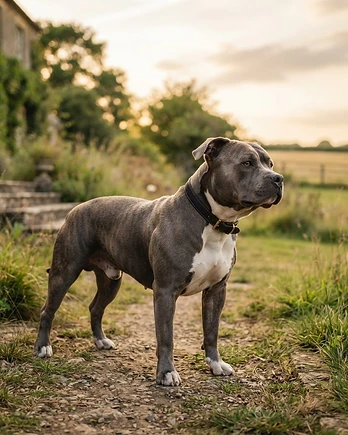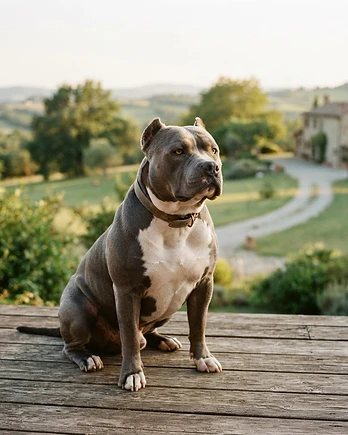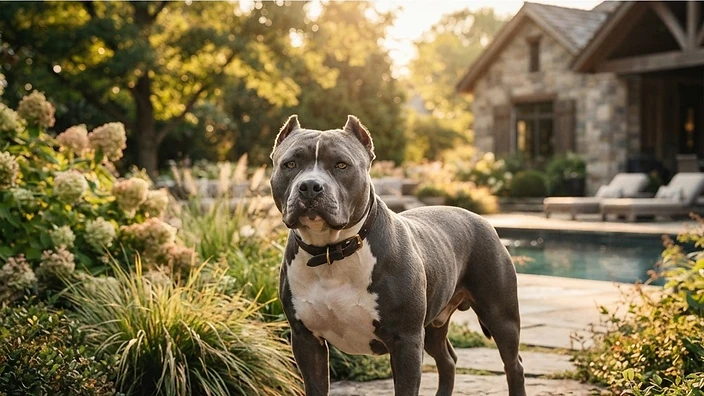
Few breeds inspire as much curiosity, passion, and devoted loyalty as the American Bully. With their broad, muscular frames, gentle eyes, and almost magnetic pull toward human companionship, these dogs occupy a unique space in the canine world — powerful in appearance, yet profoundly soft in spirit. Whether you're considering bringing one home for the first time or you're a seasoned enthusiast deepening your knowledge, understanding the full picture of this breed is essential.
The American Bully is not simply a "beefed-up Pitbull" or a status symbol. It is a deliberately developed, purpose-bred companion animal with a rich origin story, a formally recognized conformation standard, and a temperament that has won the hearts of families across the globe. At American Bully Haven Pups, our ABKC- and UKC-registered program in Austin, Texas is built on a deep respect for what this breed truly is — and what it can be when bred with integrity.
This pillar guide is the most comprehensive American Bully resource we've published. We'll walk you through every dimension of the breed: its origins and development, the four official size classes, the ABKC conformation standard, coat color genetics, the bloodlines that shaped modern dogs, registration bodies, health considerations, and how the American Bully differs from related breeds. Bookmark this page — you'll want to return to it. And when you're ready to explore further, our full resource library has everything you need.
Origin and History of the American Bully
The Founding Era (1980s–1990s)
The American Bully emerged in the United States during the late 1980s and early 1990s, primarily on the East and West Coasts. Breeders sought to refine the American Pit Bull Terrier (APBT) into a more compact, heavy-boned companion animal — retaining the breed's legendary loyalty and drive while softening its working-dog intensity and amplifying its family-friendly qualities.
The primary foundation breed was the American Pit Bull Terrier, but selective crosses introduced genetics from the American Staffordshire Terrier (AmStaff), and to a lesser documented degree, the English Bulldog, Olde English Bulldogge, American Bulldog, and Staffordshire Bull Terrier. The result was a dog with broader bone structure, wider chest, more exaggerated musculature, and a temperament that leaned even more strongly toward human affiliation.
Key founding kennels include Razor's Edge (Dave Wilson, Virginia), Gottiline (Richard Barajas, California), and Remyline (Fabian Woods). These programs produced the visual and temperamental blueprint that ABKC judges and breeders still reference today.
Formal Recognition
In 2004, the American Bully Kennel Club (ABKC) was founded specifically to register and standardize the breed. This was a pivotal moment — it gave the American Bully its own identity separate from the APBT. The United Kennel Club (UKC) followed with official recognition in 2013. Today, the American Bully is one of the fastest-growing recognized breeds in North America.
The Four Official Size Varieties
One of the most misunderstood aspects of the breed is that "American Bully" is not a single uniform size. The ABKC recognizes four distinct size classes, each judged against the same core standard with size-specific height parameters. Understanding these classes is essential whether you're a buyer, breeder, or show exhibitor.

A comparative visual of the four official American Bully size varieties recognized by the ABKC — Pocket, Standard, Classic, and XL — illustrating the differences in height, body mass, and overall presence while maintaining consistent breed type across all four classes.
Pocket Bully
The Pocket Bully is the smallest variety. Despite its name, it is not a miniature or teacup dog — it is a full, compact, heavily muscled animal.
- Height: Under 17 inches at the withers for males; under 16 inches for females
- Weight: Typically 11–22 kg (25–50 lbs)
- Character: Maximum Bully type packed into the smallest frame. Extremely popular with urban dwellers and those who want the full Bully look in a more manageable size.
Pocket Bullies command premium prices — often $3,000–$8,000+ for well-bred pups from proven lines — due to the breeding challenges involved in producing correct type at reduced height without sacrificing structural soundness.
Standard Bully
The Standard is considered the foundation variety and the measuring stick against which all other classes are evaluated.
- Height: 17–20 inches for males; 16–19 inches for females
- Weight: Typically 30–40 kg (66–88 lbs)
- Character: Balanced, athletic, and highly versatile. The Standard Bully is the ideal representation of breed type — substantial but not extreme.
Classic Bully
The Classic shares the same height parameters as the Standard but has a lighter body frame and less overall body mass. It most closely resembles the American Pit Bull Terrier and American Staffordshire Terrier in body weight while maintaining the Bully's characteristic broad head and wide chest.
- Height: Same as Standard
- Weight: Noticeably lighter build than Standard
- Character: For owners who want Bully temperament with a leaner, more athletic silhouette.
XL Bully
The XL Bully is the largest recognized variety and among the most visually striking dogs in the canine world.
- Height: Over 20 inches for males; over 19 inches for females (up to approximately 23 inches)
- Weight: Typically 45–60 kg (100–130 lbs)
- Character: Same gentle temperament as all Bully varieties, amplified presence. XL Bullies require more food, space, and exercise but are legendary for their calm, affectionate nature with families.
Note: The ABKC does not recognize an "XXL" or "Extreme" as separate official classes. Dogs marketed as such are either very large XLs or fall outside the breed standard entirely.
| Variety | Male Height | Female Height | Approx. Weight | |---------|-------------|---------------|----------------| | Pocket | Under 17" | Under 16" | 25–50 lbs | | Standard | 17–20" | 16–19" | 66–88 lbs | | Classic | 17–20" | 16–19" | Lighter than Std | | XL | Over 20" | Over 19" | 100–130 lbs |
American Bully Temperament
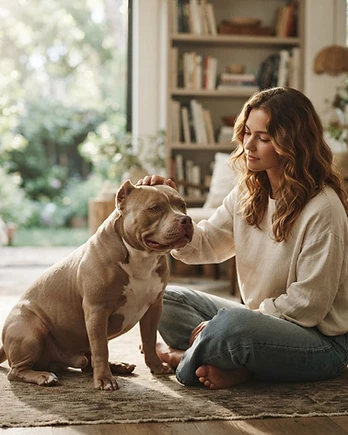
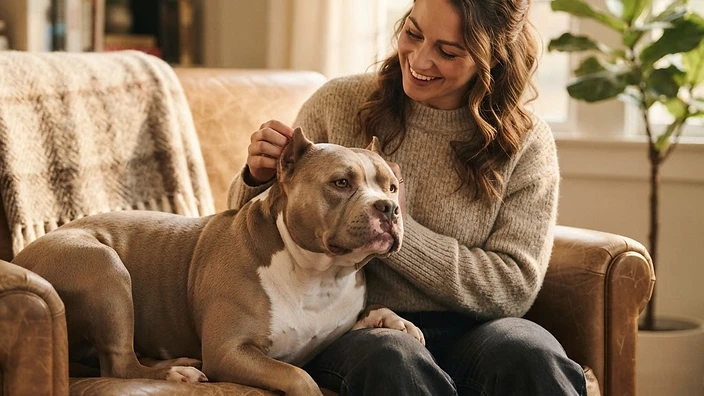
If there is one truth every owner discovers within days of bringing an American Bully home, it is this: this breed lives to love people. The temperament of the American Bully is arguably its most defining and distinguishing trait — and the characteristic breeders have worked hardest to preserve.
According to the ABKC breed standard, the ideal American Bully temperament is described as "outgoing and stable, eager to please, and highly adaptable." The breed is renowned for:
- Human affiliation: Extremely people-oriented; forms intense bonds with all family members, including children
- Confidence without aggression: A well-bred Bully is self-assured, not reactive. Shyness or human aggression is considered a serious fault under both ABKC and UKC standards
- Playfulness and energy: Moderate-to-high energy with a deep love of play, though they are also content to cuddle
- Trainability: Intelligent and eager to please — responds exceptionally well to positive reinforcement training
- Adaptability: Comfortable in apartments (especially Pockets and Standards) or large homes given adequate exercise
Temperament and Children
The American Bully has earned a well-deserved reputation as a "nanny dog" — though responsible supervision, as with any large-breed dog, is always recommended. Their natural gentleness, patience, and low prey drive toward humans make them exceptional family companions.
Dispelling the Aggression Myth
Perhaps the most damaging misconception about American Bullies is that their muscular appearance signals aggression. In reality, human aggression is a disqualifying fault under ABKC rules, and ethical breeders temperament-test every breeding animal. The breed's visual intimidation is simply that — visual. The dog behind that broad chest and wide head is typically one of the most affectionate animals you'll ever meet.
For a deep dive into raising a well-adjusted Bully from puppyhood through senior years, see The Complete American Bully Care Guide: Puppyhood to Senior Years.
ABKC Conformation Standard
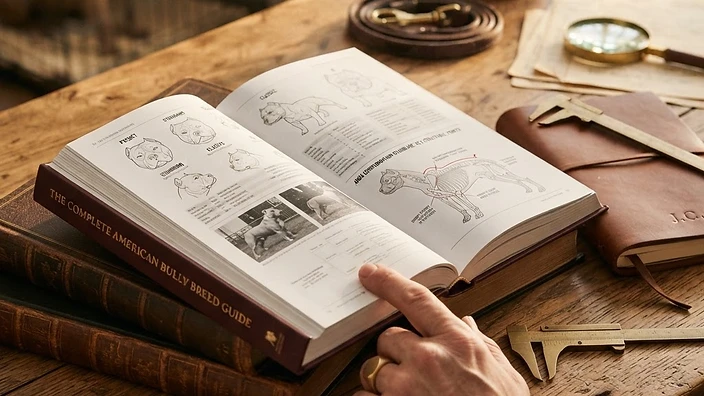
The American Bully Kennel Club conformation standard is the official written blueprint describing the ideal American Bully. Understanding this standard helps buyers recognize quality breeding and helps breeders make sound pairing decisions.
Head
The head is perhaps the most iconic feature of the breed. The ABKC standard calls for:
- Large, broad skull with pronounced cheek muscles
- Deep stop (the indentation between the forehead and muzzle)
- Medium-length muzzle, rounded on the upper edge; must not be excessively short (brachycephalic extremes are faulted)
- Wide-set, oval to almond-shaped eyes in any color except albinism
- Rose or semi-prick ears preferred; cropped ears are permitted
Neck, Topline, and Body
- Neck: Heavy, muscular, slightly arched; tapers from shoulder to back of skull
- Topline: Level or very slightly sloping from withers to rump
- Chest: Deep, broad, and well-sprung ribs; forechest prominent
- Back: Short, strong, and firm
Forequarters and Hindquarters
- Shoulders: Strong and muscular with wide blade placement
- Forelegs: Heavy-boned, straight, set wide apart
- Hindquarters: Broad, muscular, and well-angulated at stifle and hock
- Feet: Round, compact, with well-arched toes
Coat and Skin
- Coat: Short, close, stiff to the touch, and glossy
- Color: All colors and patterns accepted except merle under ABKC standard (more on this in the color genetics section)
- Skin: Loose and semi-elastic without excessive wrinkling
Faults and Disqualifications
Serious faults include: unilateral or bilateral cryptorchidism, viciousness or human aggression, albinism, and dogs that do not fall within height parameters for their entered class.
Coat Colors and Color Genetics
The American Bully presents in a stunning array of coat colors and patterns — one of the breed's most visually celebrated attributes. Understanding the genetics behind these colors helps buyers appreciate what they're investing in and helps breeders make responsible, health-conscious pairing decisions.

A collection of American Bully puppies displaying diverse coat colors and patterns including lilac tri-color, blue tri, chocolate tri, and merle, illustrating the rich genetic color palette possible within the breed through variations at the A, B, D, K, M, and S loci.
Base Colors
- Black: Dominant base color; controlled by the K locus (KB allele dominant black)
- Blue: A dilution of black, produced by the dd genotype at the D locus (dilute gene). Blue Bullies range from steel gray to a soft silver-slate.
- Chocolate (Brown/Liver): Produced by the bb genotype at the B locus, which converts black pigment to brown
- Lilac: A double dilution — both the blue dilution (dd) AND the chocolate gene (bb) acting together. Lilac is among the rarest and most sought-after colors, producing a soft silver-lavender coat.
- Red/Fawn/Buckskin: Produced by ay (sable) or e alleles at the A and E loci
- Cream: Extreme dilution via ee genotype combined with other loci
Patterns
- Tri-Color: Three distinct color zones on the body — base color, tan points (above eyes, cheeks, chest, legs), and often white. Tri is controlled by the at allele at the A locus. Chocolate Tri, Blue Tri, and Lilac Tri are among the most popular patterns.
- Piebald (Pied): Large white patches controlled by the S locus (sp allele)
- Brindle: Dark striping over a lighter base, controlled by the K locus (kbr allele)
- Merle: A mottled, dappled pattern produced by the M locus (Merle allele). Merle is not accepted by the ABKC standard as a show color, though merle American Bullies are popular among pet owners. Responsible breeders never breed merle-to-merle (double merle), which produces a high rate of blindness and deafness.
If you're drawn to specific colors, explore our currently available pups — including Diesel — Chocolate Tri Male American Bully puppy, Atlas — Lilac Tri-Color Male American Bully puppy, Bowie — Blue Tri Male American Bully puppy, Hazel — Merle Female American Bully puppy, and Ella — Lilac Tri Female American Bully puppy.
Eye Colors
Blue-dilute dogs frequently carry blue or gray eyes. Lilac dogs may present with champagne, pale green, or ice-blue eyes. Merle dogs can carry heterochromia (two different eye colors) or split iris patterns.
Influential Bloodlines
Knowledge of bloodlines is fundamental to understanding the modern American Bully. The following kennels and lines have had the most profound influence on the breed's development.
Razor's Edge
Founded by Dave Wilson in Northern Virginia in the early 1990s. Razor's Edge dogs are known for their wide heads, broad chests, and short, compact builds. This line contributed enormously to the Pocket and Standard varieties.
Gottiline
Developed by Richard Barajas in California around the legendary sire Juan Gotty (registered name: The Real Gotti). Gottiline dogs introduced extreme width, short-coupled bodies, and the exaggerated Bully type that defined the mid-2000s aesthetic. Juan Gotty's influence can be traced through thousands of pedigrees worldwide.
Remyline
Established by Fabian Woods, Remyline balanced extreme Bully type with athletic structure and sound temperament. Remyline dogs — particularly the sire Miagi Remyline — are prized for movement quality and longevity.
Kurupt Bloodline
Known for producing extraordinarily compact, wide, and structurally extreme Pocket Bullies. The sire Kurupt of Gottiline brought a new level of compactness that defined the Pocket class.
Other Notable Lines
- Daxline — Known for muscle density and conditioning
- Watchdog Kennels — Early contributors to the Standard variety
- Iron Cross Bullies — Known for combining Razor's Edge and Gottiline genetics with improved health outcomes
Registration Bodies: ABKC, UKC, and Beyond
American Bully Kennel Club (ABKC)
Founded in 2004, the ABKC is the primary registry for the American Bully. It maintains the official breed standard, sanctions conformation shows, and issues pedigree registration papers. ABKC registration requires a three-generation pedigree and physical registration of both parents.
United Kennel Club (UKC)
The UKC recognized the American Bully in 2013 and maintains its own breed standard (closely aligned with ABKC). UKC registration is widely respected and opens access to UKC-sanctioned performance events.
Other Registries
- International Bully Coalition (IBC) — Focuses on XL and Extreme varieties
- European Bully Kennel Club (EBKC) — Serves the growing European American Bully community
- Bully Breed Kennel Club (BBKC) — Regional registry with growing recognition
At American Bully Haven Pups, every litter is registered with both the ABKC and UKC, ensuring your puppy carries papers recognized by the two most respected authorities in the breed. Learn more about our breeding program.
Health Testing Standards
Ethical breeders utilize OFA (Orthopedic Foundation for Animals) health testing for hips, elbows, cardiac function, and patellar luxation. The ABKC and UKC both encourage — and at higher levels require — OFA clearances for dogs used in breeding programs. Buyers should always request OFA certificates for both parent dogs.
American Bully vs. Related Breeds
Buyers frequently confuse the American Bully with related bully-type breeds. Here's how they compare:
| Feature | American Bully | APBT | American Staffordshire Terrier | American Bulldog | |---|---|---|---|---| | Build | Broad, heavy, compact | Athletic, lean | Medium, muscular | Large, powerful | | Head | Very wide, short muzzle | Moderate width | Broad, defined stop | Large, square | | Temperament | Extremely human-affectionate | High-energy, driven | Confident, loyal | Protective, athletic | | Size Range | 13–23+ inches | 17–21 inches | 17–19 inches | 20–28 inches | | Primary Registry | ABKC, UKC | UKC, ADBA | AKC | NKC, ABRA | | AKC Recognition | No | No | Yes | No |
The key distinction: the American Bully was selectively bred away from working/terrier traits and toward maximum human companionship. The result is a dog that retains physical power but channels it entirely into affection and loyalty.
Health Considerations
The American Bully is generally a robust breed, but its unique conformation brings specific health considerations every owner should understand.
- Hip and Elbow Dysplasia: Common in larger varieties (XL and Standard). OFA hip and elbow radiographs at 24 months are standard for breeding stock.
- Patellar Luxation: More common in Pocket Bullies due to their compact conformation. OFA patellar evaluation recommended.
- Cardiac Health: Some lines carry a predisposition to subaortic stenosis (SAS) or other cardiac anomalies. Annual cardiac auscultation and OFA cardiac certification are essential.
- Brachycephalic Obstructive Airway Syndrome (BOAS): Dogs with excessively shortened muzzles can experience breathing difficulty. Responsible breeders select for muzzle length that allows free, unobstructed breathing.
- Skin Conditions: Deep skin folds (particularly around the face and tail pocket) can harbor yeast and bacterial infections if not cleaned regularly.
- Lifespan: Well-bred American Bullies typically live 10–13 years, with smaller varieties (Pocket, Classic) often outliving larger ones.
For comprehensive guidance on keeping your Bully healthy from puppyhood through senior years, read The Complete American Bully Care Guide: Puppyhood to Senior Years.
Key Takeaways
- The American Bully was developed in the late 1980s–1990s as a purpose-bred companion animal derived primarily from the American Pit Bull Terrier with contributions from the AmStaff, English Bulldog, and others.
- The ABKC (founded 2004) and UKC (recognition 2013) are the two primary registration and standards bodies.
- There are four official size varieties: Pocket, Standard, Classic, and XL — all judged against the same core standard.
- The breed's defining trait is its extreme human affiliation. Human aggression is a disqualifying fault.
- Coat color genetics are complex — tri-color (chocolate tri, blue tri, lilac tri), merle, brindle, and piebald patterns are all possible. Merle is not ABKC-standard for conformation showing.
- Foundational bloodlines — Razor's Edge, Gottiline, Remyline, Kurupt — shaped the modern breed and appear in most pedigrees today.
- OFA health testing (hips, elbows, patella, cardiac) is the ethical standard for breeding stock.
- The American Bully is distinct from the APBT — it is not the same breed and should not be evaluated against APBT or AmStaff standards.
- Prices for well-bred puppies from registered parents range from approximately $2,500–$10,000+ depending on color, lineage, and variety.
Frequently Asked Questions
Is the American Bully the same as a Pitbull?
No — and this distinction matters deeply to breed advocates. The American Bully is a separate, distinct breed from the American Pit Bull Terrier, recognized independently by the ABKC and UKC. While the APBT is one of the American Bully's founding breeds, selective breeding over 30+ years has produced an animal with meaningfully different conformation, muscle mass, bone structure, and temperament emphasis. The American Bully was bred specifically to maximize companion qualities and human affiliation, while the APBT retains more working-dog drive and athleticism. Calling an American Bully a "Pitbull" is both technically inaccurate and does a disservice to both breeds.
Are American Bullies good with children and families?
Absolutely — in fact, family suitability is one of the breed's greatest strengths. American Bullies are patient, gentle, and deeply bonded to their human families, including children. Their natural tolerance and affectionate nature have earned comparisons to "nanny dogs." As with any dog breed, supervised interaction between dogs and young children is recommended, and early socialization enhances an already excellent temperament. Dogs from reputable, health- and temperament-tested breeding programs — like ours at American Bully Haven Pups — display the gold-standard Bully temperament consistently.
What is the difference between a Pocket and an XL Bully?
The primary difference is height (and consequently weight and overall presence). A Pocket Bully male stands under 17 inches at the withers and typically weighs 25–50 lbs, while an XL Bully male stands over 20 inches and can weigh 100–130 lbs. Both varieties share the same breed standard for conformation — broad head, wide chest, heavy bone — just expressed at very different scales. Both varieties share the same gentle, human-oriented temperament. Choice between them typically comes down to living situation, activity level, and personal preference.
How much does an American Bully puppy cost?
Prices for well-bred, ABKC/UKC-registered American Bully puppies typically range from $2,500 to $10,000 or more, depending on several factors: size variety (Pockets and XLs often command premiums), coat color (lilac tri, merle, and blue tri carry higher prices due to genetic rarity), pedigree quality (proximity to legendary studs like Juan Gotty affects value), and breeder reputation. Unusually low prices (under $1,000–$1,500) for "registered" Bullies are a red flag — they often indicate unregistered or poorly health-tested animals, or puppies from lines with known structural or temperament issues.
Is the merle color pattern safe in American Bullies?
Merle is produced by the M (Merle) locus allele and is a visually stunning pattern. However, it carries important health considerations: double merle (M/M genotype), produced by breeding two merle-patterned dogs together, results in a high probability of severe vision and hearing impairment (up to 25% risk of blindness, deafness, or both per puppy). Responsible breeders — including our program — never breed merle to merle. A single-copy merle (M/m) is generally healthy. Buyers should always ask breeders for genetic testing documentation confirming merle zygosity. Note that merle is not accepted in ABKC conformation showing but is perfectly acceptable as a pet color.
What health tests should a reputable American Bully breeder perform?
At minimum, ethical American Bully breeders should perform OFA hip and elbow radiographic evaluations (official results at 24 months), OFA cardiac auscultation by a board-certified cardiologist, OFA patellar evaluation (especially important for Pocket Bullies), and a CAER eye examination for dogs with merle genetics. Genetic panel testing (for color genetics, degenerative myelopathy, and hyperuricosuria) adds another layer of responsible breeding practice. Always ask for copies of OFA certificates — they're publicly searchable at ofa.org. Our program provides full health documentation for every breeding animal.
Start Your American Bully Journey
The American Bully is more than a breed — it's a lifestyle, a community, and for many families, an irreplaceable bond. Whether you're drawn to the compact power of a Pocket Bully, the balanced athleticism of a Standard, or the breathtaking presence of an XL, this breed has a variety and a personality to match every household.
At American Bully Haven Pups, every puppy we raise in Austin, Texas is produced from ABKC- and UKC-registered parents with verified OFA health testing, thoughtful bloodline selection, and a socialization program designed to send confident, loving puppies into their forever homes.
We invite you to explore our available American Bully puppies, read through our adoption guide to understand our process, or simply contact us with your questions. We love talking about this breed — and we'd love to help you find your perfect match.
For more expert resources on health, nutrition, training, and ownership, explore our complete full resource library — including detailed cluster articles covering every aspect of The Complete American Bully Breed Guide: Everything to Know across topics from temperament deep-dives to color genetics breakdowns. Additional installments in this series — including part two, part three, part four, part five, part six, part seven, and part eight — provide even deeper dives into every dimension of this extraordinary breed.