Bringing an American Bully into your life is one of the most rewarding decisions a dog owner can make. These compact, muscular, deeply loyal companions are engineered — through careful, ethical breeding — to be the ultimate family dog: confident without aggression, affectionate without fragility, and athletic without being unmanageable. But like any living being, they thrive when their care is intentional, consistent, and informed by real knowledge of the breed.
At American Bully Haven Pups in Austin, Texas, we've raised ABKC- and UKC-registered American Bullies for years. We've watched puppies grow into steadfast family members, navigated health challenges, refined feeding protocols, and fine-tuned socialization plans through seasons of hands-on experience. This guide is the distillation of everything we know — and everything we wish every owner knew before bringing their Bully home.
Whether you're preparing for a new puppy, managing an adolescent, or supporting a senior dog, this is your definitive resource. We'll walk through daily routines, age-appropriate exercise, coat care and grooming, home and yard safety, seasonal considerations, travel, veterinary milestones, and lifelong wellness habits. Bookmark this page. You'll return to it often.
Understanding the American Bully Before You Begin
The American Bully is a purpose-bred companion dog developed in the United States from the 1980s through the 1990s, drawing primarily from the American Pit Bull Terrier and American Staffordshire Terrier, with careful infusions from the English Bulldog, Olde English Bulldogge, and other molosser-type breeds. The result is a dog with a distinctive blocky head, broad chest, heavy bone density, and a short, smooth double-layered coat — all built on a temperament that is gentle, people-oriented, and highly trainable.
The ABKC (American Bully Kennel Club) and UKC (United Kennel Club) recognize four size variants: Pocket (under 17 inches at the withers for males), Standard (17–20 inches), Classic (same frame as Standard with lighter body mass), and XL (over 20 inches). Each variant shares the same breed standard for temperament and structure but carries different care implications for exercise load, caloric needs, and joint health monitoring.
For the full breed history, conformation standards, and temperament profile, visit The Complete American Bully Breed Guide: Everything You Need to Know.
Bringing Your Puppy Home: The First 30 Days
Puppy-Proofing Your Home and Yard
Before your puppy arrives, walk every room at floor level. American Bully puppies are curious, low-to-the-ground, and surprisingly strong for their size. Secure electrical cords, remove toxic houseplants (philodendron, pothos, sago palm, and aloe are common culprits), lock away cleaning products and medications, and install baby gates across stairwells. Cabinet locks are essential — Bully puppies have the jaw strength to pry open lower cabinets by 10–12 weeks.
In the yard, inspect the perimeter fence for gaps at ground level. A Standard or XL puppy at 8 weeks can squeeze through a 4-inch gap. Ensure fence height is a minimum of 5 feet for adult Bullies — athletic males can clear 4-foot fences. Remove standing water (a drowning risk for young puppies), anchor loose garden tools, and identify and remove toxic plants: oleander, lantana, and azalea are common in Central Texas landscapes and acutely toxic to dogs.
Crate Training and Sleep Environment
A crate is not a punishment — it is a sanctuary. For American Bully puppies, a 36-inch wire or plastic crate works for Pocket and Standard variants through adulthood; XL variants will need a 42–48 inch crate. Line it with a washable orthopedic mat (not cedar shavings, which can irritate short muzzles) and introduce it gradually using high-value treats. Most Bully puppies accept crate training within 5–7 days when introduced positively.
Night-time crying is normal for the first 3–5 nights. Place the crate in your bedroom initially so the puppy can hear and smell you. After 2 weeks, you can gradually move it to its permanent location.
The First Vet Visit: 48–72 Hours
Schedule a wellness exam within 72 hours of bringing your puppy home. Bring all documentation provided by your breeder: ABKC/UKC registration papers, vaccination records, deworming logs, and any health testing certificates from the sire and dam. A reputable vet will perform a full physical, verify vaccination status, and discuss your deworming and parasite prevention protocol.
Nutrition: Feeding Your American Bully at Every Life Stage
Puppy Nutrition (8 Weeks – 12 Months)
American Bully puppies have high caloric density requirements due to rapid musculoskeletal development. Feed a large-breed puppy formula (even for Pocket variants — the bone and muscle growth patterns are similar) with a minimum of 28–30% crude protein and 8–12% crude fat. Look for AAFCO (Association of American Feed Control Officials) nutritional adequacy statements confirming the food is formulated for growth.
Biological value matters: animal-sourced proteins (chicken, beef, salmon, turkey) should appear in the first two ingredients. Avoid corn syrup, artificial preservatives (BHA, BHT, ethoxyquin), and excessive grain fillers. Feed 3 times daily from 8–16 weeks, then transition to twice daily from 16 weeks onward. Typical feeding quantity for an 8-week Standard puppy is 1–1.5 cups of dry kibble per day, divided.
Adult Nutrition (1–7 Years)
At 12 months, transition to an adult maintenance formula over 10–14 days (mix increasing ratios of new food into the current food to avoid GI upset). Adult American Bullies weighing 50–80 lbs (Standard) typically require 1,600–2,200 kcal/day depending on activity level. XL variants at 80–120 lbs may require 2,500–3,200 kcal/day.
Raw feeding (BARF — Biologically Appropriate Raw Food) is increasingly popular among Bully owners and can support lean muscle mass, coat luster, and stool quality when properly balanced. A raw diet should achieve a ratio of approximately 80% muscle meat, 10% raw meaty bone, 5% liver, and 5% other secreting organ. Consult a veterinary nutritionist before transitioning.
Senior Nutrition (7+ Years)
Senior American Bullies benefit from a lower-calorie, higher-fiber diet that supports healthy weight maintenance and joint health. Look for added glucosamine (500–1,000 mg/day), chondroitin sulfate, and omega-3 fatty acids (EPA and DHA from fish oil) to support cartilage integrity. Reduce crude fat to 8–10% to prevent obesity, which dramatically worsens hip dysplasia and elbow dysplasia outcomes.

An American Bully puppy eating a balanced, high-protein meal from a stainless steel bowl, illustrating age-appropriate nutrition practices recommended in this comprehensive American Bully care guide.
Exercise: Age-Appropriate Activity for a Healthy Bully
Puppies (8 Weeks – 12 Months): Protect the Growth Plates
This is the most misunderstood aspect of Bully puppy care. American Bullies have open physeal growth plates (the cartilaginous regions at the ends of long bones) until approximately 12–14 months of age. High-impact repetitive exercise before growth plate closure — distance running, forced treadmill work, repetitive jumping — can cause physeal fractures or irregular bone development, leading to permanent structural abnormalities.
The safe guideline: 5 minutes of structured exercise per month of age, twice daily. An 8-week puppy gets two 10-minute gentle play sessions. A 6-month puppy can handle two 30-minute sessions of leashed walking, fetch, and off-leash play on soft surfaces. Avoid concrete repetitive impact exercise until 14 months.
Adolescents and Adults (12 Months – 7 Years)
Once growth plates have closed, American Bullies can handle a robust exercise regimen. Aim for 45–75 minutes of daily activity split across two sessions. Excellent activities include:
- Weighted pulling / weight drag: Builds topline muscle and rear drive; start at 10% of body weight and progress slowly.
- Flirt pole: High-intensity, joint-friendly cardio that satisfies prey drive.
- Swimming: The gold standard for muscle development without joint impact — especially valuable for XL variants.
- Structured leash walking: Develops loose-leash manners and mental stimulation simultaneously.
- Agility (modified): Low jumps (under 12 inches), tunnel work, and weave poles develop proprioception and handler focus.
Avoid exercise in temperatures above 85°F (29°C). American Bullies are brachycephalic-adjacent — their shorter muzzle and compressed soft palate increase thermoregulatory risk. In Austin's summers, exercise before 8 AM or after 7 PM.
Seniors (7+ Years): Keep Moving, Adapt the Pace
Senior Bullies still need daily movement — inactivity accelerates muscle atrophy and joint stiffness. Transition to two 20–30 minute low-impact walks daily. Swimming remains excellent. Add passive range-of-motion stretches before and after exercise. Monitor for signs of pain: reluctance to rise, altered gait, stiffness after rest, or yelping when touched along the spine or hips.
Grooming: The Complete American Bully Routine
The American Bully's short, smooth coat is one of its most manageable features — but "low maintenance" is not the same as "no maintenance." A consistent grooming routine supports skin health, early detection of dermatological issues, and the human-dog bond.
Coat Care
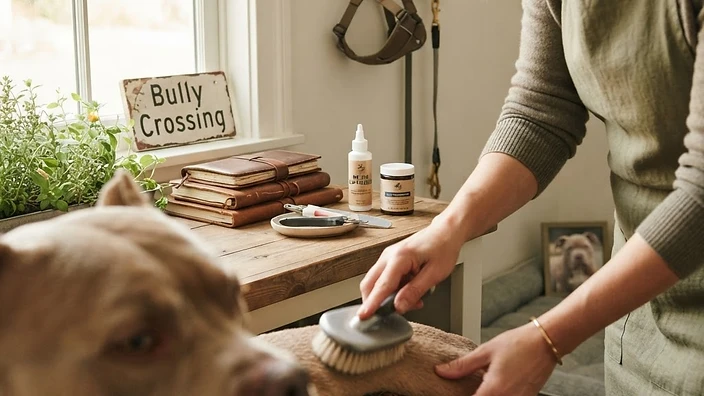
Brush your Bully weekly with a rubber curry brush or grooming mitt to remove dead undercoat and distribute sebaceous oils. Bathe every 4–6 weeks using a pH-balanced, hypoallergenic dog shampoo (avoid human shampoos — the pH is too acidic for canine skin). American Bullies are prone to seborrhea, environmental allergies, and hotspots, particularly in humid climates. If you notice erythema (redness), pruritus (itching), or flaking, consult your veterinarian for a dermatology workup.
Wrinkle and Skin Fold Care
Bullies with prominent head wrinkles and facial folds require daily cleaning of these skin folds to prevent pyoderma (bacterial skin fold infection). Use a soft cloth dampened with veterinary-grade antiseptic wipes or diluted chlorhexidine solution, dry thoroughly, and optionally apply a thin layer of corn starch or veterinary skin fold powder to prevent moisture accumulation.
Nail Trimming and Ear Care
Trim nails every 3–4 weeks. The quick (vascular core) in dark-nailed Bullies is not visible; err on the side of small, frequent cuts rather than aggressive single cuts. Keep styptic powder on hand. Clean ears monthly with a veterinary ear cleaner — never insert cotton swabs deeper than the visible ear canal. American Bullies are susceptible to otitis externa (ear canal inflammation), especially in humid environments.
Dental Hygiene
Dental disease affects 80% of dogs over age 3, and American Bullies are no exception. Brush teeth 3–5 times weekly using enzymatic dog toothpaste (never human toothpaste — xylitol is toxic). Provide veterinary-approved dental chews (VOHC-accepted products) daily. Schedule professional dental cleanings under anesthesia every 1–2 years based on your vet's assessment.

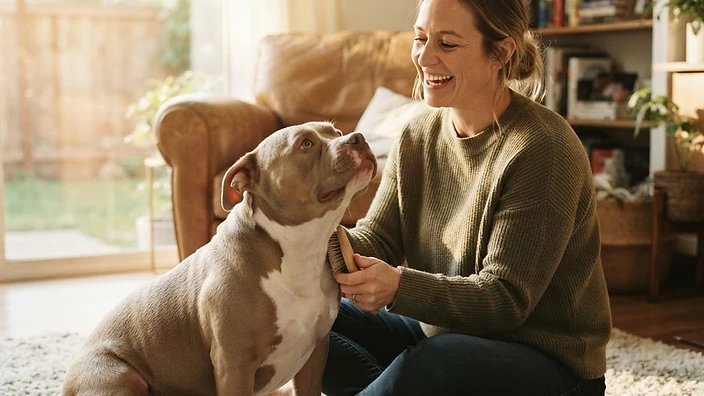
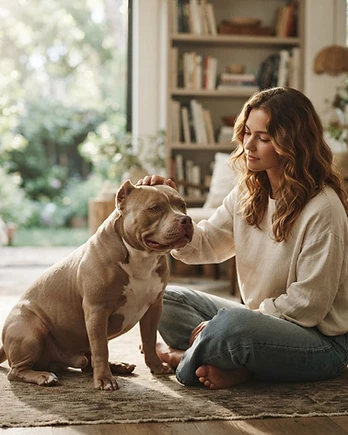
An American Bully being groomed with a rubber curry brush by its owner, demonstrating the weekly coat care and skin health routine essential for maintaining the breed's short smooth coat and preventing dermatological issues.
Veterinary Care and Health Milestones
Core Vaccination Schedule
Follow AAHA (American Animal Hospital Association) guidelines:
- 6–8 weeks: DA2PP (distemper, adenovirus, parvovirus, parainfluenza) — first dose
- 10–12 weeks: DA2PP booster + Bordetella
- 14–16 weeks: DA2PP final puppy booster + Leptospirosis (especially relevant in Central Texas)
- 16 weeks+: Rabies (required by Texas law)
- 12–16 months: DA2PP and Rabies boosters; then tri-annually
Parasite Prevention
Year-round heartworm prevention is non-negotiable in Texas. Use a veterinarian-prescribed macrocyclic lactone (ivermectin, milbemycin oxime, or selamectin). Combine with a broad-spectrum flea/tick preventative — Bravecto, NexGard, or Simparica Trio are commonly used. Monthly intestinal deworming is recommended through 6 months; thereafter treat on positive fecal float results.
OFA Health Testing
Ethical American Bully breeders like American Bully Haven Pups conduct OFA (Orthopedic Foundation for Animals) hip and elbow evaluations on breeding stock, along with cardiac auscultation by a veterinary cardiologist and CAER eye examinations. When you purchase from a registered breeder, ask for OFA clearance numbers for both parents — you can verify them at ofa.org. This transparency is a cornerstone of responsible breeding.
Common breed-relevant health concerns to monitor include:
- Hip dysplasia: Malformation of the coxofemoral joint; managed with weight control, physiotherapy, NSAIDs, and in severe cases, total hip replacement.
- Elbow dysplasia: Fragmented coronoid process or osteochondrosis dissecans; diagnosed via radiograph.
- Hypothyroidism: Low thyroid hormone production; tested via T4 and TSH serum panels.
- Brachycephalic Obstructive Airway Syndrome (BOAS): Varies by muzzle conformation; monitor for stertor, exercise intolerance, and cyanosis.
- Skin allergies (atopic dermatitis): Managed with allergen avoidance, omega-3 supplementation, medicated shampoos, and veterinary immunotherapy.
Socialization and Mental Enrichment
The Critical Socialization Window: 3–14 Weeks
The single most important developmental period in your Bully's life is the socialization window between 3 and 14 weeks of age. During this period, the puppy's brain is maximally plastic — new experiences are encoded as "normal" rather than threatening. Responsible breeders begin socialization before the puppy leaves for its new home; owners must continue it with urgency.
Expose your puppy to: men, women, children, elderly people, people in hats/uniforms/sunglasses, other vaccinated dogs, cats, livestock (if applicable), cars, motorcycles, umbrellas, stairs, elevators, slippery floors, and varied outdoor surfaces. Keep each introduction positive and below threshold — never force an approach that triggers avoidance or fear.
Ongoing Mental Enrichment
American Bullies are more intelligent than their stoic expression suggests. Mental stimulation reduces destructive behavior, anxiety, and reactivity. Incorporate:
- Kong-style food puzzles: Stuff with kibble and wet food, freeze overnight.
- Snuffle mats: Tap into natural foraging behavior.
- Obedience training: 10–15 minute daily sessions; American Bullies respond exceptionally well to positive reinforcement (marker/clicker training, high-value food rewards).
- Nosework/scent work: Channel their olfactory drive constructively.
Seasonal Care in Austin, Texas
Summer (June – September)
Austin summers are brutal — consistent highs of 95–105°F with elevated humidity. Heat stroke (hyperthermia) is a genuine emergency in American Bullies. Signs include excessive panting, hypersalivation, brick-red gums, vomiting, and collapse. Keep dogs indoors during peak heat (10 AM – 6 PM), provide constant access to fresh water, and never leave a Bully in a parked vehicle.
Paw pads can blister on asphalt exceeding 140°F (common on black pavement in direct summer sun). Test pavement with the back of your hand — if you can't hold it there for 7 seconds, it's too hot for paws. Use dog booties or walk on grass.
Winter (December – February)
Austin winters are mild but can bring unexpected ice and temperature drops into the 20s°F. American Bullies, with their short single-layer coat and low body fat, are more cold-sensitive than many breeds. Provide a lined dog jacket for outdoor walks below 45°F. Ensure outdoor dog areas have insulated shelter and bedding raised off concrete.
Spring and Fall: Allergy Seasons
Central Texas is notorious for mountain cedar (Juniperus ashei) pollination in December–February and oak pollen in spring. American Bullies prone to atopic dermatitis will show flares during these periods. Wipe paws and coat with a damp cloth after outdoor excursions to remove surface allergens. Discuss antihistamines (cetirizine, diphenhydramine) or veterinary immunotherapy with your vet if seasonal flares are severe.
Travel and Transportation
American Bullies are excellent travel companions when conditioned gradually. For car travel, use a crash-tested crate or a dog-specific seatbelt harness. Introduce the car with the engine off first, then short trips, then longer journeys — counterconditioning any motion anxiety with high-value treats.
For air travel, most American Bullies (particularly Standard and XL) are too large for in-cabin travel and must fly as cargo — a stressful and risky option for brachycephalic-adjacent breeds. We strongly recommend ground transport or professional pet transport services for long-distance moves. Check your airline's breed restrictions; many carriers have banned short-nosed breeds from cargo holds.
For hotel stays, pack: your dog's crate, their food (measured portions in zip-lock bags), water from home (sudden water source changes can cause GI upset), familiar bedding, and their veterinary records. Keep a copy of rabies vaccination certificate and registration papers accessible.
Senior Bully Care: The Golden Years (7+ Years)
American Bullies have a typical lifespan of 10–13 years. The senior phase brings predictable changes: reduced metabolism, muscle atrophy, joint stiffness, cognitive changes (Canine Cognitive Dysfunction Syndrome — the canine equivalent of dementia), and increased cancer risk.
Schedule bi-annual veterinary wellness exams from age 7 onward. Baseline bloodwork (CBC, comprehensive metabolic panel, urinalysis, T4) at age 7 establishes reference ranges for detecting organ changes early. Dental disease accelerates in seniors; don't skip professional cleanings.
Orthopedic comfort matters: transition to an elevated food bowl (reduces neck strain), provide orthopedic memory foam bedding, add ramps at furniture edges and vehicle entry points. Adequan (polysulfated glycosaminoglycan) injections, prescribed by your vet, can meaningfully improve joint fluid quality and mobility in arthritic seniors.
Enrich the senior years emotionally — old Bullies still crave companionship, gentle play, and purposeful interaction. Shorter, more frequent walks beat long exhausting ones. Let your senior dog set the pace.
Key Takeaways
- Puppy-proof home and yard before your Bully arrives; inspect fence lines, toxic plants, and hazardous objects at floor level.
- Feed AAFCO-compliant, animal-protein-forward food appropriate to life stage; avoid rapid diet changes.
- Protect growth plates — limit high-impact exercise to 5 minutes per month of age until 12–14 months.
- Adults need 45–75 minutes of daily activity; avoid exercise above 85°F in Austin's climate.
- Maintain a weekly grooming routine: brushing, skin fold cleaning, dental hygiene, nail trims, and ear checks.
- Follow AAHA vaccination guidelines and use year-round heartworm and flea/tick prevention.
- Prioritize the 3–14 week socialization window — it shapes your dog's temperament for life.
- Schedule bi-annual vet exams from age 7; add joint support supplements and orthopedic bedding for senior comfort.
- Purchase only from ABKC/UKC-registered breeders who provide OFA health clearances for breeding stock.
Frequently Asked Questions
How much exercise does an American Bully need per day?
Adult American Bullies (12 months and older) thrive on 45–75 minutes of exercise daily, ideally split into two sessions. Puppies under 12 months should be limited to 5 minutes of structured exercise per month of age to protect open growth plates. Senior Bullies benefit from two 20–30 minute low-impact walks daily. Activity type matters as much as duration — swimming, flirt pole, and structured leash walking are ideal; forced high-impact running on hard surfaces should be avoided at any age.
What should I feed my American Bully puppy?
Feed a high-quality large-breed puppy formula with a minimum of 28–30% crude protein, with animal proteins listed first. Look for AAFCO nutritional adequacy for growth. Feed 3 times daily from 8–16 weeks, then twice daily. Avoid food with artificial preservatives, corn syrup, or excessive fillers. Transition to adult food at 12 months over a 10–14 day period to avoid gastrointestinal upset.
Are American Bullies good family dogs?
Absolutely — the American Bully was purpose-bred as a companion dog and consistently ranks among the most family-friendly breeds in temperament evaluations. They are affectionate with children, tolerant of handling, and strongly bonded to their human family. Proper socialization between 3–14 weeks of age is critical to producing a well-adjusted, confident adult. The Complete American Bully Breed Guide: Everything You Need to Know covers temperament in depth.
How often should I groom my American Bully?
Weekly brushing with a rubber curry brush, monthly baths with pH-balanced shampoo, daily skin fold cleaning (for dogs with prominent wrinkles), nail trims every 3–4 weeks, monthly ear cleaning, and 3–5 times weekly tooth brushing. This routine takes roughly 20–30 minutes per week and dramatically reduces veterinary dermatology costs over the dog's lifetime.
What health tests should I expect from an ethical American Bully breeder?
An ethical ABKC- or UKC-registered breeder should provide OFA hip and elbow clearances for both parents, cardiac clearance from a board-certified veterinary cardiologist, CAER eye examination results, and ideally thyroid panel results. You can verify OFA clearance numbers independently at ofa.org. At American Bully Haven Pups, health testing is foundational to our breeding program — learn more on our about our breeding program page.
When do American Bullies reach full maturity?
American Bullies are generally considered physically mature between 18–24 months, though XL variants may continue filling out through 36 months. Growth plate closure occurs around 12–14 months. Mental and emotional maturity typically follows physical maturity, with most Bullies settling into their adult temperament between 18–24 months. This is why early socialization and consistent training during the first two years are so consequential.
Explore More in Our Care Resource Library
This pillar guide connects to a full library of specialized care topics. Explore our in-depth cluster resources:
- American Bully puppy nutrition, feeding schedules, and diet transitions
- American Bully exercise and physical conditioning by age
- American Bully grooming: coat, skin fold, and dental care
- American Bully socialization and early training
- American Bully seasonal care and environmental safety
- American Bully veterinary care and vaccination milestones
- American Bully senior care and healthy aging
- American Bully travel, boarding, and home safety
Browse our complete full resource library for breed guides, health articles, and owner education.
Ready to Welcome Your American Bully Home?
The best care starts before your puppy arrives — with the right breeder, the right preparation, and the right knowledge. If you're ready to take the next step, explore our available American Bully puppies, including stunning puppies like Atlas — Lilac Tri-Color Male American Bully puppy, Ella — Lilac Tri Female American Bully puppy, Bowie — Blue Tri Male American Bully puppy, Diesel — Chocolate Tri Male American Bully puppy, and Hazel — Merle Female American Bully puppy.
Read through our adoption guide to understand our process, and don't hesitate to contact us with any questions. We're here every step of the way — from the day you bring your Bully home to the quiet grace of their senior years.