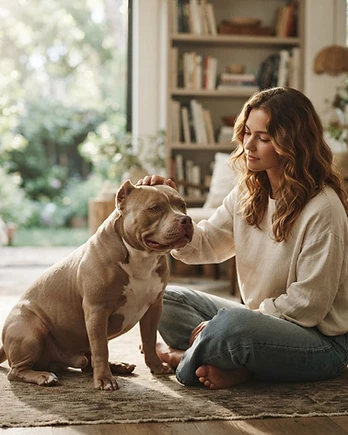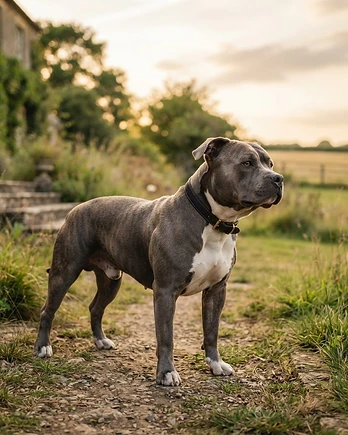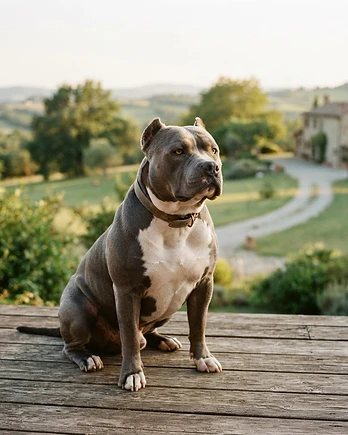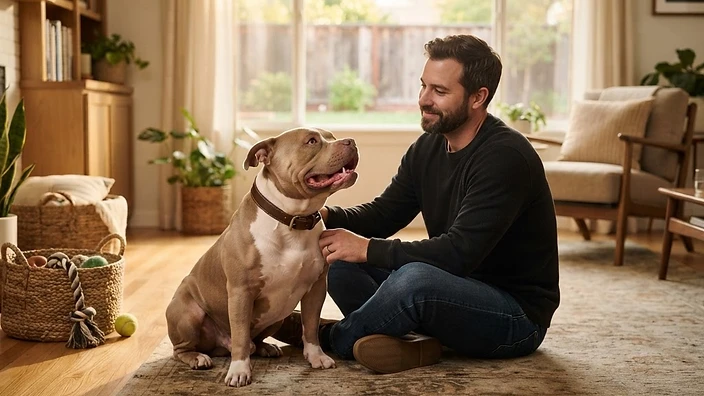
Bringing an American Bully into your home is one of the most rewarding decisions you'll ever make. These dogs — with their broad chests, blocky heads, and hearts that seem entirely too large for even their muscular bodies — bond with their families in a way that's genuinely hard to describe until you've experienced it. But that deep bond comes with a genuine responsibility: understanding exactly what this breed needs at every stage of life.
This guide is designed to be the only American Bully care resource you'll ever need. Whether you're preparing for a new puppy, navigating the adolescent chaos of a one-year-old Bully, or learning how to support a senior dog through their golden years, you'll find concrete, breed-specific, veterinarian-aligned guidance here. We've drawn on years of hands-on experience as ABKC- and UKC-registered breeders in Austin, Texas, along with current veterinary best practices, to give you the most complete picture possible.
Before diving in, we encourage you to explore our full resource library for companion articles on nutrition, training, health testing, and more — all built around the same philosophy that guides our breeding program: healthy dogs, informed owners, and lifelong support.
Understanding the American Bully: Breed Context
The American Bully is a purpose-bred companion developed in the United States during the 1980s and 1990s, with roots in the American Pit Bull Terrier, American Staffordshire Terrier, and several bully-type breeds. The American Bully Kennel Club (ABKC) formally recognized the breed in 2004, and the United Kennel Club (UKC) followed in 2013. The breed comes in four official size classes — Pocket, Standard, Classic, and XL — with body weights ranging from roughly 30 lbs for a Pocket female to well over 120 lbs for an XL male.
Understanding these size classes matters for care, because exercise tolerance, caloric requirements, joint health considerations, and even heat sensitivity differ meaningfully across the spectrum. For a deeper dive into breed history, size classifications, and temperament, see The Complete American Bully Breed Guide: Everything You Need to Know.
Puppyhood: Weeks 8–16 (The Foundation Stage)
Bringing Your Puppy Home
Most responsible ABKC-registered breeders release puppies at 8 weeks of age, after the critical socialization window (3–8 weeks) has been seeded and a first veterinary wellness exam, deworming protocol, and initial vaccinations have been completed. When your puppy arrives, have a designated quiet space ready — a crate or exercise pen no larger than necessary, lined with an absorbent pad and a worn article of your clothing to ease the transition.
For your first 72 hours, limit visitors and keep the environment calm. Puppies this age are processing enormous amounts of sensory information. Overwhelming them early can create lasting anxiety patterns.
Early Veterinary Care and Vaccination Schedule
Schedule your first independent vet visit within 48–72 hours of bringing your puppy home. A core vaccination schedule for American Bully puppies typically follows this timeline:
- 6–8 weeks (at breeder): DHPP combination (Distemper, Hepatitis, Parvovirus, Parainfluenza) — first dose
- 10–12 weeks: DHPP booster; Bordetella if kennel exposure is likely
- 14–16 weeks: DHPP final puppy booster; Rabies (required by Texas state law at 12–16 weeks)
- 12–16 months: DHPP one-year booster; Rabies booster (then triennial)
Discuss a heartworm prevention protocol immediately — Austin's climate supports year-round mosquito activity, making monthly prophylactic medication (milbemycin oxime, ivermectin-based, or afoxolaner combination products) non-negotiable.
Nutrition in the Puppy Stage
American Bully puppies are high-growth animals with significant musculoskeletal development demands. Feed a large-breed puppy formula with a crude protein content of 28–32%, crude fat between 12–18%, and calcium-to-phosphorus ratios between 1.2:1 and 1.8:1 to support bone mineralization without promoting excessive growth that stresses developing joints.
Look for AAFCO (Association of American Feed Control Officials) nutritional adequacy statements specifically for "growth" or "all life stages." Avoid generic "all life stages" formulas designed primarily for small breeds — their caloric density and calcium levels are often mismatched for bully-type puppies. Feed 3–4 meals per day at 8–12 weeks, transitioning to 3 meals by 12–16 weeks.
Early Socialization: The Most Important Investment You'll Make
The socialization window (3–14 weeks) is the single greatest opportunity to shape your American Bully's adult temperament. Puppies introduced to diverse people, sounds, surfaces, environments, and animals during this period develop the confident, stable disposition the breed is famous for. After 14 weeks, fear responses become progressively harder to counteract.
Targeted socialization experiences should include: children of different ages, men with facial hair, umbrellas, skateboards, elevators, hardwood floors, car rides, gentle handling of paws/ears/mouth, and calm exposure to other dogs in controlled settings. Keep every interaction positive and brief.
Adolescence: 4–18 Months (The Testing Stage)
Adolescence in the American Bully brings rapid physical growth, hormonal shifts, and a predictable regression in previously learned behaviors. This is entirely normal — and it's the stage where consistent, positive-reinforcement training pays the biggest dividends.
Exercise Guidelines for Growing Bullies
One of the most persistent myths about American Bullies is that more exercise is always better. For a growing puppy, the opposite is true. Growth plates — the cartilaginous regions at the ends of long bones — don't fully close until 12–18 months in Standard and Classic Bullies and potentially 18–24 months in XL dogs. High-impact exercise on hard surfaces, repetitive jumping, or forced running before growth plate closure increases the risk of osteochondrosis dissecans (OCD), hip dysplasia, and elbow dysplasia.
A practical guideline is the 5-minute rule: 5 minutes of structured exercise per month of age, twice daily. A 4-month-old puppy needs roughly 20 minutes of leash walking twice per day — not an hour of fetch on concrete.
| Age | Max Structured Exercise per Session | Notes | |---|---|---| | 8–12 weeks | 10–15 min | Leash walking on grass, free play | | 3–6 months | 15–25 min | No jumping, no stairs if avoidable | | 6–12 months | 25–40 min | Introduce swimming; avoid hard surfaces | | 12–18 months | 40–60 min | Monitor for lameness; OFA screening age | | 18+ months | 60–90 min | Full adult exercise capacity |
Training Foundations
Begin formal obedience training at 8–10 weeks using positive reinforcement (marker training or clicker training). American Bullies are highly food-motivated and responsive to social praise, making them excellent training candidates. Core commands — sit, down, stay, come, leave it, heel — should be reliably fluent by 6 months.
Pro-level tip: "leave it" is arguably the most important safety command for this breed, given their enthusiasm and muscular confidence. Practice it daily in every environment.


A young American Bully puppy on a lightweight leash explores a grassy outdoor environment during a structured socialization session. The image reflects the breed's curious, confident temperament and the importance of positive early experiences for long-term behavioral health.
Adult Care: 18 Months–7 Years (The Prime Years)
Daily Routine Structure
American Bullies are routine-oriented dogs. A predictable daily schedule reduces anxiety, supports healthy digestion, and makes behavioral management easier. A sample adult daily routine:
- 6:30 AM: Morning walk (30–45 min), mental enrichment (puzzle feeder)
- 7:00 AM: Breakfast
- Midday: Training session (10–15 min) or play session
- 5:30 PM: Evening walk (45–60 min)
- 6:00 PM: Dinner
- Evening: Calm family time, chew enrichment
- 9:00–10:00 PM: Settled for sleep
Adult Bullies typically need 60–90 minutes of moderate-to-vigorous physical activity per day. Activities well-suited to the breed include leash walking, swimming (excellent for muscle development with minimal joint impact), weight pull (a sport with dedicated ABKC and UKC divisions), flirt pole sessions, and structured play.
Nutrition for Adult American Bullies
Transition from puppy to adult formula between 12–18 months depending on size class. Adult American Bullies thrive on high-protein (25–30% dry matter basis), moderate-fat (12–16% dry matter) diets with named animal proteins (chicken, beef, salmon) as the first ingredient. Biological value matters: animal proteins are more bioavailable than plant-based protein sources.
Caloric needs vary by size, activity, and reproductive status. A neutered 70-lb Standard male in moderate activity burns approximately 1,400–1,700 kcal per day. Monitor body condition score (BCS) monthly — you should feel but not prominently see the ribs, and there should be a visible waist when viewed from above.
Grooming: Simple but Consistent
The American Bully's short, close-lying coat is one of its most practical features — but "low maintenance" is not the same as "no maintenance." A consistent grooming routine prevents skin issues, keeps the coat healthy, and gives you regular hands-on time to spot early health changes.
Weekly grooming routine:
- Brush coat with a rubber curry brush or grooming mitt to remove dead hair and distribute sebum
- Wipe facial wrinkles and skin folds with a fragrance-free antimicrobial wipe to prevent bacterial and yeast dermatitis
- Check ear canals for redness, odor, or excess wax; clean with a veterinarian-approved ear cleaning solution
- Inspect paw pads for cracking, cuts, or foreign material
- Check nail length — nails should not click on hard floors
Monthly grooming tasks:
- Bathe with a hypoallergenic, pH-balanced canine shampoo (human shampoo disrupts the skin's acid mantle)
- Trim nails or schedule a professional nail grind
- Brush teeth — dental disease affects 80% of dogs by age 3, contributing to systemic inflammation; daily brushing is ideal, weekly is minimum
Home and Yard Safety
American Bullies are powerful, curious, and confident — a combination that requires thoughtful home and yard management.
Indoor hazards to address:
- Secure toxic household chemicals (xylitol in sugar-free gum, grapes/raisins, dark chocolate, macadamia nuts, onion, garlic, and all NSAIDs are particularly dangerous)
- Use baby gates to restrict staircase access for puppies under 6 months
- Ensure electrical cords are secured or covered
- Keep toilet lids closed (drowning risk for puppies)
Yard safety:
- A minimum 6-foot privacy fence is recommended for Standard and XL Bullies; chain-link allows visual stimulation that can increase fence reactivity
- Check fence line monthly for gaps, rot, or dig-outs
- In Austin's climate, ensure shade structures cover at least 30% of the yard area
- Never leave an American Bully unsupervised outside for extended periods — both theft risk and heat risk are significant in Central Texas
Seasonal Care in Texas
Austin's climate presents specific seasonal challenges that Northern climates don't:
Summer (May–September): American Bullies are brachycephalic-adjacent — while not as extreme as Bulldogs or Pugs, their shortened facial structure and heavy muscle mass increase heat stress risk. Signs of heat stroke include excessive panting, brick-red gums, drooling, staggering, and collapse — a true veterinary emergency. Walk dogs before 9 AM or after 7 PM during summer months. Ground temperature on asphalt at 95°F air temperature can exceed 140°F — enough to cause paw pad burns in under 60 seconds.
Winter: Cold snaps in Austin are brief but can catch owners off-guard. Bullies with their thin, single-layer coats lose body heat faster than double-coated breeds. A waterproof dog jacket is appropriate for temperatures below 45°F, especially for older, leaner, or health-compromised dogs.

A mature American Bully rests on a supportive orthopedic dog bed in a calm indoor environment. The image highlights the importance of joint support, environmental comfort, and attentive care adjustments as American Bullies transition into their senior years at age seven and beyond.
Health Testing and Preventive Wellness
OFA Health Testing
Ethical ABKC- and UKC-registered breeders perform Orthopedic Foundation for Animals (OFA) health testing before breeding. As an owner, understanding these tests helps you advocate for your dog. Key screening areas include:
- Hip dysplasia: OFA hip radiograph evaluation (rated Excellent, Good, Fair, Borderline, or Dysplastic)
- Elbow dysplasia: OFA elbow evaluation
- Cardiac health: OFA cardiac evaluation by a board-certified cardiologist
- Eye health: CAER (Companion Animal Eye Registry) examination
For dogs in breeding programs, genetic panel testing (via Embark or Paw Print Genetics) screens for hereditary conditions including hyperuricosuria, hereditary cataracts, and degenerative myelopathy.
Parasite Prevention Protocol
| Parasite | Prevention | Frequency | |---|---|---| | Heartworm | Prescription monthly preventive | Monthly year-round | | Fleas/Ticks | Topical or oral preventive | Monthly or per label | | Intestinal parasites | Fecal float exam + deworming | 2x per year |
Annual heartworm antigen testing is required in Texas before renewing preventive prescriptions.
Spay/Neuter Timing
Recent research (UC Davis, 2020–2023) on large-breed dogs suggests that early spay/neuter (before 12 months) is associated with higher rates of joint disorders and certain cancers. For Standard and XL American Bullies, many veterinarians now recommend waiting until 18–24 months for females and 12–18 months for males. Discuss this with your veterinarian alongside your individual dog's behavior and lifestyle.
Travel and Transportation
American Bullies are adaptable travelers when properly acclimated. Crate-train from puppyhood so the crate becomes a safe space — this makes car travel, airline cargo (if applicable), and hotel stays dramatically less stressful.
Car travel essentials:
- A crash-tested dog harness or secured crate is safest; unrestrained dogs in vehicles are a collision hazard
- Never leave a Bully in a parked car in Texas — interior temperatures exceed 120°F within 20 minutes
- On trips over 2 hours, plan water and bathroom breaks every 90 minutes
Air travel: Most American Bullies (especially Standard and XL) are too large for in-cabin travel. Cargo travel for brachycephalic-influenced breeds is restricted by many airlines between May and September due to heat risk. Ground transport services specializing in dogs are a safer alternative for long distances.
Senior Care: 7+ Years
The American Bully's average lifespan is 10–12 years, with smaller size classes (Pocket, Standard) trending toward the higher end. Senior dogs — generally considered 7+ years for this breed — require thoughtful adjustments to diet, exercise, and veterinary monitoring.
Physical Changes to Monitor
- Joint stiffness and reduced mobility: Canine osteoarthritis affects an estimated 20% of dogs over 7 years. Signs include difficulty rising, reluctance to use stairs, and behavioral changes. Discuss joint supplementation (omega-3 fatty acids at 40–100 mg EPA/DHA per kg body weight, glucosamine/chondroitin) and NSAIDs with your veterinarian.
- Weight management: Metabolic rate decreases with age. Senior Bullies may need 15–20% fewer calories than their adult peak; transition to a senior formula with adjusted protein quality and L-carnitine for fat metabolism.
- Dental and cardiac health: Semi-annual dental cleanings under anesthesia and annual cardiac auscultation (or echocardiogram) become more important after age 7.
- Cognitive dysfunction syndrome (CDS): Canine equivalent of dementia — watch for disorientation, disrupted sleep cycles, house-training regression, and reduced interaction.
Senior Wellness Schedule
Increase veterinary visits from annual to semi-annual at age 7. Senior wellness panels should include complete blood count (CBC), comprehensive metabolic panel, urinalysis, thyroid function (T4), and heartworm test.
Key Takeaways
- American Bullies span four ABKC-recognized size classes, and care requirements scale with size — especially exercise, caloric needs, and joint health timelines.
- Growth plates don't close until 12–24 months; high-impact exercise before that window risks lasting orthopedic damage.
- Socialization between 3–14 weeks is the highest-leverage investment you can make in your Bully's temperament.
- Grooming is simple but non-negotiable — skin fold care, ear health, and dental hygiene prevent the majority of common Bully health complaints.
- In Austin's climate, heat management is a year-round safety priority, not a seasonal afterthought.
- OFA health testing, annual (then semi-annual) wellness exams, and year-round parasite prevention form the backbone of a long, healthy life.
- Senior care begins at age 7: reduce caloric load, support joints, increase vet frequency, and watch for cognitive changes.
- A predictable daily routine benefits American Bullies at every life stage — structure reduces anxiety and supports physical health.
Frequently Asked Questions
How much exercise does an American Bully need daily?
Adult American Bullies (18+ months) typically need 60–90 minutes of moderate exercise daily, split into two sessions. Puppies under 12 months should follow the 5-minutes-per-month-of-age guideline to protect developing growth plates. Exercise intensity matters as much as duration — low-impact activities like swimming and leash walking are preferable to high-impact jumping and sprinting on hard surfaces, especially for younger and older dogs.
What should I feed my American Bully puppy?
Choose a large-breed puppy formula with AAFCO certification for "growth" and a named animal protein as the first ingredient. Target 28–32% crude protein and a calcium-to-phosphorus ratio of 1.2:1 to 1.8:1. Avoid formulas with excessive fillers or plant-based proteins as primary sources. Feed 3–4 meals per day until 16 weeks, then transition to 3 meals until 6 months, then twice daily. Consult your veterinarian to adjust portions based on your puppy's body condition score.
Are American Bullies good for first-time dog owners?
Yes — with the right preparation. American Bullies are affectionate, people-oriented, and eager to please, making them highly trainable. However, their size, strength, and energy level demand consistent positive-reinforcement training from day one. First-time owners who invest in puppy classes and maintain a structured daily routine will find the breed exceptionally rewarding. Reading through resources like our adoption guide and The Complete American Bully Breed Guide before bringing a puppy home is strongly recommended.
How often should I bathe my American Bully?
Monthly bathing is appropriate for most American Bullies with healthy skin. Dogs with allergic skin disease or recurrent hot spots may benefit from more frequent bathing with a medicated or hypoallergenic shampoo as directed by a veterinarian. Between baths, wipe down skin folds and wrinkles 2–3 times per week with fragrance-free antimicrobial wipes to prevent bacterial and yeast dermatitis — a common issue in dogs with prominent facial structure.
When should I switch my American Bully from puppy food to adult food?
For Pocket and Standard Bullies, transition to adult food between 12–14 months when growth plates are approaching closure. For Classic and XL Bullies, wait until 14–18 months given their longer growth window. Transition gradually over 7–10 days (25% new food / 75% old, then 50/50, then 75/25, then full transition) to minimize gastrointestinal upset.
How do I know if my American Bully is at a healthy weight?
Use the Body Condition Score (BCS) system on a 1–9 scale, with 4–5 being ideal. At ideal weight, you should easily feel the ribs without pressing hard but not see them prominently. Viewed from above, there should be a visible waist tuck behind the ribcage. Viewed from the side, there should be a slight abdominal tuck. American Bullies' muscular build can make visual assessment tricky — hands-on rib palpation is the most reliable method.
Explore More American Bully Care Resources
This pillar guide is the hub of our complete care resource cluster. For deeper dives into specific topics, explore these companion articles:
- American Bully puppy nutrition and feeding schedules
- American Bully socialization and training by age
- American Bully grooming: coat, skin, and hygiene care
- American Bully health testing, vaccinations, and vet care
- American Bully exercise, enrichment, and daily routine
- American Bully home environment, yard safety, and travel
- American Bully seasonal care guide for Texas owners
- Caring for a senior American Bully
Ready to Welcome an American Bully Into Your Family?
At American Bully Haven Pups, every puppy we place is bred with these care principles in mind — healthy genetics confirmed by OFA testing, early socialization, age-appropriate nutrition, and full ABKC and UKC registration. We're with you from the moment you inquire through every stage of your dog's life.
Meet our current litter: Atlas — Lilac Tri-Color Male, Bowie — Blue Tri Male, Diesel — Chocolate Tri Male, Ella — Lilac Tri Female, and Hazel — Merle Female are all available now. Browse our available American Bully puppies or contact us with any questions — we love talking dogs and helping families find the perfect match.
Learn more about our values and health-testing standards at about our breeding program.