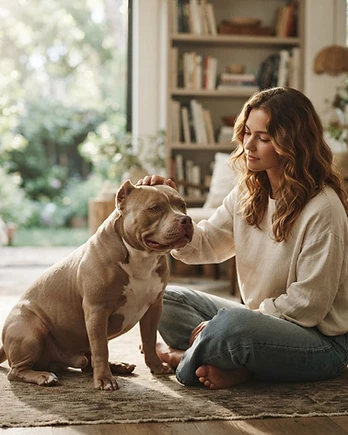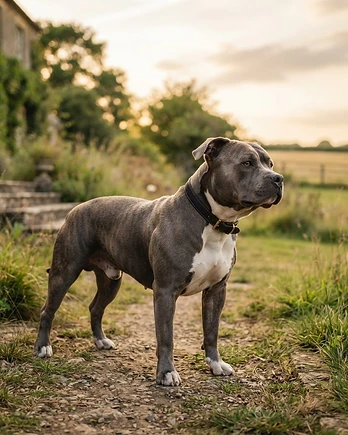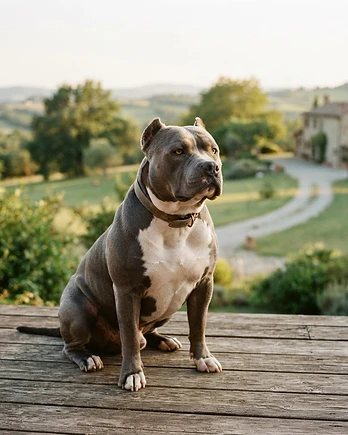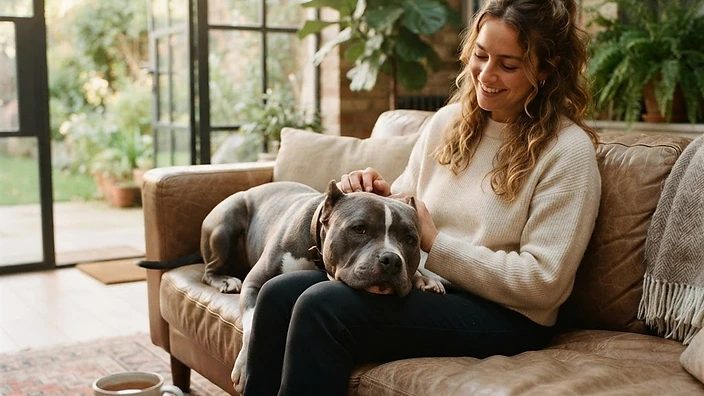
Bringing an American Bully into your life is one of the most rewarding decisions you'll ever make. These dogs — bred from American Pit Bull Terrier and American Staffordshire Terrier foundations, refined over decades by ABKC and UKC breeders — are compact powerhouses of loyalty, affection, and personality. They bond deeply with their families, thrive on routine, and reward attentive ownership with years of joyful companionship.
But great care doesn't happen by accident. The American Bully is a breed with specific physical needs, a sensitive temperament that flourishes with structure, and a lifespan (typically 10–13 years) that passes through distinctly different phases — each demanding a tailored approach. Whether you're welcoming an 8-week-old puppy or navigating the needs of a 9-year-old senior, the right knowledge makes every stage healthier and happier for both of you.
This guide is the most comprehensive American Bully care resource we've built at American Bully Haven Pups. It covers daily routines, age-appropriate exercise, grooming, nutrition, home and yard safety, seasonal adjustments, travel, veterinary wellness, and the lifelong habits that separate a good owner from a great one. Bookmark it, share it with your family, and revisit it as your Bully grows. For a deep dive into breed history, size classes (Pocket, Standard, Classic, XL), and temperament, start with The Complete American Bully Breed Guide: Everything to Know.
Key Takeaways
- American Bullies thrive on consistent daily routines covering feeding, exercise, training, and sleep.
- Exercise must be age-appropriate — over-exercising puppies under 12 months risks growth plate damage.
- Short, dense coats are low-maintenance but require regular brushing, ear cleaning, and skin fold care.
- Brachycephalic-adjacent facial structure means heat sensitivity is a real concern — especially in Texas summers.
- Preventive veterinary care (core vaccines, OFA health testing, dental cleanings) dramatically extends lifespan and quality of life.
- Socialization between 3–16 weeks is the single most influential window in your Bully's behavioral development.
- Senior American Bullies (7+) need modified exercise, joint support, and more frequent vet checkups.
- A safe, enriched home environment prevents most common behavioral problems before they start.
The American Bully Life Stages at a Glance
Understanding where your dog is developmentally shapes every care decision you'll make.
| Life Stage | Age Range | Key Focus | |---|---|---| | Neonatal & Transitional | 0–3 weeks | Warmth, mother's milk, neurological development | | Socialization Window | 3–16 weeks | Exposure, confidence-building, bite inhibition | | Juvenile | 4–6 months | Foundation training, controlled play, first vaccines | | Adolescent | 6–18 months | Boundary-testing, leash manners, structured exercise | | Adult | 18 months–7 years | Maintenance, fitness, annual wellness exams | | Senior | 7+ years | Joint support, modified exercise, increased vet visits |
Bringing Your Puppy Home: The First 30 Days
The first month sets the emotional and behavioral tone for your dog's entire life. When your puppy arrives — ideally at 8 weeks, after weaning and initial socialization with their littermates — their brain is still in the critical socialization window. Every positive experience you provide during weeks 8–16 creates neural pathways that shape confidence and temperament permanently.
Day One Essentials
- Designated sleep space: A crate (30" wire or plastic crate suits most Pocket and Standard Bullies; 36" for Classic and XL) lined with a fleece blanket and a worn t-shirt carrying your scent reduces separation anxiety dramatically.
- Quiet introduction: Limit guests for the first 48 hours. Let your puppy explore at their own pace.
- Feeding station: Establish a fixed location for food and water bowls immediately.
- First vet visit: Schedule within 72 hours of homecoming to establish a baseline wellness record and review the vaccination schedule your breeder started.
Socialization: The Most Important Investment You'll Make
The socialization window closes around 16 weeks. During this period, controlled, positive exposure to people (men, women, children, strangers with hats/uniforms), surfaces (grass, tile, gravel, stairs), sounds (traffic, thunder recordings, kitchen appliances), and other vaccinated dogs builds the neurological foundation for a stable, confident adult Bully.
Aim for 3–5 new positive experiences per day. Keep every interaction brief and reward-based. A puppy that is under-socialized during this window is significantly more likely to display fear-based reactivity as an adult — one of the most common and most preventable behavioral challenges in the breed.
For a structured approach to puppy development and early training, our dedicated cluster article covers the week-by-week milestones in detail.
Daily Care Routine: Building Structure That Sticks
American Bullies are creatures of habit. A predictable daily routine reduces anxiety, prevents boredom-driven destructive behavior, and supports healthy digestion and sleep cycles.
Sample Daily Schedule (Adult Bully)
- 7:00 AM — Morning potty, 20–30 minute walk or structured play
- 7:30 AM — Breakfast (measured portion, same time daily)
- 8:00 AM–12:00 PM — Rest/independent time in crate or designated space
- 12:00 PM — Midday potty break, 10–15 minute training session
- 5:30 PM — Evening walk (30–45 minutes), social time
- 6:00 PM — Dinner
- 8:00 PM — Calm enrichment (puzzle feeder, chew time)
- 10:00 PM — Final potty, settle for sleep
Consistency in feeding times also supports digestive health and makes housetraining significantly easier in puppies.
Exercise by Age: Getting It Right Matters
One of the most damaging myths about American Bullies is that more exercise is always better. In puppies, the opposite is true. The growth plates (physeal cartilage at the ends of long bones) remain open and vulnerable until approximately 12–14 months of age. High-impact repetitive exercise — running on pavement, jumping, forced fetch sessions — before growth plates close increases the risk of physeal fractures and long-term joint dysplasia.
Exercise Guidelines by Life Stage
Puppies (8–16 weeks): Free play in a safe, enclosed yard. No forced walks longer than 5 minutes per month of age (i.e., 8-week-old = maximum 10 minutes). No stairs, jumping from furniture, or repetitive fetch on hard surfaces.
Juvenile (4–6 months): Gentle leash walks (15–20 minutes, twice daily), socialization outings, and supervised play with other puppies. Begin structured obedience training sessions (5–10 minutes, 2–3x daily).
Adolescent (6–18 months): Gradually increase walk duration. Introduce swimming (exceptional low-impact exercise for Bullies). Continue to avoid high-impact repetitive exercise until 12–14 months. Mental stimulation becomes increasingly important as their intelligence and energy increase.
Adult (18 months–7 years): 45–60 minutes of moderate exercise daily. American Bullies excel at weight pull (an ABKC-recognized sport), agility, flirt pole sessions, and structured fetch. Vary the modality to prevent overuse injuries and maintain mental engagement.
Senior (7+ years): Reduce intensity, not frequency. Two 20–30 minute gentle walks daily maintain muscle mass and cardiovascular health without stressing aging joints. Swimming remains ideal. Watch for signs of exercise intolerance: lagging, limping, or excessive panting.

An American Bully in peak physical condition running on grass during a supervised exercise session, illustrating the breed's athletic build and the importance of tailored exercise routines across life stages.
For a complete breakdown of age-appropriate exercise and physical conditioning, including weight pull training fundamentals, see our dedicated cluster article.
Nutrition: Fueling the American Bully's Unique Physiology
The American Bully's compact, heavily muscled frame has higher protein and fat demands than many breeds of comparable size. Look for a commercial diet meeting AAFCO (Association of American Feed Control Officials) nutritional adequacy standards for the appropriate life stage.
What to Look for in a Quality Food
- Crude protein: Minimum 24–28% for adults; 28–32% for puppies and active adults
- Named animal protein as the first ingredient: Chicken, beef, salmon, or lamb — not "meat meal" or "animal by-products" as the primary protein source
- Omega-3 and Omega-6 fatty acids: Critical for skin and coat health, inflammatory regulation, and cardiovascular function. Look for DHA (docosahexaenoic acid) from fish oil or flaxseed
- Glucosamine and chondroitin: Especially valuable in large-framed XL Bullies prone to hip and elbow dysplasia
- Avoid: Artificial preservatives (BHA, BHT, ethoxyquin), corn syrup, excessive fillers
Feeding Amounts and Caloric Density
A Standard American Bully (50–70 lbs) typically requires approximately 1,200–1,600 kcal/day depending on activity level. XL Bullies (80–130 lbs) may require 1,800–2,400 kcal/day. Always feed by the dog's ideal body weight, not their current weight, and adjust seasonally — most dogs require 15–20% fewer calories in winter when activity decreases.
Divide daily intake into two meals for adult dogs to reduce the risk of gastric dilatation-volvulus (GDV), which, while more common in deep-chested breeds, can affect any large-chested dog.
For complete guidance on American Bully nutrition and feeding schedules, including raw diet considerations and supplement protocols, visit our detailed nutrition cluster article.
Grooming: Low Maintenance, High Reward
The American Bully's short, dense, single or double coat is one of the breed's most practical features — but "low maintenance" doesn't mean no maintenance. A consistent grooming routine prevents skin conditions, ear infections, and dental disease, all of which are disproportionately common in the breed.
Coat Care
- Brushing: Weekly with a rubber curry brush or bristle brush removes dead hair, distributes natural sebum, and stimulates healthy circulation. During seasonal shedding (spring and fall), increase to 3x weekly.
- Bathing: Every 4–6 weeks with a pH-balanced, dog-specific shampoo. American Bullies with wrinkles or skin folds (common in the Classic and XL classes) require fold cleaning every 1–2 weeks with unscented baby wipes or diluted chlorhexidine solution to prevent pyoderma (bacterial skin fold infection).
- Coat condition: Dull coat, excessive shedding outside of seasonal periods, or flaky skin often indicate nutritional deficiency (omega fatty acids), environmental allergies, or hypothyroidism — all worth raising with your veterinarian.
Ears, Eyes, Nails, and Teeth
- Ears: Clean weekly with a veterinarian-recommended ear cleanser. American Bullies' semi-upright or rose-shaped ears can trap moisture. Signs of infection include odor, dark discharge, head-shaking, or scratching.
- Eyes: Wipe daily with a damp cloth to remove discharge. Brachycephalic-adjacent skull structure can cause minor entropion (inward-rolling eyelid) in some lines — monitor for excessive tearing or squinting.
- Nails: Trim every 3–4 weeks. Overgrown nails alter gait mechanics and place chronic stress on the carpals, pasterns, and shoulder joints. Use a guillotine or scissor-type clipper, or a rotary grinder if your dog is sensitive to clipping.
- Dental hygiene: Periodontal disease affects an estimated 80% of dogs over age 3. Brush teeth 3–5x weekly with enzymatic dog toothpaste (never human toothpaste — xylitol and fluoride are toxic to dogs). Annual professional dental cleanings under anesthesia are the standard of care.

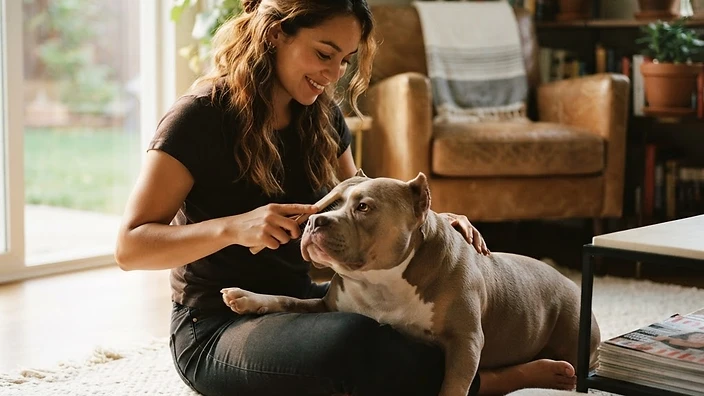
An American Bully being gently groomed by its owner, showcasing proper brushing technique and ear care — key components of the breed's regular maintenance routine that prevent common skin and ear infections.
For a complete step-by-step American Bully grooming routine, including product recommendations and skin fold care protocols, see our dedicated grooming cluster article.
Home and Yard Safety
American Bullies are curious, athletic, and surprisingly agile for their build. A puppy-proofed and Bully-proofed home prevents emergency vet visits and builds the trust your dog needs to feel secure.
Indoor Safety Checklist
- Electrical cords: Covered or secured. Puppies chew aggressively during teething (12–24 weeks).
- Toxic plants: Common houseplants toxic to dogs include pothos, sago palm, philodendron, and lilies. Relocate or remove entirely.
- Toxic foods: Chocolate, xylitol (in sugar-free gum, peanut butter, and baked goods), grapes, raisins, onions, macadamia nuts, and raw yeast dough are all acutely toxic to dogs.
- Medications: Store all medications (including OTC supplements) in closed cabinets. NSAIDs like ibuprofen and acetaminophen are extremely dangerous to dogs even in small doses.
- Trash cans: Lidded or inside a cabinet. Cooked bones, coffee grounds, and fatty food scraps in garbage cause pancreatitis and intestinal obstruction with alarming regularity.
Yard Safety
- Fencing: Minimum 5–6 foot privacy fence for Standard and larger Bullies. Check for gaps at the base — determined Bullies will exploit them. Avoid chain-link fences that allow nose-to-nose contact with passing dogs, which can trigger barrier frustration.
- Pool safety: American Bullies, despite their musculature, are not natural swimmers. Their heavy, low-center body composition makes them prone to exhaustion quickly. Never leave a Bully unsupervised near pools, ponds, or standing water.
- Toxic yard plants: Azalea, oleander, lantana, and certain mushroom species are common in Texas landscapes and toxic to dogs.
- Heat safety: In Austin's climate, shade and fresh water must always be available. Concrete and asphalt surfaces can exceed 150°F (65°C) on hot summer days, causing severe paw pad burns.
Seasonal Care: Texas and Beyond
Summer Heat Management
American Bullies are moderately heat-sensitive. Their musculature generates significant metabolic heat, and those with shorter muzzles (particularly Pocket Bullies) have reduced thermoregulatory capacity. In Austin's summers (where temperatures regularly exceed 100°F), take outdoor exercise before 8 AM or after 8 PM. Recognize early heat exhaustion signs: excessive panting, drooling, bright red gums, lethargy, and stumbling. This is a veterinary emergency.
Winter Care
Despite their muscular build, American Bullies have minimal subcutaneous fat and a short coat offering little insulation. In temperatures below 45°F, limit outdoor exposure and consider a fitted dog coat for extended outings. Indoor heating can dry skin — increase omega fatty acid supplementation and maintain ambient humidity around 40–50%.
Parasite Prevention: Year-Round in Texas
Heartworm disease, transmitted by mosquitoes, is endemic in Texas. Year-round heartworm prevention (monthly oral or topical preventive) is non-negotiable. Flea and tick prevention is equally critical — ticks in Central Texas carry Lyme disease, ehrlichiosis, and Rocky Mountain spotted fever. Discuss a comprehensive parasite prevention protocol with your veterinarian annually.
For detailed guidance on seasonal health and parasite prevention, including heartworm treatment protocols and emergency preparedness, visit our seasonal care cluster article.
Veterinary Wellness: Preventive Care That Pays Dividends
Core Vaccination Schedule
| Age | Vaccines | |---|---| | 6–8 weeks | DA2PP (Distemper, Adenovirus, Parvovirus, Parainfluenza) | | 10–12 weeks | DA2PP booster, Bordetella | | 14–16 weeks | DA2PP booster, Rabies | | 12–16 months | DA2PP booster, Rabies booster | | Every 1–3 years (adult) | DA2PP, Rabies (per state law and titer results) |
OFA Health Testing
Ethical ABKC and UKC breeders — including our program at American Bully Haven Pups — conduct OFA (Orthopedic Foundation for Animals) health testing on breeding stock. For American Bullies, recommended OFA panels include:
- Hip and elbow dysplasia evaluation (radiographic, OFA-certified)
- Cardiac evaluation by a board-certified cardiologist (congenital heart disease, including pulmonic stenosis, has been documented in the breed)
- Eye certification (CAER exam for hereditary eye conditions)
- Thyroid panel (autoimmune thyroiditis is increasingly documented in bully breeds)
Ask for OFA numbers when evaluating any breeder. Our breeding program provides full health testing documentation on all sires and dams.
Spay and Neuter Timing
Current veterinary consensus has shifted significantly on spay/neuter timing in medium-to-large breeds. Early spay/neuter (before 6 months) is associated with increased risk of hip dysplasia, CCL (cranial cruciate ligament) tears, and certain cancers in larger-framed breeds. Most veterinary internal medicine specialists now recommend waiting until 12–18 months for Standard and XL Bullies to allow complete hormonal maturation. Discuss the optimal timing with your veterinarian, considering your dog's size, sex, and lifestyle.
For a complete deep-dive into American Bully health screening, OFA testing, and preventive wellness protocols, see our dedicated health cluster article.
Training and Mental Enrichment
American Bullies are intelligent, people-pleasing dogs that respond exceptionally well to positive reinforcement-based training. They do not respond well to harsh correction, dominance-based methods, or prolonged isolation — all of which damage trust and can trigger anxiety-based behaviors.
Foundation Skills Every Bully Should Know
- Sit, down, stay, come (recall) — the safety quartet
- Loose-leash walking (their muscular build makes pulling genuinely problematic)
- "Leave it" and "drop it" — potentially life-saving in urban environments
- Crate training — a lifelong management and safety tool, never a punishment
- Canine Good Citizen (AKC CGC) certification — an excellent structured goal for new owners
Mental Enrichment: Often Overlooked, Always Vital
A physically exercised Bully that is mentally understimulated will find their own entertainment — and you won't like it. Rotate puzzle feeders, Kong-stuffing (frozen Kongs extend the challenge), sniff walks (decompression walks where the dog leads), and training games. Ten minutes of active mental engagement is roughly equivalent to 30 minutes of physical exercise in terms of fatigue produced.
For our complete American Bully training methodology and enrichment guide, including detailed positive reinforcement protocols, visit the dedicated training cluster article.
Travel and Boarding
Road Trips
American Bullies travel well when properly conditioned. Use a crash-tested, appropriately sized crate or a vehicle-specific harness (Center for Pet Safety-certified options exist). Never allow your Bully to ride with their head out the window — eye, ear, and respiratory injuries are common. Bring water, a portable bowl, and their regular food to avoid GI upset from dietary change.
Air Travel
Due to brachycephalic-adjacent characteristics in many Bully lines, most airlines ban short-nosed breeds from cargo holds. Check your airline's restricted breed list. If your Bully is small enough for in-cabin travel (under approximately 20 lbs including carrier), use an airline-approved soft-sided carrier and pre-condition them to it weeks in advance.
Boarding and Pet Sitting
When you can't travel with your Bully, vet the boarding facility rigorously. Ask about group play policies (not all Bullies thrive in group settings — individual temperament varies), temperature control, emergency protocols, and staff experience with bully breeds. A trusted in-home pet sitter familiar with the breed is often preferable for dogs prone to facility stress.
For complete travel planning and boarding guidance for American Bullies, including a packing checklist, see our travel cluster article.
Senior American Bully Care: The Golden Years
At approximately 7 years of age, your American Bully transitions into their senior phase. This doesn't mean decline is inevitable — with proactive care, many Bullies remain vibrant and active into their early teens.
What Changes at 7+
- Metabolic rate decreases: Transition to a senior-formulated diet with lower caloric density and higher fiber content to prevent obesity.
- Joint health becomes critical: Supplement with glucosamine (500–1,000 mg/day), chondroitin sulfate, and fish oil (EPA + DHA). Orthopedic beds (memory foam, 4"+ thickness) significantly reduce joint pressure during sleep.
- Cognitive function: Canine Cognitive Dysfunction Syndrome (CCDS) — the dog equivalent of dementia — can emerge after age 9. Signs include disorientation, altered sleep cycles, reduced interaction, and house soiling. Medium-chain triglyceride (MCT) supplements and environmental enrichment may slow progression.
- Veterinary frequency: Increase wellness exams to twice yearly. Add senior bloodwork panels (CBC, comprehensive metabolic panel, thyroid T4) to catch renal insufficiency, hypothyroidism, or early neoplasia before clinical symptoms emerge.
- Dental care intensifies: Periodontal disease accelerates with age. Professional cleanings every 6–12 months may become appropriate.
Frequently Asked Questions
How much exercise does an American Bully need daily?
Adult American Bullies (18 months and older) thrive with 45–60 minutes of moderate exercise per day, ideally split into two sessions. This can include brisk walks, structured play, swimming, flirt pole sessions, or weight pull training. Puppies under 12 months should be limited to 5 minutes of exercise per month of age per session to protect developing growth plates. Senior Bullies do best with two gentle 20–30 minute walks daily, with swimming as an ideal supplement.
Are American Bullies good family dogs?
Absolutely — in fact, family companionship is one of the breed's defining traits. American Bullies are known for exceptional patience with children, strong affection toward all family members, and a social nature that makes them poor guard dogs but extraordinary family dogs. Proper socialization during the critical window (8–16 weeks) and consistent positive training are the two variables most predictive of outstanding temperament. Learn more about breed temperament in The Complete American Bully Breed Guide: Everything to Know.
How often should I take my American Bully to the vet?
Puppies should visit the vet every 3–4 weeks from 8 weeks until 16 weeks to complete the core vaccination series, then at 6 months for their pre-spay/neuter consultation. Adult Bullies (18 months–7 years) benefit from annual wellness exams including heartworm testing and parasite screening. Senior Bullies (7+) should be seen twice yearly, with senior bloodwork panels at each visit. If you notice any sudden behavioral or physical changes, don't wait for the annual appointment — book a sick visit promptly.
What are the most common health problems in American Bullies?
The most documented health concerns in the breed include hip and elbow dysplasia (especially in XL-framed dogs), allergic skin disease (atopic dermatitis, often triggered by environmental allergens or dietary proteins), congenital cardiac anomalies (particularly pulmonic stenosis), hypothyroidism, and dental disease. Responsible breeders like American Bully Haven Pups screen breeding stock through OFA for hips, elbows, heart, and eyes to reduce the incidence of heritable conditions in offspring.
How do I manage my American Bully's skin folds and wrinkles?
Bullies with prominent skin folds — particularly around the muzzle, neck, and tail pocket — require fold cleaning every 1–2 weeks. Use unscented baby wipes or a diluted chlorhexidine solution (0.05% is safe for canine skin) to remove moisture and debris from fold surfaces, then dry thoroughly. Moisture retained in skin folds creates an ideal environment for Malassezia (yeast) and Staphylococcal bacterial pyoderma. Signs of infection include redness, odor, discharge, or your dog rubbing the area. If infection is present, veterinary treatment with topical antifungal or antibiotic therapy is needed.
What should I feed my American Bully puppy?
Feed a high-quality commercial puppy food meeting AAFCO standards for growth and reproduction, with a minimum of 28% crude protein and 15–17% fat for healthy musculoskeletal development. Large-breed puppy formulas are appropriate for Classic and XL Bullies; Standard and Pocket Bullies can do well on standard puppy formulas. Avoid calcium and phosphorus supplementation beyond what's in a balanced diet — excessive calcium supplementation in growing large-breed puppies is a proven risk factor for developmental orthopedic disease. Feed 3x daily until 6 months, then transition to 2x daily.
Building a Life Together
The American Bully isn't just a breed — it's a commitment to a relationship built on consistency, respect, and daily presence. These dogs give everything they have to the people they love. The owners who get the most from their Bullies are the ones who invest the most: in knowledge, in routine, in veterinary care, and in the small daily moments that compound into a lifetime of trust.
Every puppy we raise at American Bully Haven Pups — from Diesel, our stunning Chocolate Tri male, to Atlas, our striking Lilac Tri-Color male, Bowie, our handsome Blue Tri male, Hazel, our beautiful Merle female, and Ella, our gorgeous Lilac Tri female — leaves our Austin program with a health guarantee, full vaccination records, AKC/UKC registration paperwork, and the foundation of the care principles described in this guide already in place.
Explore our full resource library for every topic covered in depth, browse our available American Bully puppies, or read through our adoption guide to understand exactly what it looks like to bring one of our puppies home. If you have questions this guide didn't answer, we'd love to hear from you — contact us anytime. Your Bully's best life starts with the right foundation — and you're already building it.